
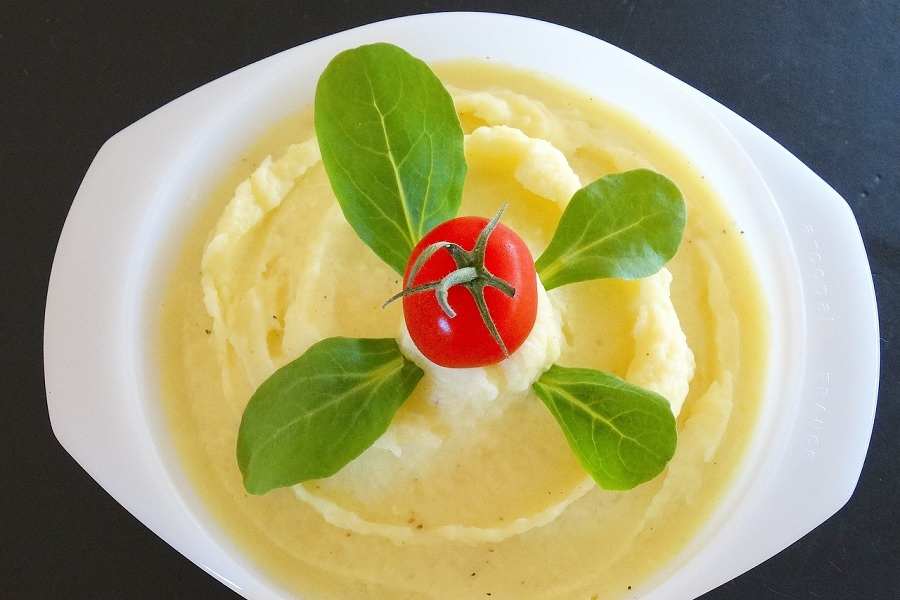
Mashed potatoes are one of those side dishes that seem to disappear quickly.
But when they do not, the next question is always the same: How long are they still good for?
Short answer: about 3 to 4 days in the refrigerator if stored properly, and about 3 to 4 months in the freezer for best quality.
Frozen leftovers can stay safe longer if kept continuously frozen, but quality does start to slide over time.
This matters more than people think because mashed potatoes are not just potatoes anymore.
Once you add milk, cream, butter or sour cream, you are dealing with a perishable leftover, not some magical starch that can sit on the counter indefinitely.
This informative read breaks down the main things that affect mashed potato shelf life, including ingredients, storage practices and temperature control, along with how to tell when it is time to stop being optimistic and throw them out.
Mashed Potato Shelf Life Influencing Factors
Mashed potatoes are pretty simple.
Keeping them safe is also pretty simple. The problem is that people tend to overcomplicate the wrong part. It is not really about finding a secret storage hack.
It is about understanding three basic things: what is in them, how fast you cool them, and what temperature you keep them at.
Those three are what will either preserve your leftovers or ruin them.
1. Ingredients
This is where mashed potatoes stop being “just potatoes.”
Plain cooked potatoes can already become a food safety issue if handled poorly, but mashed potatoes often include milk, cream, butter, cheese or sour cream, which makes them more perishable.
That does not mean you should avoid dairy. It just means you should treat the dish like any other cooked leftover and get it chilled promptly.
Perishable foods should not be left at room temperature for more than two hours, or one hour if the room or outdoor temperature is above 90°F (1).
If you make your mashed potatoes with broth instead of cream or milk, that may help the texture hold up a little differently, but it does not suddenly turn them into a shelf-stable food. Leftovers are leftovers.
2. Storage
Storage is the part people most often get wrong.
Mashed potatoes should be refrigerated within two hours of cooking or serving. If they are sitting out longer than that, especially on a buffet table or holiday spread, bacteria can multiply quickly.
The best move is to transfer them into small, shallow containers so they cool faster, then refrigerate them in a tightly covered container. (2)
That “small, shallow containers” advice may sound annoyingly specific, but it matters.
A huge, deep bowl of mashed potatoes cools slowly, which gives bacteria more time in the temperature danger zone.
A couple of shallower containers cool much faster and are safer. If you want to freeze them, do that within the same 3-to-4-day refrigerator window, preferably sooner rather than later, and use an airtight freezer-safe container or bag.
3. Temperature
Temperature is really the whole story.
Harmful bacteria grow fastest between 40°F and 140°F, which is why food safety sources call this the “danger zone” (3).
Your refrigerator should be at 40°F or below, and your freezer should be at 0°F or below. Mashed potatoes can generally keep for about 3 to 4 days in the refrigerator when stored at the proper temperature.
In the freezer, they stay safe much longer, though the texture may become a bit grainier or watery over time. That is a quality issue more than a safety one.
How Much Time Can Mashed Potatoes Be Good for?
There is no one magic number that works in every situation, because storage method changes everything.
But if you want the practical rule most people should follow, here it is: refrigerator for a few days, freezer for a few months, and the counter for almost no time at all.
Refrigerated Mashed Potatoes
If you keep mashed potatoes in an airtight container in the refrigerator, they are generally good for 3 to 4 days.
That is the standard guidance for cooked leftovers. If they have been sitting out for more than two hours before being refrigerated, that clock does not matter much anymore because the safety issue has already started.
In that case, it is smarter to discard them than to gamble on appearance or smell alone.
Frozen Mashed Potatoes
Mashed potatoes can absolutely be frozen.
For best quality, aim for about 3 to 4 months. FoodSafety.gov notes that frozen foods kept continuously at 0°F or below can remain safe indefinitely, but texture and flavor will gradually decline.
That is especially true with mashed potatoes, where creaminess and moisture matter quite a bit. After thawing in the refrigerator, you can reheat them on the stove or in the microwave.
If you want them to hold up as well as possible, freeze them in airtight containers or freezer bags, label them with the date, and thaw them in the refrigerator rather than on the counter.
Frequently Asked Questions
1. Is it still okay to consume mashed potatoes after five days in the refrigerator?
I would not.
The general rule for cooked leftovers is 3 to 4 days in the refrigerator. After that, the risk of foodborne illness goes up.
Mayo Clinic also points out that bacteria do not always change the smell, taste or appearance of food, which is why “it looks fine” is not much of a safety test.
If you know you are not going to eat your mashed potatoes within four days, freeze them earlier rather than trying to stretch day five into day six and hoping for the best.
2. How can I tell if my mashed potatoes have gone bad?
There are a few obvious red flags: a sour or unpleasant smell, visible mold, a slimy texture, or strange watery separation that looks worse than simple reheating dryness.
That said, food safety experts are clear on one important point: harmful bacteria do not always announce themselves with a bad smell or visible change.
If your mashed potatoes have been sitting in the refrigerator longer than 3 to 4 days, or you are not sure how long they have been there, it is safer to throw them out than to taste-test your luck.
3. Can I use the containers I use for all other foods to store my mashed potatoes?
You can use your regular food storage containers, but they should be clean, airtight and preferably shallow.
What matters most is not having a special “mashed potato container.” It is using a container that helps the potatoes cool quickly and protects them from contamination.
Also, keep leftovers away from raw meat juices or anything else in the fridge that could drip or cross-contaminate them.
4. Can I freeze mashed potatoes with gravy?
You can, but I would not call it ideal.
From a food safety standpoint, both mashed potatoes and gravy can be frozen. From a texture standpoint, freezing them separately usually works better because it gives you more control when reheating.
The potatoes can be loosened with a little milk or butter, while the gravy can be reheated and adjusted on its own.
If you do freeze them together, make sure the mixture is cooled promptly, packed in a freezer-safe airtight container and thawed in the refrigerator before reheating.
5. How long will mashed potatoes keep in the fridge after being reheated?
The safest approach is to reheat only the portion you plan to eat.
Leftovers should be reheated to an internal temperature of 165°F (74°C) (6). Once you start reheating and cooling the same food repeatedly, quality drops and food safety becomes harder to manage.
NC State’s Safe Plates guidance specifically advises against reheating food multiple times. In other words, portion first, reheat second.
That is the cleaner and safer habit. Also, when you reheat in the microwave, stir occasionally to help eliminate cold spots. That part matters more than people think.
6. Does room temperature work for storing mashed potatoes?
No. Room temperature is exactly where perishable leftovers become risky.
Food safety guidance is very consistent on this: perishable food should not sit out for more than two hours, or more than one hour if the temperature is above 90°F.
Mashed potatoes may look harmless, but once they are cooked and mixed with dairy or butter, they should be treated like any other cooked side dish. If they have been left out overnight, they should be discarded.
In Conclusion
Mashed potatoes are best treated like any other perishable leftover.
Keep them in the refrigerator for 3 to 4 days, freeze them for about 3 to 4 months for best quality, and refrigerate them within two hours of cooking or serving.
Store them in airtight, shallow containers, and reheat them to 165°F before eating. That is really the whole thing. Not glamorous, perhaps.
But food safety rarely is. And it is still a lot better than dealing with a bowl of mashed potatoes that looked innocent enough and turned out not to be.
Leave Feedback: Was this article helpful?