
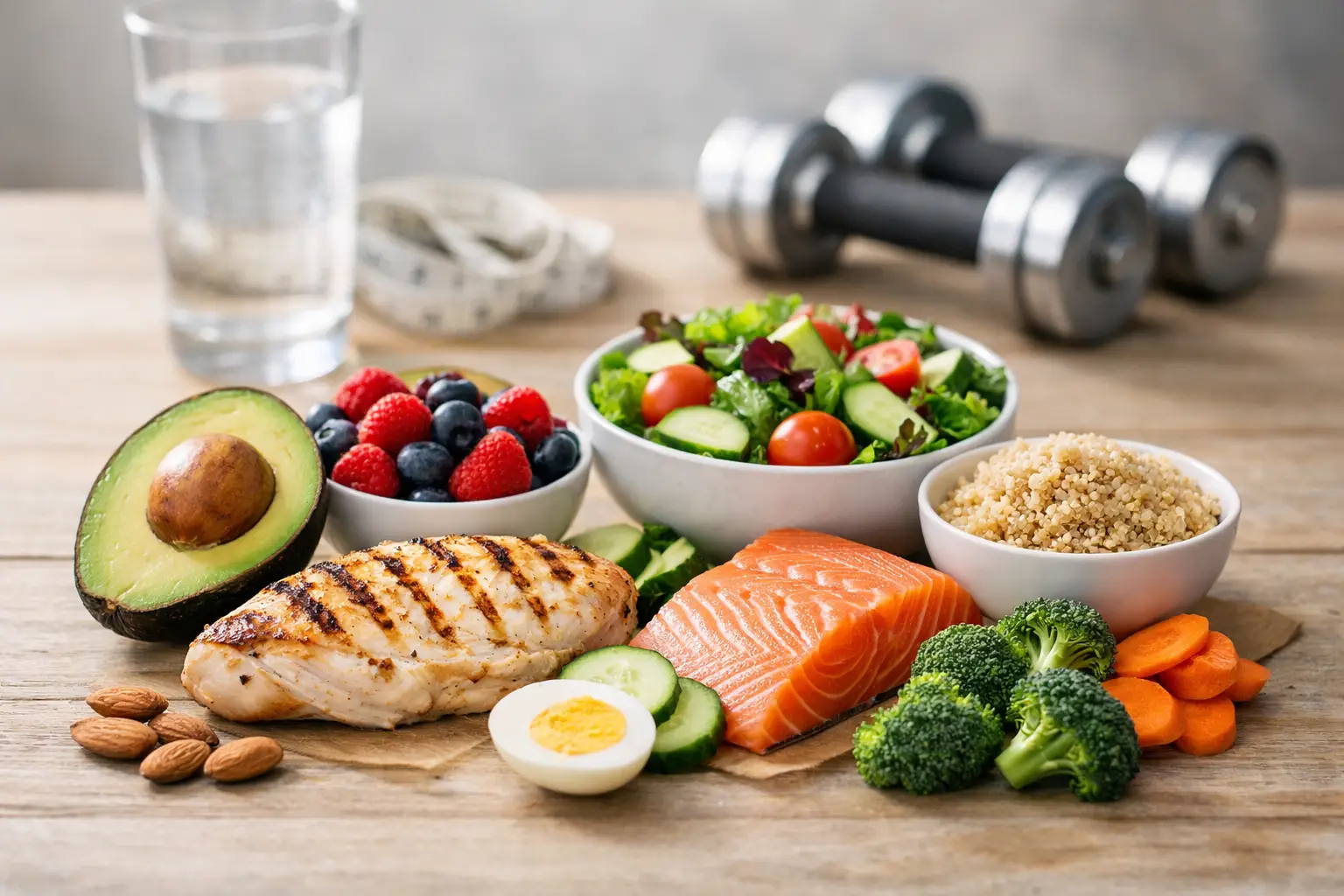
If your meals leave you hungry an hour later, weight loss starts to feel like a willpower problem.
Most of the time, it is not.
A lot of people are simply trying to “eat healthy” on meals that are not very filling. Hunger shows up later, portions get bigger, and the kitchen suddenly becomes very interesting at 9 p.m.
As the National Institute of Diabetes and Digestive and Kidney Diseases explains, weight management is influenced by your overall eating pattern, activity, sleep, stress, and other health factors, not just discipline.
That also means there is no one magic fat-burning food. Still, certain foods do make the process easier because they are rich in protein, fiber, water, or some useful combination of the three.
Those qualities tend to help with fullness, keep calories more manageable, and make it easier to stay consistent without feeling like every meal is a test of character.
What makes the best foods for weight loss?
The best weight loss foods usually do one or more things well.
They help control hunger, support muscle while you lose fat, and add volume to meals without packing in excessive calories.
In practice, that often means foods with protein, fiber, water, or lower calorie density. As NIDDK notes in its current weight-management guidance, fruits, vegetables, whole grains, beans, and lean proteins all fit that pattern.
Protein matters because it is generally more filling than refined carbohydrates and helps preserve lean mass during weight loss.
Fiber helps too, because it slows digestion and can make meals more satisfying. Harvard’s Nutrition Source points out that fiber helps regulate the body’s use of sugars and can help keep hunger in check, while its guide to protein foods highlights staples like eggs, fish, yogurt, beans, and lentils for exactly this reason.
There is one catch. A food can be nutritious and still not be especially helpful for your goals if portions regularly get away from you.
Nuts, avocado, olive oil, and nut butter are obvious examples. They are not bad foods. I am not interested in pretending they are.
But they are calorie-dense, which means they work best when portions are doing what portions are supposed to do, something NIDDK addresses in its portion guidance.
12 best foods for weight loss
1. Eggs
Eggs are one of the most practical foods on this list because they combine high-quality protein with convenience.
They fit breakfast, lunch, dinner, or the “I need something decent in ten minutes” category. Harvard lists eggs as a quality protein source, and they are easy to build into balanced meals.
They also work best when paired with something else that brings fiber and volume to the plate.
Eggs alone are fine. Eggs with vegetables, fruit, or whole grain toast are usually better for staying power. That is the difference between a meal and a snack pretending to be one.
2. Greek yogurt
Plain Greek yogurt is a strong weight loss food because it is high in protein and easy to turn into an actual meal or snack.
It can work at breakfast, after a workout, or as a higher-protein dessert when you want something sweet without opening the door to a whole evening of snacking.
As USDA FoodData Central shows, plain Greek yogurt packs substantially more protein than many sweetened yogurt options.
The main thing to watch is added sugar. Plain versions are usually the better deal nutritionally, and you can always add berries, oats, or chia seeds yourself.
A lot of flavored yogurts are really more dessert than breakfast, which is not illegal, obviously, but it is useful to know what is going on.
3. Lean chicken and turkey
Skinless chicken breast and turkey stay popular for a reason.
They provide a lot of protein for relatively few calories, which makes meals more filling without becoming especially heavy. NIDDK’s plate-method guidance specifically uses lean proteins like chicken and turkey as examples that fit a healthy meal pattern.
That does not mean every weight loss dinner needs to look like dry grilled chicken and steamed broccoli from 2006.
Ground turkey, shredded chicken in soup, turkey meatballs, and roasted chicken all count. The bigger factor is usually how the meal is built and what goes with it.
4. Fish
Fish is another food that makes weight loss a little easier because it brings protein and, in the case of salmon, sardines, and similar fish, some healthy fats too.
Harvard includes fish among its core protein foods, and the World Health Organization’s healthy diet guidance also places fish within a balanced eating pattern.
Lean white fish like cod is lower in calories, while salmon is richer and more energy-dense but often more satisfying. That trade-off is worth understanding.
A more satisfying dinner sometimes beats a lighter one that leaves you scavenging through the pantry an hour later.
5. Potatoes
Potatoes are one of the more misunderstood foods in the weight loss conversation.
The problem is usually not the potato itself. It is what gets done to it. Harvard’s review on potatoes makes this distinction pretty clearly: fries and chips are a different nutritional story than baked or boiled potatoes.
A plain baked or boiled potato can actually be quite filling because it provides carbohydrate, water, and volume without the calorie load of fried versions.
That does not make potatoes a free-for-all, but it does mean they do not deserve to be lumped in with chips and fries as though these were all nutritionally interchangeable. They are not.
6. Oats
Oats are one of the better breakfast foods for weight loss because they are affordable, versatile, and rich in soluble fiber.
As Harvard explains in its oats overview, the beta-glucan in oats has been studied for slowing digestion and increasing satiety, which is exactly what you want from a breakfast that is supposed to carry you longer than an hour.
Of course, what goes into the bowl matters. Oatmeal with berries and Greek yogurt is one thing. A sugary instant packet with syrup and not much else is another. Oats work best when they are part of a balanced meal, not a dessert in witness protection.
7. Beans and lentils
Beans and lentils are excellent for weight loss because they bring both protein and fiber, which is a combination that tends to help with fullness.
The Dietary Guidelines for Americans and NIDDK both highlight beans, peas, and lentils as useful foods because they provide fiber and protein at the same time.
They are also budget-friendly, which is not a small point right now. Add them to soups, grain bowls, tacos, or salads and they do a lot of heavy lifting. Increase gradually if you are not used to them, because your digestive system may need a little time to stop acting surprised.
8. Leafy greens
Spinach, romaine, kale, and arugula are useful mainly because they add a lot of volume for very few calories.
That makes them helpful for building larger meals that still fit a calorie deficit. NIDDK’s healthy eating guidance consistently leans on fruits and vegetables for that reason.
Greens alone, though, are not exactly a satisfying meal. They do their best work when paired with protein, healthy fat, and some kind of fiber-rich carbohydrate. A salad with chicken, beans, vegetables, and a reasonable amount of dressing is one thing.
A sad bowl of lettuce with three cucumber slices is another.
9. Cruciferous vegetables
Broccoli, cauliflower, Brussels sprouts, and cabbage are standout vegetables for weight loss because they are high in fiber, relatively low in calorie density, and often more filling than softer vegetables.
Harvard’s fiber guide points to vegetables as important fiber sources, and these tend to be especially useful because they make meals feel more substantial.
Preparation matters here too. Roasting, sautéing, or folding them into stir-fries and bowls tends to work better than steaming them into bland surrender. Flavor matters. Healthy food that tastes like punishment is hard to repeat.
10. Berries
Berries are one of the better sweet foods for weight loss because they bring fiber, water, and a lot of flavor for relatively few calories.
Harvard includes berries among its fiber-rich foods, and they tend to be much more satisfying than many processed snacks that disappear in six bites and somehow still leave you hungry.
Fresh and frozen both work. Add them to yogurt, oatmeal, or smoothies, or eat them on their own when you want something sweet that does not turn into a 600-calorie “treat yourself” moment.
11. Cottage cheese
Cottage cheese deserves more credit than it gets. It is high in protein, easy to portion, and flexible enough to work with fruit, vegetables, or even savory meals.
A quick look at USDA FoodData Central shows why it works so well for this: plenty of protein without a huge calorie load.
Some people love it, some do not. Fair enough. Greek yogurt offers a similar high-protein advantage if the texture is a dealbreaker.
The best plan is still the one you can repeat without needing to convince yourself every time.
12. Soup
Broth-based soup is one of the more underrated foods for weight loss.
As Harvard Health notes, soup is often very filling because it is largely water and tends to be high in volume.
The Penn State research behind the Volumetrics approach has shown similar results, especially for lower-calorie soups before meals.
This is one of the few cases where starting with soup can genuinely be useful. Creamy soups are not forbidden, but broth-based vegetable, chicken, or lentil soups usually give you more fullness per calorie.
How to build meals with the best foods for weight loss
The food itself matters, but the way you combine it matters too.
A helpful rule, and one that fits nicely with NIDDK’s plate-method guidance, is to build meals around protein first, then add fiber-rich carbohydrates and plenty of produce.
That might look like Greek yogurt with berries and oats, a bean-and-veggie bowl with chicken, or salmon with potatoes and broccoli.
This generally works better than focusing only on cutting calories. Meals that are too small or too low in protein and fiber have a habit of catching up with you later. That is when snacking, grazing, or oversized dinners become more likely.
Hunger is not a moral failure. Most of the time, it is feedback.
It also helps to pay attention to your own patterns. Afternoon hunger may mean lunch needs more protein and fiber. Night eating may mean dinner is not satisfying enough.
That is usually more useful than hunting for one perfect “weight loss snack” and expecting it to solve everything.
Foods that can help – and when they might not
Even the best foods for weight loss are not automatically ideal in every situation.
Nuts, avocado, olive oil, and nut butter are nutritious, but they are calorie-dense. Smoothies can be healthy, but drinking calories is often less satisfying than chewing them.
Potatoes can fit well, but fries are a different category. Yogurt can be a great choice, unless it is loaded with added sugar and mostly functioning as dessert.
That is why labels like good and bad are not especially helpful. Weight loss generally goes better when you look at patterns instead of trying to identify one perfect food and one evil one. A cookie does not ruin progress.
A salad does not guarantee it. The larger pattern is still what matters most.
Medical needs matter too.
People with diabetes, kidney disease, digestive conditions, or food allergies may need a more tailored approach, and NIDDK’s guidance on living with diabetes is a good reminder that individualized planning matters.
Personalized advice from a doctor or registered dietitian makes much more sense than trying to force a one-size-fits-all food list onto every body and every health condition.
A smarter way to think about weight loss foods
The best weight loss foods are not the ones with the flashiest claims.
They are the foods that help you stay full, meet your nutrition needs, and make it easier to eat in a calorie deficit without feeling miserable.
For most people, that means leaning on fairly unglamorous staples like eggs, yogurt, fish, beans, oats, potatoes, berries, soup, and plenty of vegetables.
Resources from NIDDK, the World Health Organization, the Dietary Guidelines for Americans, and Harvard’s nutrition resources all point in roughly that same direction.
Start with a few foods you actually enjoy, build repeatable meals around them, and let consistency do the heavy lifting.
That is usually a much better plan than chasing the newest “miracle” food and wondering why it did not change your life by Tuesday.
Leave Feedback: Was this article helpful?