
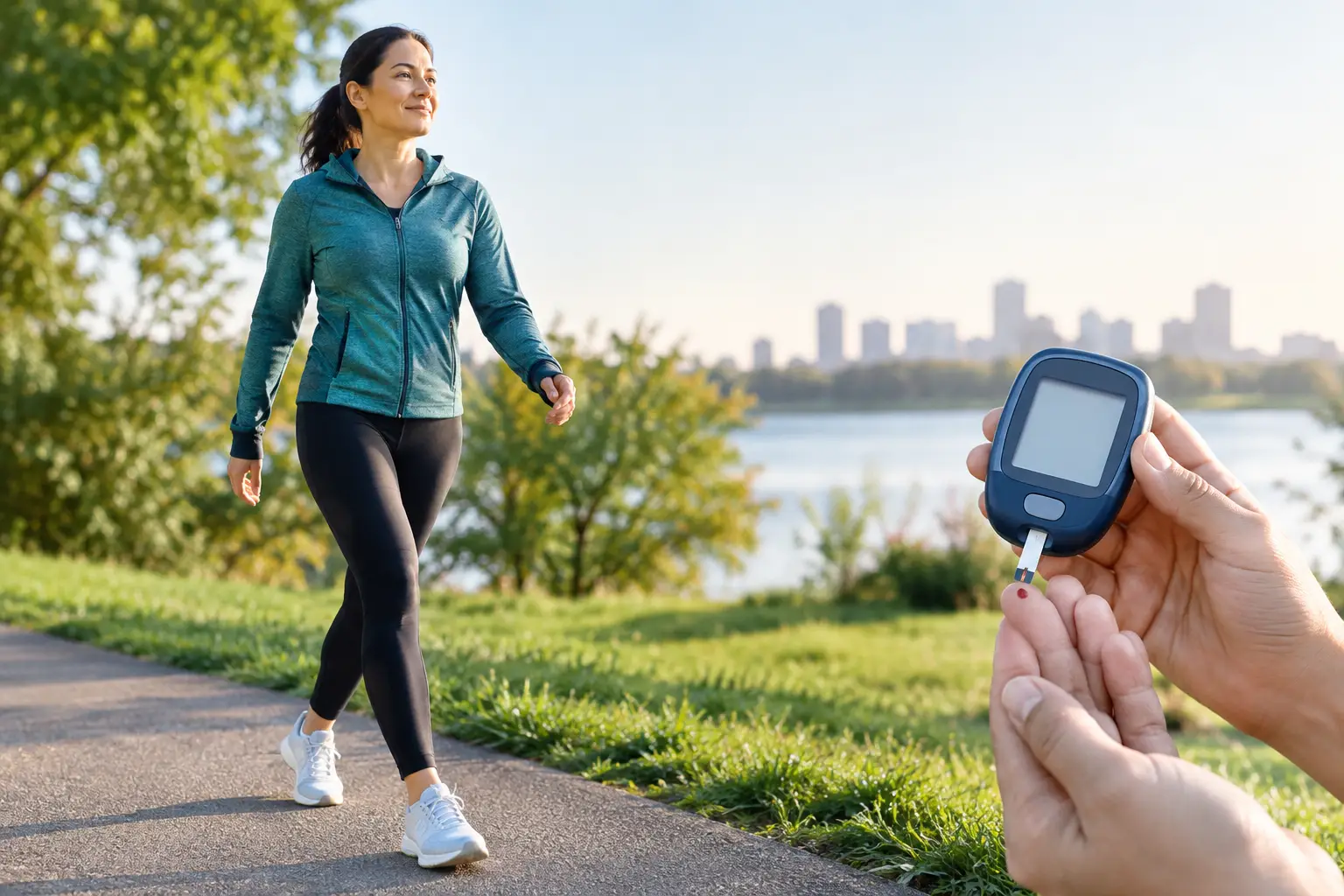
A 10-minute walk after dinner may sound almost too simple to matter. But for many people, that small habit can make a meaningful difference in what happens to blood sugar after a meal. So, does walking lower blood sugar? Research suggests it can, especially when walking is done regularly and timed around meals.
Walking is not a replacement for prescribed diabetes medication, nutrition changes, or medical care. It is, however, one of the most accessible tools people can use to support healthier glucose levels – no gym membership, special equipment, or intense workout required.
Does Walking Lower Blood Sugar After Meals?
Yes. Walking can lower blood sugar because working muscles use glucose for energy. As your leg muscles contract, they can take up glucose from the bloodstream, helping reduce the rise in blood sugar that often follows eating.
This effect does not require a punishing pace. Light-to-moderate movement can help, although a brisker walk may produce a larger benefit if it is safe and comfortable for you. The key point is that sitting still after a meal gives muscles little reason to use that available glucose. Walking creates that demand.
Research reviews have found that breaking up sitting with short bouts of light walking can improve post-meal glucose levels. Other studies suggest that a brief walk after meals may be particularly useful for adults with type 2 diabetes or prediabetes, whose blood sugar can remain elevated longer after eating.
The effect is usually temporary, which is why consistency matters. One walk can help with one post-meal rise, while a regular walking routine can contribute to better overall glucose management alongside other healthy habits.
Why Timing Can Matter as Much as Distance
A long walk is beneficial, but you do not need to save all your movement for one workout. Blood sugar commonly rises after meals as carbohydrates are broken down and glucose enters the blood. Moving during that window may help your body handle the rise more effectively.
For many people, walking for 10 to 15 minutes shortly after eating is a realistic place to start. Some research has found that short walks after each meal can be as helpful, or in some cases more helpful, for daily blood sugar control than completing the same amount of walking in one longer session.
Dinner is often a practical focus. People tend to be less active in the evening, and dinner may be their largest meal. A walk around the block, a few laps through a safe indoor space, or gentle pacing while talking on the phone can be enough to turn a sedentary evening into an active one.
That said, the best timing is the timing you can maintain. If walking immediately after meals is inconvenient, a walk later in the day is still far better than no movement at all. A sustainable routine beats a perfect plan that lasts three days.
How hard should you walk?
Aim for a pace that feels purposeful but manageable. You should be able to talk in short sentences, though singing would be difficult. This is often called moderate intensity. For some people, especially those who are new to exercise, an easy stroll is the right starting point.
As fitness improves, gradually adding pace, hills, or a few extra minutes may increase the benefits. There is no need to turn every walk into a strenuous workout. The safest and most effective plan is one that matches your current fitness, joints, balance, and health conditions.
Walking Supports Blood Sugar in More Than One Way
The immediate benefit of a walk is increased glucose use by the muscles. Over time, walking can also improve insulin sensitivity. Insulin is the hormone that helps move glucose from the blood into cells. When the body becomes more responsive to insulin, it may need less insulin to manage the same amount of glucose.
Regular walking may also support weight management, cardiovascular health, sleep, and stress reduction. These factors are connected to blood sugar, even though they do not change it in the same way or on the same timeline. For example, poor sleep and chronic stress can make glucose harder to manage for some people, while excess body weight can contribute to insulin resistance.
This does not mean walking guarantees normal blood sugar. Type 1 diabetes, type 2 diabetes, gestational diabetes, certain medications, illness, hormones, sleep, and the amount and type of carbohydrate eaten can all affect readings. Think of walking as one useful part of the picture, not a cure-all.
A Simple Walking Plan to Try
If you are generally healthy and your clinician has not advised you to limit activity, begin with a small, repeatable goal. Try a 10-minute walk after one meal each day for a week. Dinner is a convenient choice for many households, but breakfast or lunch works just as well.
Once that feels routine, you could add a second post-meal walk or extend the first walk to 15 or 20 minutes. The Physical Activity Guidelines for Americans recommend at least 150 minutes of moderate-intensity aerobic activity each week for most adults, plus muscle-strengthening activities on two days per week. But the health value of movement begins below that target. Short walks count.
A practical routine might look like this: walk after lunch on workdays, take a family walk after dinner a few evenings a week, and use an indoor mall, treadmill, or walking video when weather is poor. Keeping walking shoes visible and choosing a consistent cue, such as clearing the dinner dishes, can make the habit easier to remember.
If you monitor glucose at home, ask your health care team how and when to check it. Your readings can show how your own body responds to a meal and a walk. Avoid judging the habit by one number alone, since sleep, stress, hydration, medication timing, and meal composition can all influence results.
Safety Considerations for Diabetes
Walking is safe for many people, but diabetes can bring specific concerns. If you use insulin or medicines that can cause low blood sugar, such as sulfonylureas, exercise may increase your risk of hypoglycemia. Symptoms can include shakiness, sweating, hunger, dizziness, confusion, or a fast heartbeat.
Talk with your clinician or diabetes educator about whether you should check glucose before and after activity, carry a fast-acting carbohydrate source, or adjust food or medication timing. Do not change medication doses on your own.
Foot care also matters. Diabetes can affect sensation and circulation in the feet, making blisters or small injuries easier to miss. Wear comfortable, supportive shoes, check your feet regularly, and seek medical advice for sores, redness, swelling, or pain that does not improve.
People with severe nerve damage, active foot ulcers, certain eye complications, unstable heart symptoms, or other health concerns may need individualized exercise guidance. If walking causes chest pain, severe shortness of breath, faintness, or unusual symptoms, stop and seek medical care.
Pair the Walk With a Balanced Meal
A post-meal walk is helpful, but it works best alongside eating patterns that support steady energy and glucose. Meals that include fiber-rich carbohydrates, protein, and healthy fats tend to affect blood sugar differently than meals built mainly around refined carbohydrates or sugary drinks.
For example, a dinner with chicken or beans, roasted vegetables, and brown rice may lead to a different glucose response than a large serving of sweetened cereal or takeout fries. Individual responses vary, so there is no single perfect menu. The goal is not to fear carbohydrates, but to choose satisfying portions and higher-quality sources more often.
A helpful closing thought: you do not have to walk miles to make movement matter. A short walk after a meal is a realistic act of care for your body, and repeated often enough, those ordinary minutes can add up.
Leave Feedback: Was this article helpful?