
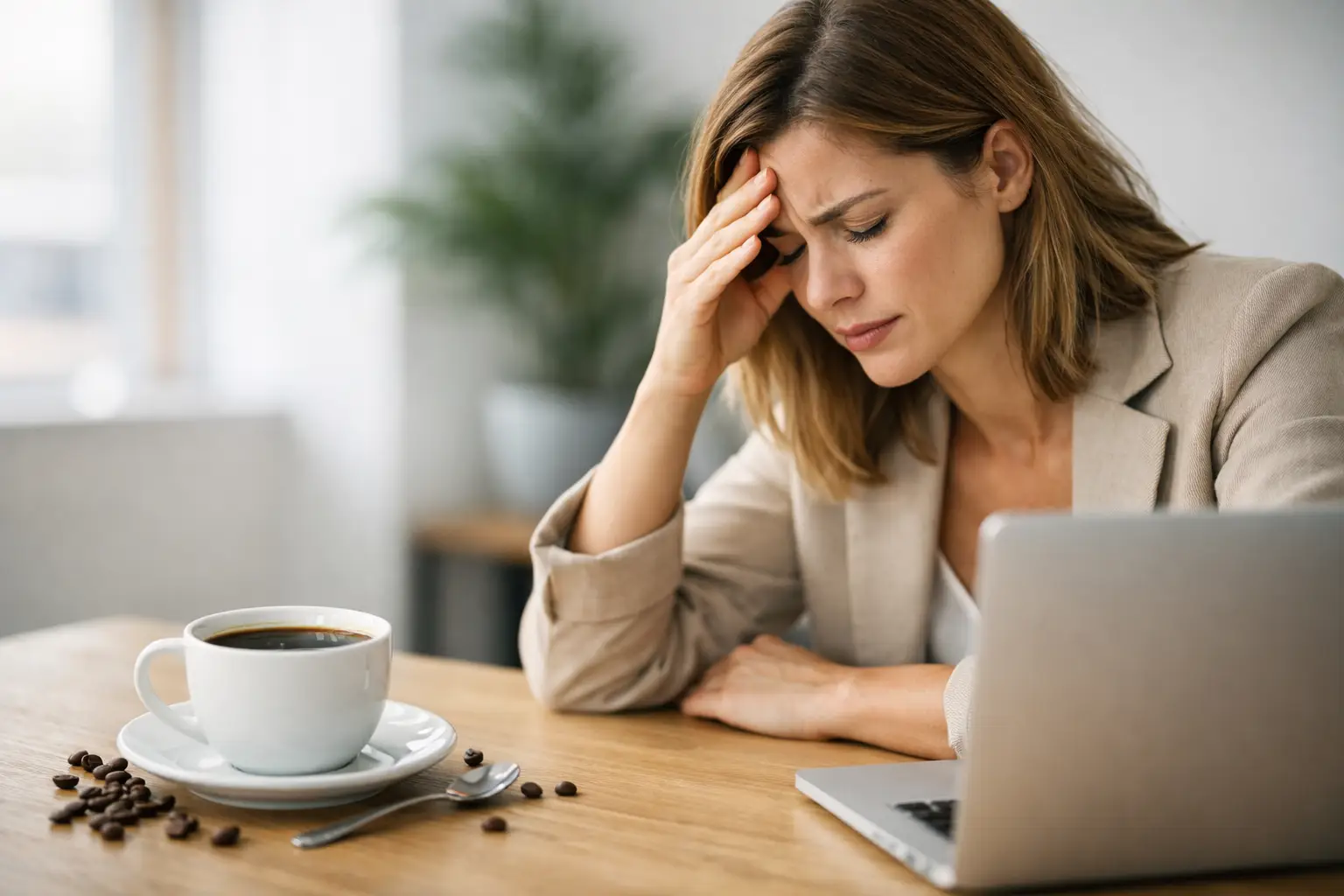
That mid-morning coffee can feel like a lifeline, but if your heart starts racing and your thoughts feel harder to settle afterward, the question is fair: is caffeine bad for anxiety? For many people with anxiety, it can be. Caffeine does not cause every case of anxiety, and some people tolerate it well, but it can trigger or intensify symptoms that feel a lot like anxiety.
The key is not assuming that coffee is automatically off-limits. Your total dose, the time you drink it, your sleep, medications, and personal sensitivity all matter. A reliable plan starts with noticing how caffeine affects you, then making measured changes rather than quitting abruptly.
Why caffeine can make anxiety feel worse
Caffeine is a stimulant. It works largely by blocking adenosine, a brain chemical that helps promote sleepiness. That is why caffeine can improve alertness and reduce fatigue. But the same stimulating effect can also increase physical sensations that are uncomfortable when you are already prone to anxiety.
After caffeine, some people notice a faster heartbeat, shaky hands, sweating, muscle tension, nausea, restlessness, or trouble focusing. These sensations overlap with the body’s stress response. If you tend to monitor bodily changes closely or have experienced panic attacks, a racing heart after a large cold brew may be interpreted as danger, which can fuel a cycle of fear and more physical symptoms.
Research supports this connection. Studies have found that higher caffeine doses can provoke anxiety symptoms in susceptible people, particularly those with panic disorder. The Diagnostic and Statistical Manual of Mental Disorders also recognizes caffeine-induced anxiety disorder, although this is not the most common explanation for everyday anxiety.
Caffeine may also raise levels of stress-related hormones, including cortisol, in some circumstances. The effect varies by person and regular use, but it helps explain why caffeine can feel energizing to one person and edgy to another.
Is caffeine bad for anxiety in every person?
No. The relationship is highly individual. Many people with generalized anxiety, social anxiety, or occasional stress can drink a modest amount of coffee without a noticeable problem. Others find that even one cup makes them feel wired, irritable, or unable to sleep.
Dose is often the difference. The U.S. Food and Drug Administration says that up to 400 milligrams of caffeine per day is generally not associated with dangerous effects for most healthy adults. That is a safety guideline, not a recommendation for anxiety management. For someone who is caffeine-sensitive, 400 milligrams can be far more than they can comfortably handle.
Caffeine amounts are also easy to underestimate. An 8-ounce brewed coffee may contain roughly 80 to 100 milligrams, but a large coffee-shop drink can contain much more. Cold brew, energy drinks, pre-workout powders, tea, chocolate, soda, and certain headache medicines can all add to the day’s total.
Genetics, body size, pregnancy, liver health, nicotine use, and certain medications can affect how quickly the body processes caffeine. Regular caffeine users may develop some tolerance, but tolerance does not always protect against sleep disruption or anxiety symptoms.
The sleep connection matters more than many people realize
A cup of coffee at 3 p.m. may not make you feel anxious immediately. It can still interfere with sleep later that night. Caffeine has an average half-life of about five hours, meaning about half of it may remain in your body five hours after you consume it. In some people, it lasts considerably longer.
Poor sleep lowers resilience the next day. It can make worries feel louder, reduce patience, and increase sensitivity to normal stress. Then fatigue makes another caffeine drink tempting, and the pattern continues. For people dealing with anxiety, breaking this sleep-caffeine loop can be more helpful than focusing only on the coffee itself.
A practical starting point is to avoid caffeine at least eight hours before bedtime. If you are particularly sensitive or struggle with insomnia, a morning-only cutoff may work better. Keep in mind that energy drinks and pre-workout products are especially likely to contain large doses, sometimes consumed quickly.
Signs caffeine may be contributing to your anxiety
Caffeine is more likely to be part of the problem if your symptoms reliably show up within a few hours of consuming it. Patterns are more useful than one difficult day. Consider whether you notice more nervousness, racing thoughts, irritability, stomach discomfort, palpitations, tremors, or trouble falling asleep after coffee or other caffeinated products.
It is also worth paying attention to context. Caffeine may feel manageable on a relaxed weekend but overwhelming on a rushed workday, after a short night of sleep, or when you have skipped meals. Drinking coffee on an empty stomach does not cause anxiety by itself, but it can make jitteriness or nausea more noticeable for some people.
A simple one- or two-week log can help. Record the time and type of caffeinated drink, approximate amount, sleep the night before, and anxiety symptoms later in the day. This is not about judging your habits. It is a practical way to see whether there is a consistent connection.
How to cut back without feeling miserable
If caffeine seems to worsen your anxiety, tapering is usually easier than stopping suddenly. Regular caffeine use can lead to withdrawal symptoms such as headache, fatigue, low mood, difficulty concentrating, and irritability. These symptoms are temporary but can make a quick quit feel like a setback.
Start by reducing your usual intake by about 25% every few days or each week, depending on how much you consume and how you feel. For example, if you normally drink two large coffees, make one of them half-caf or switch it to a smaller size. If you use energy drinks, reducing frequency and choosing a lower-caffeine option can be a meaningful first step.
You do not have to replace coffee with a sugary drink. Decaf coffee, herbal tea, sparkling water, and water with citrus can preserve the ritual of a break or a warm drink. Decaf is not completely caffeine-free, so people who are very sensitive should check how it affects them.
Support the change with the basics that genuinely affect energy: regular meals with protein and fiber, enough water, daylight early in the day, and short walks. These habits will not erase an anxiety disorder, but they can reduce the fatigue that makes high-dose caffeine appealing.
When caffeine may be especially worth limiting
Some situations call for extra caution. Consider a lower intake or a conversation with a healthcare professional if you have frequent panic attacks, severe insomnia, uncontrolled high blood pressure, heart rhythm symptoms, or persistent digestive discomfort. Caffeine can also interact with some prescription and over-the-counter medicines.
Pregnant people are commonly advised to keep caffeine below 200 milligrams daily, based on guidance from the American College of Obstetricians and Gynecologists. Children and teens may be more vulnerable to caffeine’s effects, and energy drinks are a particular concern because they can deliver high amounts quickly.
Do not assume caffeine explains every episode of chest pain, shortness of breath, fainting, or a new irregular heartbeat. Seek urgent medical care for severe or unfamiliar symptoms, especially if they occur with chest pressure, weakness, or pain spreading to the jaw, arm, or back.
Anxiety care is bigger than your coffee habit
Reducing caffeine can be a useful tool, but it is not a substitute for appropriate anxiety treatment. If worry, panic, avoidance, or physical symptoms are interfering with work, relationships, sleep, or daily activities, a qualified healthcare professional can help identify what is going on. Effective options may include therapy, lifestyle support, medication when appropriate, or a combination.
For many people, the goal is not a permanently caffeine-free life. It is finding a level that lets you enjoy a morning drink without paying for it later with jitters, poor sleep, or a mind that will not slow down. Try a smaller dose, an earlier cutoff, and a little curiosity about your patterns. Your most useful answer may come from how calm and steady you feel afterward.
Leave Feedback: Was this article helpful?