
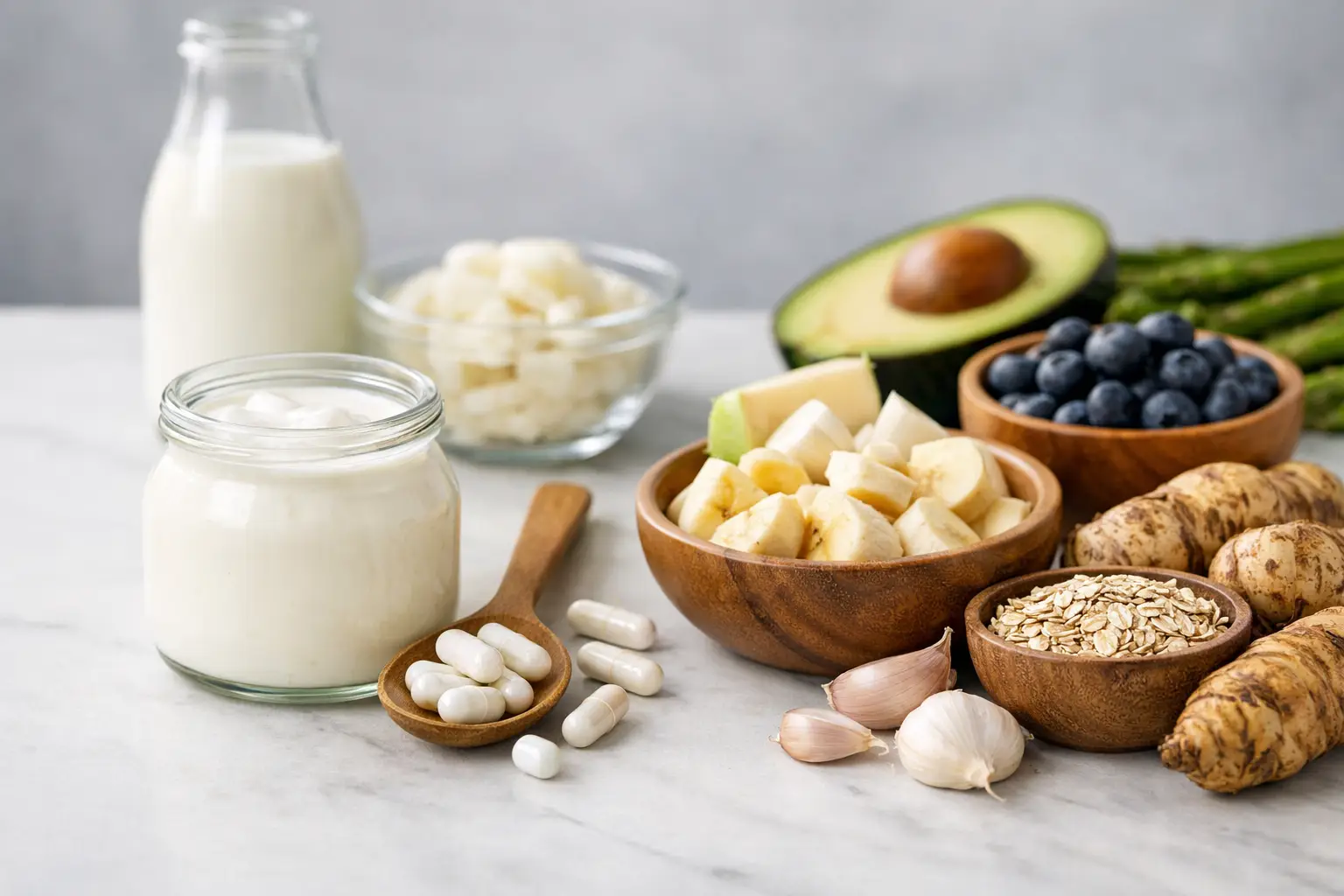
A bowl of yogurt with berries and oats may support your gut in more than one way. The yogurt can provide live microorganisms, while the oats and berries supply fibers that help beneficial microbes thrive. That simple pairing captures the central question behind probiotics vs prebiotics: Are you adding helpful bacteria, feeding the bacteria already there, or both?
The answer matters because the gut microbiome – the large, diverse community of microorganisms in the digestive tract – has become a major focus of nutrition research. It helps digest certain foods, produces compounds that support the intestinal lining, and communicates with parts of the immune system. Still, gut health is not a one-supplement solution. Knowing the difference between probiotics and prebiotics can help you make practical, evidence-informed choices without falling for oversized claims.
Probiotics vs Prebiotics: The Key Difference
Probiotics are live microorganisms that may provide a health benefit when consumed in adequate amounts. They are often called “good” or beneficial bacteria, though some probiotic products also contain beneficial yeasts. Common groups include Lactobacillus and Bifidobacterium species.
Prebiotics are compounds, usually certain types of fiber, that beneficial gut microbes use for food. They are not living organisms. When microbes ferment prebiotic fibers in the colon, they can produce short-chain fatty acids, including butyrate, which help fuel cells in the colon and support a healthy gut environment.
A useful comparison is a garden. Probiotics are like adding new plants. Prebiotics are the fertilizer that helps the existing plants grow. Both can be useful, but neither is automatically right for every person or every symptom.
There is also a third term worth knowing: synbiotics. These products or food combinations contain both probiotics and prebiotics. Yogurt with fruit, kefir with oats, or a supplement containing a bacterial strain plus a prebiotic fiber are examples. A synbiotic is not necessarily better than either option alone, but the combination can make sense when it fits your diet and tolerance.
What Foods Contain Probiotics?
Fermented foods are the most familiar food sources of probiotics, but not every fermented food contains live cultures by the time you eat it. Heat processing can kill live microbes, so labels matter.
Foods that may contain live and active cultures include:
- Yogurt with “live and active cultures” listed on the label
- Kefir, a fermented milk drink that often contains several bacterial and yeast cultures
- Refrigerated sauerkraut and kimchi that have not been pasteurized
- Miso, tempeh, and some fermented pickles
The strain matters. A product containing a probiotic is not the same as a product proven to help a specific concern. Research on probiotics is strain-specific, meaning benefits seen with one strain cannot automatically be applied to another strain in the same species.
For example, some probiotic strains have evidence for helping reduce the risk of antibiotic-associated diarrhea or modestly improving certain symptoms of irritable bowel syndrome. That does not mean all probiotics prevent illness, cure digestive conditions, or lead to weight loss. Advertising often skips this distinction, but it is one of the most important details to understand.
What Foods Contain Prebiotics?
Prebiotics naturally occur in many plant foods, especially those containing fibers such as inulin, fructooligosaccharides, and galactooligosaccharides. You do not need specialty powders to eat more prebiotic-rich foods.
Good everyday choices include onions, garlic, leeks, asparagus, oats, barley, beans, lentils, bananas, apples, and whole grains. Slightly green bananas and cooked-and-cooled potatoes or rice are also sources of resistant starch, a carbohydrate that can behave similarly to prebiotic fiber in the gut.
Prebiotic foods offer more than microbiome support. They usually bring vitamins, minerals, plant compounds, and fiber that can help with regularity and fullness. For most people, building meals around a wider range of plant foods is a more reliable first step than relying on a single gut-health product.
Which Is Better for Gut Health?
For many healthy adults, prebiotics from food are the best place to start. Most Americans do not get enough dietary fiber, and increasing fiber-rich foods can support digestion, heart health, blood sugar management, and appetite control at the same time.
Probiotics may be worth considering in more specific situations. You might discuss one with a health professional if you are taking antibiotics, have ongoing digestive symptoms, or are trying to manage a diagnosed condition for which a particular strain has evidence. The right product depends on the goal, the strain, the dose, and your individual health history.
If your main goal is everyday wellness, try a food-first approach: include a fermented food you enjoy a few times per week and gradually eat a greater variety of fiber-rich plants. There is no universal target for fermented foods, and more is not always better. A serving of yogurt at breakfast or a side of kimchi with dinner can be enough to make the habit realistic.
Can Probiotics or Prebiotics Cause Side Effects?
They can, especially when you make big changes quickly. Prebiotic fibers may cause gas, bloating, or cramping as gut microbes ferment them. This is particularly common with high-dose fiber supplements, chicory-root inulin, and large portions of beans or onions for people who are not used to them.
The practical fix is usually to start low and increase slowly. Add one extra fiber-rich food every few days, drink enough fluids, and pay attention to the amounts that feel comfortable. If a food consistently causes significant symptoms, you do not need to force it. Other sources of fiber and prebiotics may be easier to tolerate.
Probiotic supplements can also cause temporary gas or digestive changes. Product quality varies, and labels may not always reflect the number of live organisms present at the time you take the supplement. Choose products that identify the full strain, not just a broad category such as “probiotic blend,” and that state the number of live organisms through the expiration date.
People with severely weakened immune systems, those who are critically ill, and people with central venous catheters should speak with their medical team before using probiotic supplements. Although serious complications are uncommon, live microorganisms are not appropriate for everyone. Persistent abdominal pain, blood in the stool, unexplained weight loss, or a major change in bowel habits deserves medical evaluation rather than self-treatment with a supplement.
How to Make a Smart Choice
When comparing probiotics vs prebiotics, begin with the outcome you want. For general digestive support and a healthier eating pattern, focus on gradually increasing fiber from foods you already like. For a specific issue, look for evidence tied to a particular probiotic strain rather than trusting a broad promise on the front of a package.
Also consider the bigger picture. Sleep, stress, regular movement, alcohol intake, and the overall quality and variety of your diet can all influence the gut microbiome. No capsule can fully offset a diet low in plant foods or ongoing digestive symptoms that need medical care.
A better gut-health routine is often less complicated than it sounds: eat a wider mix of plants, add fiber at a pace your body tolerates, and choose fermented foods because you enjoy them, not because you expect a miracle. Small, consistent changes give your gut time to adjust and give you a more useful sense of what truly works for you.
Leave Feedback: Was this article helpful?