
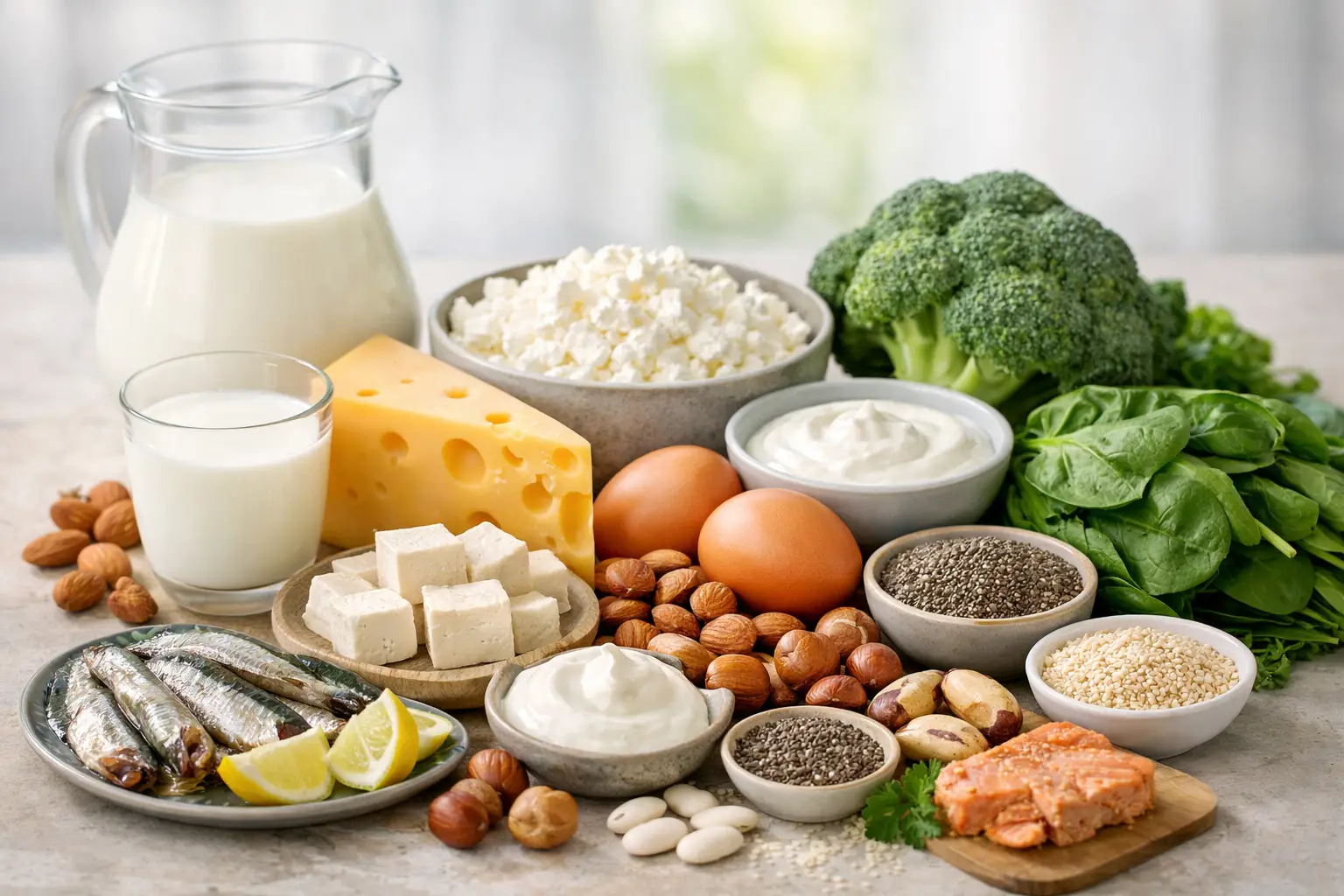
A carton of milk is not the only route to meeting your calcium needs. The best calcium foods can fit into nearly any eating pattern, including dairy-free, plant-forward, and budget-conscious meals. What matters most is choosing foods you enjoy often enough to make calcium a consistent part of your routine.
Calcium is best known for supporting bones and teeth, but it also helps muscles contract, nerves send signals, and blood clot normally. When dietary calcium falls short over time, the body can draw calcium from bone to keep these essential functions running. That is one reason daily intake matters more than an occasional high-calcium meal.
Most adults ages 19 to 50 need 1,000 milligrams of calcium per day. Women over 50 and men over 70 generally need 1,200 milligrams. Individual needs can vary, especially during pregnancy, with certain medical conditions, or when taking medications, so a clinician can offer personalized guidance.
12 Best Calcium Foods to Add to Your Meals
The amount of calcium in a food can vary by brand, recipe, and serving size. This is particularly true for plant milks, tofu, and fortified foods. Checking the Nutrition Facts label is a reliable way to compare options.
- Plain yogurt: Yogurt is one of the easiest calcium-rich foods to eat regularly. A typical serving can provide roughly one-quarter to one-third of the daily value, depending on the type. Choose plain yogurt when possible and add fruit, cinnamon, or nuts for flavor rather than relying on heavily sweetened varieties.
- Milk: Cow’s milk provides about 300 milligrams of calcium per cup. Skim, low-fat, and whole milk contain similar amounts of calcium, so the better choice depends on your overall nutrition needs and preferences. Use it in oatmeal, smoothies, soups, or coffee if drinking a full glass is not appealing.
- Fortified soy milk: For people who do not drink dairy milk, fortified soy milk is often the closest nutritional substitute because it generally supplies protein along with calcium and vitamin D. Many brands provide a calcium amount similar to dairy milk. Shake the carton before pouring, since added calcium can settle at the bottom.
- Cheese: Parmesan, mozzarella, cheddar, and other cheeses contribute meaningful calcium in relatively small portions. Hard cheeses tend to be especially concentrated. Cheese is useful as an addition to eggs, grain bowls, salads, or roasted vegetables, but it can also be high in sodium and saturated fat, so portion size still matters.
- Calcium-set tofu: Tofu can be a standout plant-based calcium source when it is made with calcium sulfate. A half-cup may provide several hundred milligrams, although amounts differ widely. Look for “calcium sulfate” in the ingredients or check the label. Firm tofu works well in stir-fries and sheet-pan meals, while soft tofu blends smoothly into sauces and soups.
- Canned sardines with bones: The soft, edible bones in canned sardines are where much of their calcium comes from. Sardines also offer protein, vitamin D, and omega-3 fats, making them a nutrient-dense choice. Try them on whole-grain toast with lemon and herbs, or mix them into a pasta dish.
- Canned salmon with bones: Like sardines, canned salmon with bones provides calcium along with protein and heart-healthy fats. The bones are usually soft enough to mash into the salmon with a fork. It can be a practical pantry option for salmon patties, salads, or sandwiches.
- Collard greens: Cooked collard greens are among the better vegetable sources of calcium. They also contain vitamin K, a nutrient involved in bone health. Sauté them with garlic and olive oil, add them to beans, or stir them into soups. Their mild bitterness pairs well with acidic ingredients such as lemon or vinegar.
- Kale and bok choy: These greens provide less calcium per serving than dairy or calcium-set tofu, but the calcium they contain is well absorbed. They are especially helpful for people who prefer to build calcium intake from several smaller food sources throughout the day. Bok choy cooks quickly, while kale holds up well in salads, grain bowls, and stews.
- White beans: Beans are not usually the highest-calcium food on the plate, but they are a valuable supporting source. White beans also provide fiber, plant protein, potassium, and iron. Add them to pasta, blend them into dips, or use them to make a creamy soup without heavy cream.
- Fortified breakfast cereal: Some cereals provide a substantial amount of calcium, especially when paired with milk or fortified soy milk. This can be useful for people with low appetites in the morning or families needing a fast breakfast. Choose options with whole grains and modest added sugar when available.
- Fortified orange juice: Calcium-fortified orange juice can help fill a gap, but it is best viewed as one option rather than a main source. Juice is lower in fiber than whole fruit and can add up in sugar and calories. A small serving alongside a balanced breakfast is more practical than drinking several glasses a day.
Which Calcium Foods Are Best for You?
The “best” choice depends on what you can eat consistently. Dairy foods are convenient and naturally rich in calcium, protein, and often vitamin D. Fortified soy milk and calcium-set tofu are particularly useful dairy-free alternatives. Fish with bones offers a concentrated option for people who enjoy seafood, while greens and beans help raise intake across meals.
Some foods contain calcium that is less available to the body. Spinach, for example, has calcium on paper but also contains compounds called oxalates that reduce absorption. That does not make spinach unhealthy. It simply means it should not be your primary calcium strategy. Kale, bok choy, collards, dairy, fortified beverages, and calcium-set tofu are generally more dependable choices for meeting calcium goals.
A varied approach is often easier than trying to get everything from one food. For example, yogurt at breakfast, a tofu bowl at lunch, and beans with cooked greens at dinner can contribute more comfortably than forcing down a large amount of one item.
Help Your Body Use Calcium Well
Calcium intake is only part of the picture. Vitamin D helps the body absorb calcium, and many people do not get enough through food alone. Fatty fish, fortified milk and plant milks, egg yolks, and safe sun exposure can contribute, though some people need a supplement based on medical advice or blood test results.
Weight-bearing and resistance exercise also support bone strength. Walking, climbing stairs, dancing, strength training, and similar activities encourage bones to respond to everyday physical stress. Exercise cannot replace adequate nutrition, but the combination is more protective than either habit alone.
It can also help to spread calcium-rich foods across the day. The body absorbs calcium most efficiently in moderate amounts rather than one very large dose. This is especially relevant if you use a calcium supplement. High-dose supplements can cause constipation and may interact with certain medicines, including some thyroid medications and antibiotics. Ask a pharmacist or clinician about timing if you take prescription medication.
Easy Ways to Build More Calcium Into Everyday Meals
Start with the meals you already make. Stir plain yogurt into a smoothie or use it as a base for a savory dip. Choose fortified soy milk for cereal or oatmeal. Add white beans and kale to a pasta sauce, or use calcium-set tofu in place of chicken in a familiar stir-fry. Small changes repeated often are usually more effective than a complete overhaul.
If lactose intolerance is the barrier, you may still be able to include lactose-free milk, yogurt, or hard cheeses, which are often easier to tolerate than regular milk. Dairy-free eaters should pay close attention to labels, since not every plant milk is fortified and not every tofu is made with calcium sulfate.
Building bone-supportive habits does not require perfection. Choose a few calcium-rich foods you genuinely like, keep them on hand, and let those ordinary choices do their work meal after meal.
Leave Feedback: Was this article helpful?