
A sandwich, a bowl of soup, and a takeout dinner can easily push a day’s sodium total past recommended limits – even if you never touch the salt shaker. To reduce sodium intake, the most effective changes usually happen while shopping, cooking, and ordering food, not by simply eating flavorless meals.
Sodium is an essential mineral that helps regulate fluid balance, nerve signals, and muscle function. The issue is quantity. Most Americans consume far more sodium than they need, largely from packaged and restaurant foods. Over time, excess sodium can raise blood pressure, which increases the risk of heart disease and stroke.
How Much Sodium Is Too Much?
The Dietary Guidelines for Americans recommend that adults limit sodium to less than 2,300 milligrams per day. That is roughly the amount of sodium in one teaspoon of table salt, although sodium in food often comes from added salt long before it reaches your kitchen table.
The American Heart Association suggests an ideal goal of 1,500 milligrams daily for most adults, particularly people with high blood pressure. That lower target may not be practical as a first step for everyone, and individual needs can differ. People with kidney disease, heart failure, certain hormonal conditions, or prescribed fluid restrictions should ask their clinician for personalized guidance.
A helpful perspective: you do not need a perfect day to make progress. Reducing sodium gradually can make lower-sodium foods taste more satisfying as your palate adapts.
Where Most Dietary Sodium Comes From
Salt added while cooking matters, but it is rarely the main source of excess sodium in a typical American diet. The Centers for Disease Control and Prevention reports that more than 70% of sodium comes from packaged, prepared, and restaurant foods.
Some high-sodium foods are obvious, such as chips, cured meats, instant noodles, and pizza. Others can seem like healthy choices. Bread, tortillas, cottage cheese, canned beans, jarred pasta sauce, breakfast cereal, salad dressing, and rotisserie chicken may all contribute meaningful amounts. A single restaurant entrée can contain a full day’s worth of sodium or more.
This does not mean these foods are off-limits. It means that checking portions and comparing products can make a bigger difference than relying on whether a food seems “healthy.”
Read Food Labels to Reduce Sodium Intake
The Nutrition Facts label is one of the most reliable tools for reducing sodium. Look at the sodium amount in milligrams and the percent Daily Value per serving. For sodium, 5% Daily Value or less is considered low, while 20% or more is high.
The serving size deserves equal attention. If a canned soup lists 700 milligrams per serving but the can contains two servings, finishing it provides 1,400 milligrams. That could use up most of a 1,500-milligram daily goal before adding crackers, a sandwich, or other meals.
Compare similar products rather than assuming one category is always low in sodium. One brand of whole-grain bread may have 80 milligrams per slice, while another has 200 milligrams. Plain frozen vegetables are usually very low in sodium, while vegetables in cheese sauce or seasoning packets may not be.
Claims such as “reduced sodium” can be useful, but they do not automatically mean low sodium. Under FDA definitions, “reduced sodium” means the product contains at least 25% less sodium than the regular version. Start with the label, then decide whether the amount works within your overall day.
Build Flavor With More Than Salt
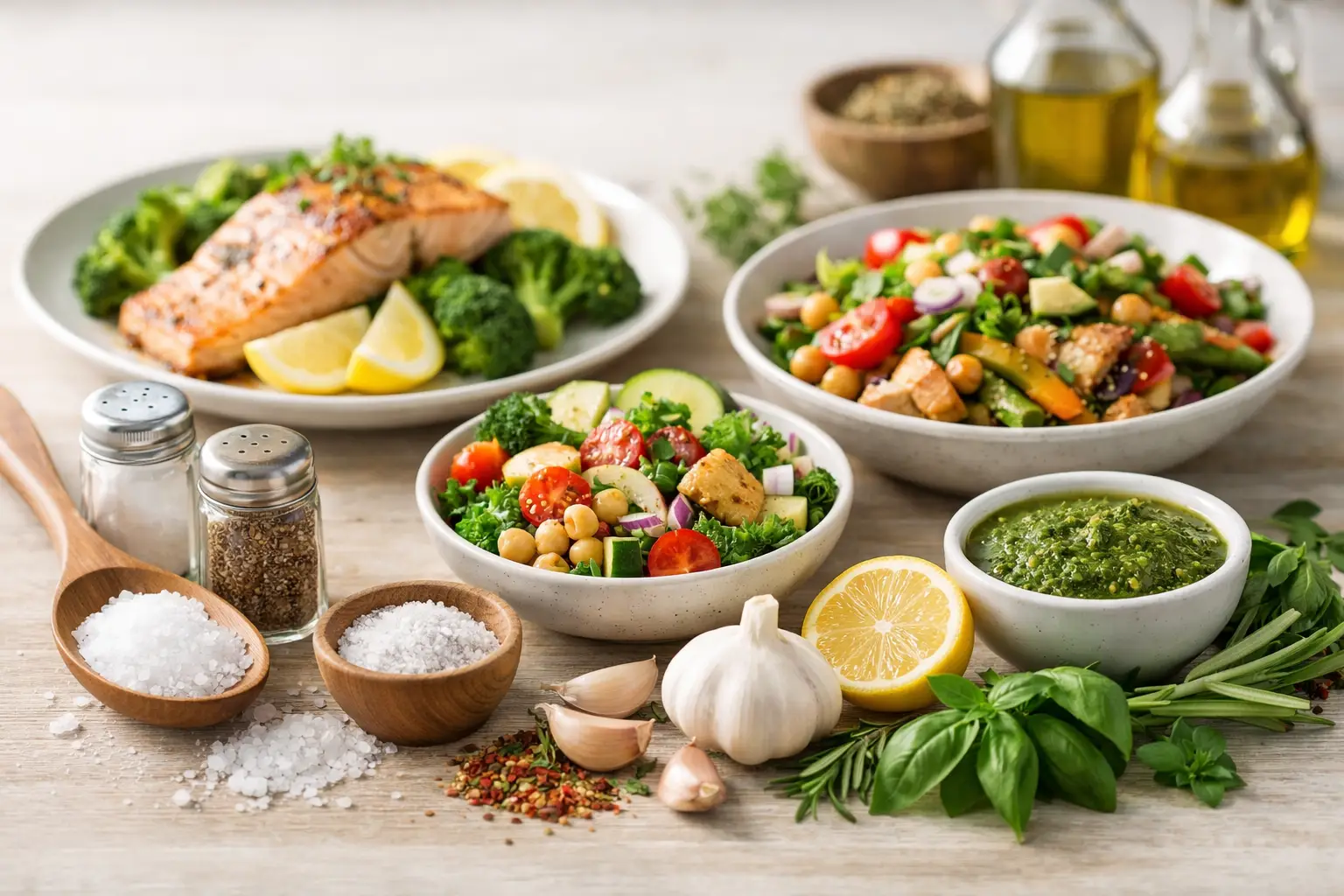
The fear of bland food keeps many people from making sodium changes that could help their health. Fortunately, salt is only one way to build flavor. Acid, herbs, spices, aromatics, and texture can make meals feel complete without relying heavily on sodium.
Try lemon or lime juice on roasted vegetables, fish, grain bowls, and soups. Vinegar adds brightness to salads, beans, and slaws. Garlic, onion, ginger, black pepper, smoked paprika, cumin, chili powder, rosemary, thyme, and basil can give foods a stronger flavor profile with little or no sodium.
Pay attention to spice blends, though. Garlic salt, seasoned salt, bouillon, taco seasoning, and many all-purpose blends can be sodium-heavy. Choose salt-free versions when possible, or make a simple blend from individual dried spices.
Make Lower-Sodium Swaps That Still Fit Real Life
Small substitutions can lower sodium without requiring a complete diet overhaul. Focus on the foods you eat often, because repeat choices add up quickly.
- Choose no-salt-added or low-sodium canned beans, tomatoes, broth, and vegetables. If regular canned beans are what you have, rinsing and draining them can reduce some of their sodium.
- Buy plain frozen vegetables and season them yourself instead of choosing varieties with sauces or seasoning packets.
- Use fresh poultry, fish, eggs, beans, or lentils more often than deli meat, sausage, bacon, hot dogs, and heavily marinated meats.
- Make simple meals at home when you can, such as sheet-pan chicken and vegetables, oatmeal with fruit, or grain bowls with unsalted nuts and a homemade dressing.
You do not have to remove favorite foods entirely. If you enjoy a salty item, balance the rest of the meal with lower-sodium choices. For example, pair a small portion of feta with a large salad made from fresh vegetables, or add a modest amount of soy sauce to a stir-fry built around unsalted rice and plenty of produce.
Be Strategic When Eating at Restaurants
Restaurant meals can be challenging because sodium is often used to preserve ingredients, season proteins, and create familiar flavors. Asking for a meal with no added salt is not always realistic, especially at fast-casual or chain restaurants where foods may arrive pre-seasoned. Still, a few choices can help.
Choose grilled, baked, roasted, or steamed items more often than cured, breaded, crispy, smoked, or heavily sauced options. Request sauces, dressings, and gravies on the side so you control how much you use. A side salad, fruit, plain baked potato, or steamed vegetables may be a better complement than fries, soup, or a second cheese-heavy side.
Portion size matters, too. Saving half of a large entrée for another meal can reduce both sodium and overall calories. If you eat out frequently, even replacing one restaurant lunch per week with a simple home-prepared meal can be a meaningful habit change.
Watch the “Healthy” Sodium Traps
Foods marketed for convenience, fitness, or weight management can still contain substantial sodium. Protein shakes, meal kits, frozen diet meals, veggie burgers, wraps, and prepared grain bowls vary widely by brand and serving size.
Sports drinks and electrolyte powders also deserve context. They may be helpful after prolonged, intense exercise in heat or when a medical professional recommends them. For a typical walk, gym session, or day at work, most people do not need extra sodium from specialty hydration products. Water and regular meals are usually enough.
There is also a nutrition trade-off with salt substitutes. Some replace sodium chloride with potassium chloride. They can be useful for certain people, but added potassium may be unsafe for people with kidney disease or for those taking medications that affect potassium levels, including some blood pressure medicines. Check with a clinician or pharmacist before using them regularly.
Set Up a Routine You Can Keep
A lower-sodium eating pattern works best when it is built around foods you genuinely enjoy. Begin by identifying one frequent source of sodium, such as canned soup at lunch, deli turkey in sandwiches, or restaurant takeout on busy evenings. Find one lower-sodium alternative and repeat it until it feels routine.
Taste foods before automatically adding salt. Keep a few dependable flavor builders in the kitchen, such as citrus, garlic, pepper, vinegar, and salt-free herbs. When buying packaged foods, compare labels for just one or two items per trip rather than trying to overhaul the entire pantry at once.
Your taste buds can adjust, but they need time. A gradual approach gives you the best chance of finding meals that support your blood pressure and still feel like food you want to eat tomorrow.
Leave Feedback: Was this article helpful?