
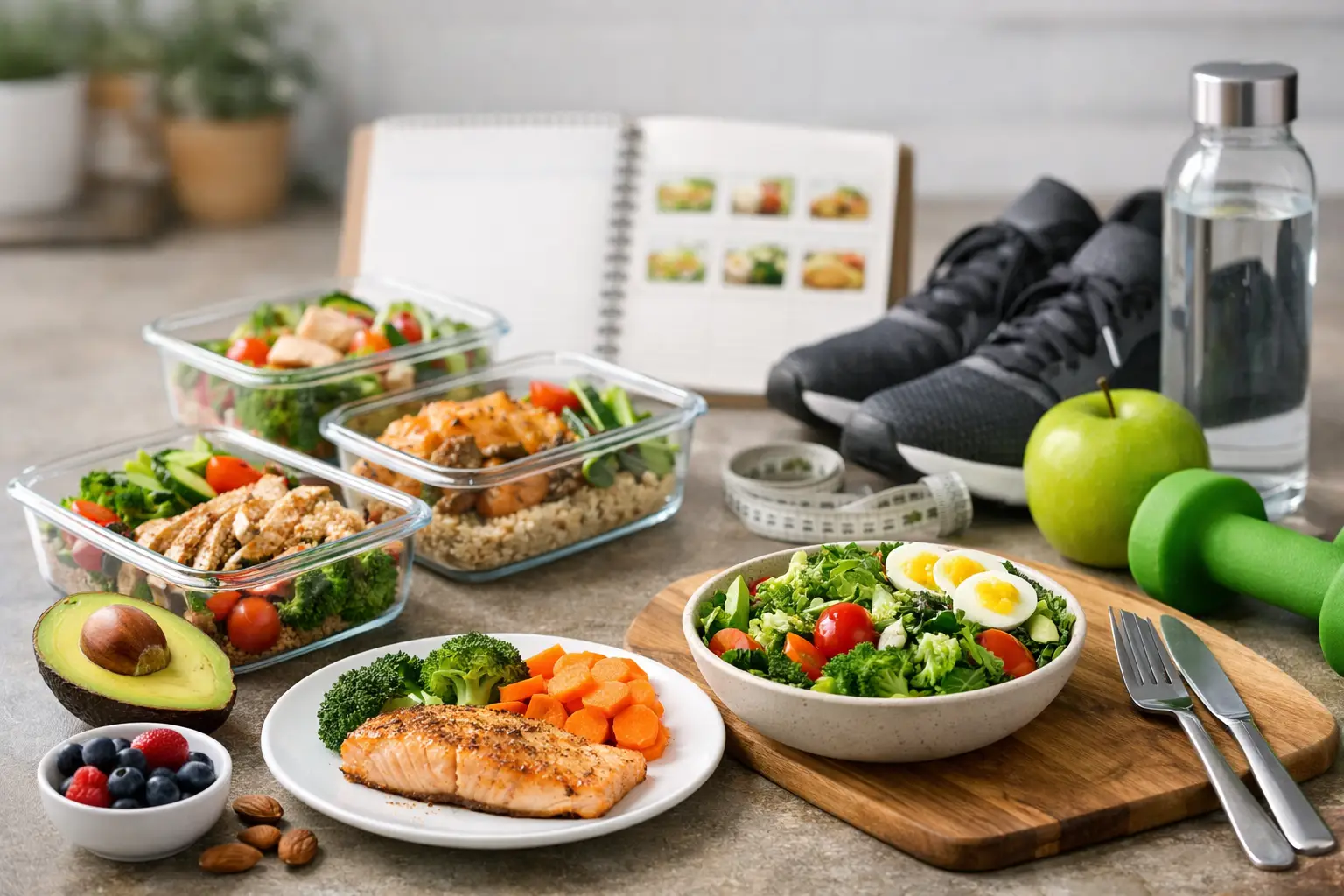
At 5:30 p.m., the hardest part of a weight-loss plan is rarely knowing that a salad could be a good choice. It is deciding what to eat when you are hungry, tired, short on time, and staring into the refrigerator. A practical meal planning weight loss example removes some of that pressure by giving you a realistic default: meals that are filling, familiar, and aligned with your calorie needs.
Meal planning is not about eating the same “perfect” foods every day. It is a way to make nutritious choices easier to repeat. Research on weight management consistently suggests that sustainable calorie reduction, adequate protein, high-fiber foods, and regular eating patterns can support weight loss. The details matter less than whether your plan is enjoyable enough to follow most of the time.
Why meal planning can make weight loss easier
Weight loss generally requires a calorie deficit, meaning you take in less energy than your body uses over time. Meal planning does not create that deficit on its own, but it can make one more manageable. When meals and snacks are decided in advance, there is less room for last-minute takeout, oversized restaurant portions, or grazing that is easy to underestimate.
A useful plan also protects against excessive restriction. Skipping meals to “save” calories can leave some people so hungry that they overeat later. Including protein, produce, and satisfying carbohydrates at regular meals may help you stay full and maintain steadier energy.
The example below provides roughly 1,500 calories per day, but it is not a universal prescription. Some adults will need more food, particularly people who are taller, more active, pregnant, breastfeeding, or managing certain health conditions. Others may need a different approach. A registered dietitian can help personalize calorie and nutrition targets.
Meal planning weight loss example: 7 balanced days
Each day uses a simple structure: a protein-rich breakfast, a lunch with vegetables and fiber, a balanced dinner, and one planned snack. Calorie estimates are approximate and will change with brands, portions, and cooking methods.
Day 1
Start with plain Greek yogurt topped with berries, one tablespoon of chopped walnuts, and a small serving of oats. For lunch, have a turkey and avocado wrap in a whole-grain tortilla with carrots and hummus. Dinner can be baked salmon, roasted broccoli, and a small baked potato with a spoonful of plain yogurt. Have an apple with peanut butter as your snack.
Day 2
Make two scrambled eggs with spinach and tomatoes, plus whole-grain toast and an orange. At lunch, eat a chicken and quinoa salad with mixed greens, cucumber, bell pepper, chickpeas, and a vinaigrette made with olive oil and vinegar. For dinner, serve turkey chili with beans alongside a side salad. A portion of cottage cheese with pineapple works well for a sweet, protein-containing snack.
Day 3
Try overnight oats made with milk, chia seeds, berries, and a scoop of plain or vanilla protein powder. For lunch, pair leftover turkey chili with a small serving of brown rice and steamed green beans. Dinner could be chicken fajita bowls with grilled chicken, peppers, onions, black beans, salsa, avocado, and cauliflower rice or brown rice. Snack on a light string cheese and grapes.
Day 4
Have a smoothie made with Greek yogurt, frozen berries, spinach, milk, and peanut butter, then add a hard-boiled egg if you need more staying power. Lunch can be a tuna salad sandwich on whole-grain bread with lettuce and tomato, served with sliced cucumbers. For dinner, make shrimp stir-fry with frozen mixed vegetables and a measured serving of rice. Choose air-popped popcorn for an evening snack.
Day 5
For breakfast, spread peanut butter on whole-grain toast and add banana slices, with a side of low-fat milk or soy milk. At lunch, eat a lentil soup with a side salad and a piece of fruit. Dinner can be lean beef or tofu tacos on corn tortillas, topped with cabbage slaw, salsa, and a small amount of cheese. A square or two of dark chocolate with strawberries can fit as a planned treat.
Day 6
Make a vegetable omelet with two eggs, mushrooms, peppers, and a little cheese. Add fruit and a slice of whole-grain toast. For lunch, use leftover taco ingredients in a salad bowl with beans, greens, salsa, and avocado. At dinner, roast chicken thighs or chicken breast with Brussels sprouts and sweet potato. Snack on Greek yogurt with cinnamon.
Day 7
Choose a high-fiber cereal with milk, berries, and a boiled egg for breakfast. For lunch, have a Mediterranean-style grain bowl with chicken or chickpeas, cucumber, tomato, greens, feta, olives, and a lemon-olive oil dressing. Dinner might be whole-wheat pasta with marinara, ground turkey or lentils, and a generous serving of sautéed zucchini. Finish with a pear and a small handful of almonds.
How to adjust this example to your needs
Think of the menu as a framework, not a rulebook. If 1,500 calories leaves you overly hungry, irritable, low in energy, or preoccupied with food, it may not be enough for your needs. Add a little more food at meals, such as another half-cup of grains, an extra serving of fruit, or a larger protein portion.
If you need a lower-calorie plan, avoid simply removing whole meals. First look at calorie-dense extras that may not be very filling, including large pours of cooking oil, sugary drinks, frequent alcohol, oversized cheese portions, or unplanned handfuls of snacks. These foods do not have to be forbidden. The goal is to use portions intentionally.
Protein needs vary, but including a source at each meal can help with fullness and preserve lean tissue during weight loss. Good options include eggs, Greek yogurt, chicken, fish, tofu, beans, lentils, cottage cheese, and lean meats. Fiber matters, too. Fruits, vegetables, beans, whole grains, nuts, and seeds add volume and support digestive health.
Make the plan practical before the week starts
Choose one or two proteins to cook in batches, such as chicken, turkey chili, lentils, or baked tofu. Wash and chop vegetables, cook a grain like brown rice or quinoa, and keep convenient options available, including frozen vegetables, bagged salad greens, canned beans, and pre-portioned yogurt.
You do not need to prepare every meal in containers on Sunday. For many people, a loose plan works better: decide on three breakfasts, two lunches, and three dinners, then repeat them as needed. Repetition can reduce shopping costs and food waste, while still leaving room for variety through seasonings, sauces, and different vegetables.
Restaurant meals and social events can also fit. If you know dinner out is coming, do not punish yourself by skipping food all day. Eat your usual balanced meals, choose an entrée with a protein and vegetable, and enjoy the occasion. One higher-calorie meal does not erase your progress.
Watch for signs the plan needs attention
A good weight-loss plan should support your health, not make daily life feel miserable. Constant hunger, dizziness, frequent binges, worsening sleep, or anxiety around food are signs to reassess the plan. People with diabetes, kidney disease, a history of an eating disorder, or those who take medications that affect appetite or blood sugar should get individualized guidance from a qualified healthcare professional.
The most useful plan is the one you can return to after a busy week, a vacation, or an imperfect day. Start with a few meals you genuinely like, keep portions realistic, and let consistency do more work than willpower.
Leave Feedback: Was this article helpful?