
A PCOS nutrition guide should not begin with a long list of foods to ban. Polycystic ovary syndrome, or PCOS, affects people differently, and eating plans that are too restrictive are hard to maintain. A more useful approach is to build meals that support steadier blood sugar, provide enough protein and fiber, and fit your life well enough to repeat most days.
PCOS is a hormonal condition often associated with irregular periods, acne, unwanted hair growth, fertility challenges, and weight changes. Many, though not all, people with PCOS also have insulin resistance. This means the body may need to produce more insulin to move glucose from the bloodstream into cells. Over time, higher insulin levels can contribute to elevated blood sugar, hunger swings, and changes in androgen hormones.
Food cannot cure PCOS, and there is no single “PCOS diet.” Still, nutrition can be a practical part of managing symptoms and lowering long-term risks such as prediabetes, type 2 diabetes, high cholesterol, and heart disease. The goal is progress, not perfect eating.
PCOS Nutrition Guide: Focus on Blood Sugar Balance
Carbohydrates are not the problem. They are an important energy source, and cutting them out entirely can leave meals unsatisfying and difficult to sustain. What tends to matter more is carbohydrate quality, portion size, and what you eat alongside it.
Meals built mostly from refined carbohydrates, such as sugary cereal, pastries, soda, white bread, or large portions of chips, can raise blood sugar quickly. That does not mean these foods are off-limits forever. It means they are usually more supportive of PCOS management when eaten less often or paired with protein, fiber, or healthy fat.
For example, a bowl of sweetened cereal by itself may leave you hungry again soon. A breakfast of eggs with vegetables and whole-grain toast, or plain Greek yogurt with berries, nuts, and oats, is likely to be more filling. The difference is not willpower. Protein, fiber, and fat slow digestion and can reduce the sharp rise and fall in blood sugar that drives cravings for some people.
Choose higher-fiber carbohydrates more often
Fiber supports fullness, digestion, and healthier blood sugar patterns. It may also help improve cholesterol levels, which matters because cardiovascular risk can be higher with PCOS. Good everyday choices include beans, lentils, chickpeas, oats, quinoa, brown rice, whole-grain bread, fruit, vegetables, and starchy vegetables such as sweet potatoes.
Fruit is sometimes unfairly discouraged in PCOS meal plans. Whole fruit contains natural sugar, but it also provides fiber, water, vitamins, and plant compounds. For most people, an apple, orange, peach, or cup of berries is a better choice than skipping fruit out of fear. Dried fruit and fruit juice are more concentrated sources of sugar, so portions matter more with those options.
Include protein at regular meals
Protein can make meals more satisfying and help limit grazing later in the day. Aim to include a protein source at breakfast, lunch, and dinner, especially if you tend to feel shaky, tired, or intensely hungry between meals.
Options include fish, chicken, turkey, eggs, Greek yogurt, cottage cheese, tofu, tempeh, edamame, beans, lentils, and lean cuts of meat. If you eat plant-based, combining foods such as beans, soy foods, whole grains, nuts, and seeds can help you meet protein needs without relying on animal products.
The right amount varies based on body size, activity level, health conditions, and personal preference. Rather than tracking every gram, start by making protein a visible part of each meal.
Build Meals Instead of Chasing “Perfect” Foods
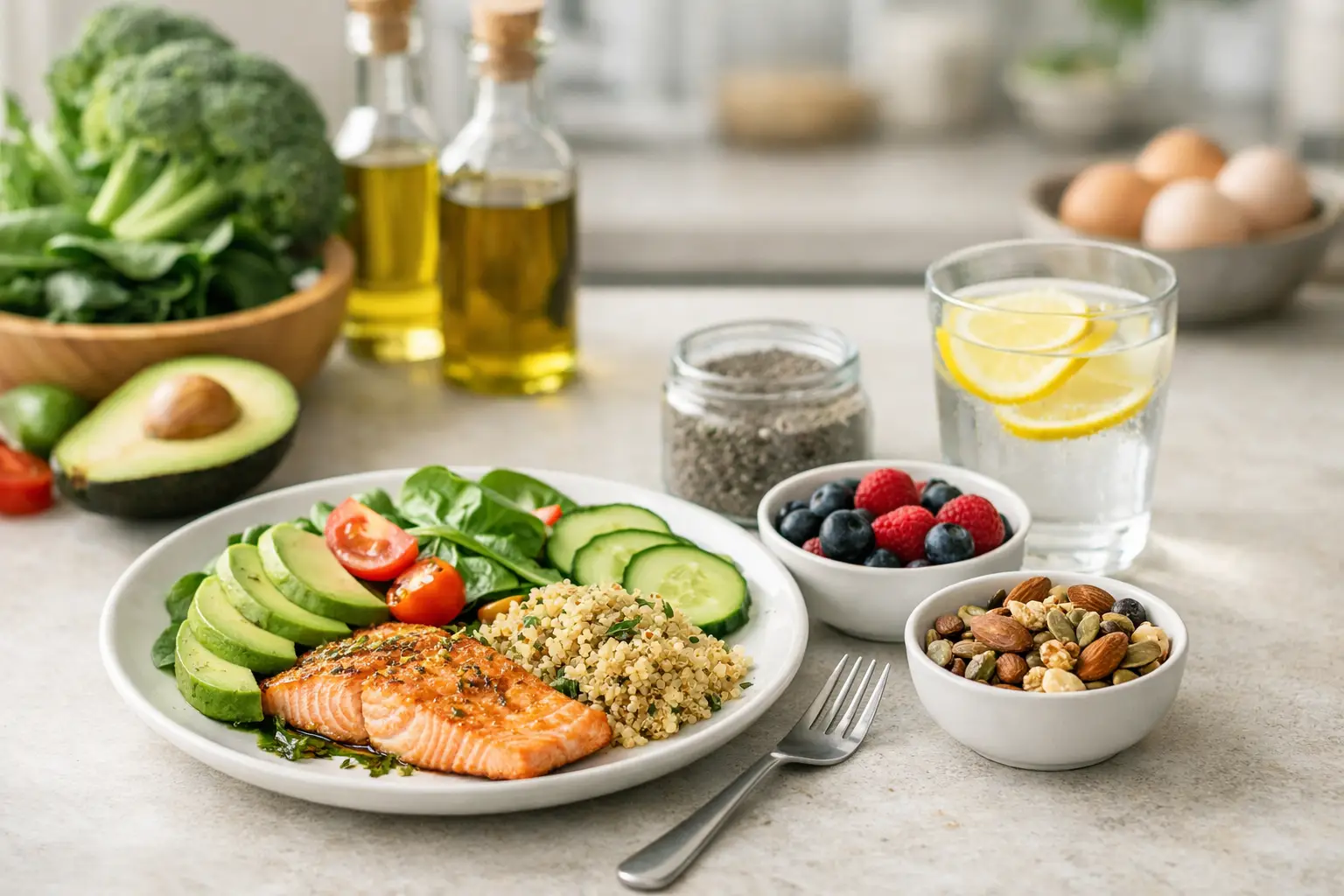
A simple plate pattern can take the guesswork out of everyday meals. Fill about half your plate with nonstarchy vegetables when possible, such as leafy greens, broccoli, peppers, zucchini, tomatoes, or green beans. Add a palm-sized portion of protein, a high-fiber carbohydrate, and a source of fat such as avocado, olive oil, nuts, seeds, or a dressing made with olive oil.
This pattern is flexible enough for familiar foods. A burrito bowl might include chicken or black beans, brown rice, fajita vegetables, salsa, and guacamole. A quick dinner could be salmon, roasted broccoli, and a baked potato. Pasta can fit, too: use a reasonable portion, add chicken, lentils, or turkey meatballs, and include vegetables and a satisfying sauce.
Some people feel better eating three meals and one planned snack. Others prefer three meals without snacks. There is no medical rule that everyone with PCOS must eat every two hours or avoid eating after a certain time. Consistency matters more than rigid timing. If late-night eating is common because dinner is too small or unbalanced, improving dinner may work better than setting a strict kitchen cutoff.
Foods to Limit Without Making Them Forbidden
Highly processed foods can be convenient, affordable, and enjoyable. The issue is not that they are morally bad. The concern is that frequent intake of foods high in added sugar, refined starches, sodium, and saturated fat can make it harder to meet fiber and nutrient needs.
Consider treating the following as occasional choices rather than daily staples:
- Sugar-sweetened drinks, including soda, sweet tea, energy drinks, and many coffee drinks
- Candy, baked goods, and heavily sweetened breakfast foods
- Refined snack foods that are easy to overeat, such as chips and crackers
- Large portions of processed meats, including bacon, sausage, and deli meats
You do not need to eliminate these foods to eat well. A useful strategy is to add supportive foods first. Have pizza with a salad or vegetables, pair a cookie with a filling meal rather than eating it when ravenous, and choose water or sparkling water more often than sweet drinks. Small changes practiced consistently can have more impact than a short-lived reset.
Weight Loss and PCOS: Keep the Goal Individual
Weight loss can improve insulin sensitivity, menstrual regularity, and other symptoms for some people with PCOS, particularly when excess body weight is affecting metabolic health. But weight is not the only measure of progress, and PCOS occurs in people across the weight spectrum. Someone at a lower weight may still have insulin resistance, irregular periods, or elevated cholesterol and deserves appropriate care.
If weight loss is a personal health goal, aggressive dieting often backfires. Very low-calorie plans can increase hunger, reduce energy for exercise, and lead to cycles of restriction and overeating. A modest calorie deficit paired with enough protein, fiber, sleep, and physical activity is generally more realistic. Even without weight loss, improvements in food quality, strength training, blood sugar, and fitness can benefit health.
Medications may also be part of care. Some people are prescribed metformin for insulin resistance, while others use hormonal treatments or medications for acne, hair growth, or weight management. Nutrition supports medical care but does not replace it.
Make Your PCOS Eating Plan Practical
The best plan accounts for budget, culture, cooking skills, work schedules, and family meals. Frozen vegetables, canned beans with low sodium, bagged salad kits, rotisserie chicken, eggs, plain yogurt, and microwavable whole grains can all make balanced eating easier. Expensive powders and specialty “hormone balance” products are not required.
It can also help to notice your own patterns for one or two weeks. Are you skipping breakfast and overeating at night? Do sweet drinks show up most afternoons? Are you eating enough at lunch to stay focused through work? These observations are more useful than judging yourself for every choice.
If you have a history of disordered eating, frequent binge eating, diabetes, kidney disease, digestive conditions, or are trying to conceive, personalized guidance is especially valuable. A registered dietitian, ideally one experienced with PCOS, can help tailor meals without unnecessary restriction. Your clinician can also monitor blood pressure, cholesterol, blood sugar, and other health markers.
A supportive PCOS eating pattern should leave room for real life: shared meals, favorite foods, busy weekdays, and occasional takeout. Start with one dependable change, such as adding protein to breakfast or replacing one sugary drink a day, then let that habit become ordinary before adding another.
Leave Feedback: Was this article helpful?