
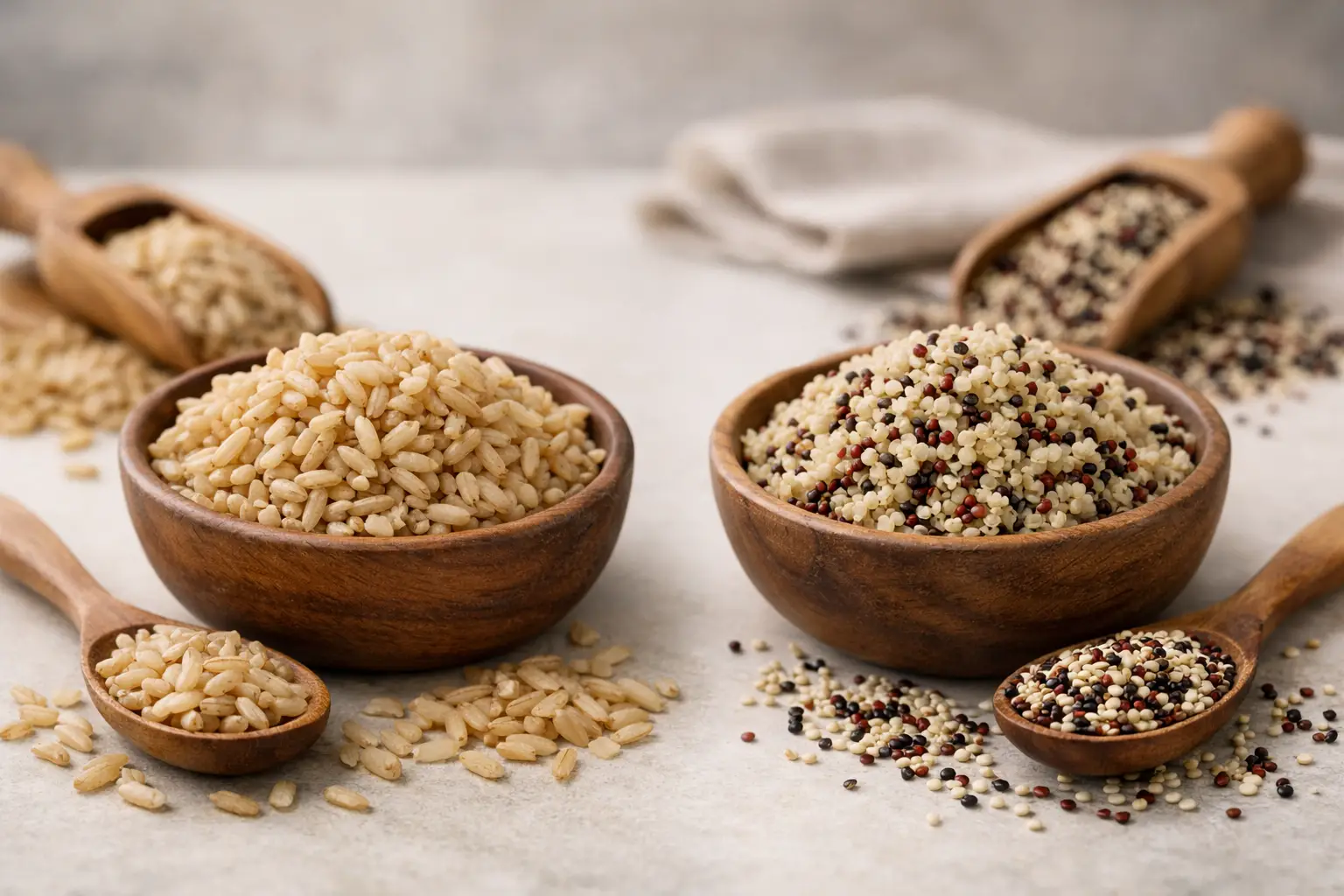
If you have ever stood in the grocery aisle deciding between a bag of brown rice and a box of quinoa, you are not alone. Brown rice vs quinoa nutrition is a common comparison because both are considered healthy staples, but they are not nutritionally identical, and the better pick depends on what you want from your meal.
Both foods can fit into a balanced diet. They are minimally processed, versatile, and easy to pair with vegetables, beans, fish, chicken, tofu, and healthy fats. Still, quinoa tends to stand out for its protein and mineral content, while brown rice often wins on cost, familiarity, and texture.
Brown rice vs quinoa nutrition at a glance
A cooked cup of brown rice and a cooked cup of quinoa look similar on the plate, but their nutrition profiles differ in meaningful ways. Brown rice is a whole grain, which means it keeps the bran and germ that white rice loses during processing. Quinoa is technically a seed, though it is usually cooked and eaten like a grain.
In general, quinoa contains slightly fewer calories and carbs than brown rice, along with more protein and fiber. It also provides a wider range of minerals, especially magnesium, iron, and manganese. Brown rice still offers valuable nutrients, including B vitamins, manganese, selenium, and fiber, just usually in smaller amounts per serving.
For many adults, the biggest difference is satiety. Because quinoa has more protein and fiber, it may help some people feel full longer. That can matter if your goal is weight management or better blood sugar control.
Calories, carbs, protein, and fiber
When people compare brown rice vs quinoa nutrition, macronutrients are usually the first place to look.
One cup of cooked brown rice provides roughly 215 to 220 calories, about 45 grams of carbohydrates, around 5 grams of protein, and about 3.5 grams of fiber. One cup of cooked quinoa provides about 220 calories, around 39 grams of carbohydrates, roughly 8 grams of protein, and about 5 grams of fiber.
The calorie difference is small enough that it usually does not drive the decision. The bigger distinction is protein quality. Quinoa is often described as a complete protein because it contains all nine essential amino acids. That does not mean brown rice is unhealthy or low quality. It simply means quinoa offers a more balanced amino acid profile on its own.
This matters most for people who eat mostly plant-based meals. If you are vegetarian or trying to reduce meat intake, quinoa can make it easier to build meals that are more filling and nutritionally balanced. If you already eat a variety of protein sources throughout the day, the gap may matter less.
Fiber also deserves attention. Quinoa has a modest edge, and that can support digestion, fullness, and heart health. But the difference is not huge. If the rest of your diet is rich in vegetables, fruit, beans, nuts, and seeds, either option can fit well.
Which has more vitamins and minerals?
Quinoa usually comes out ahead here. It is especially notable for magnesium, phosphorus, manganese, folate, and iron. Magnesium supports muscle and nerve function, blood sugar regulation, and blood pressure. Iron helps carry oxygen in the blood, and folate is important for cell growth and overall health.
Brown rice also supplies helpful nutrients, particularly manganese and selenium, and it contributes B vitamins as well. But serving for serving, quinoa is generally more nutrient-dense.
That said, nutrition is not just about which food wins on paper. Portion size, what you eat it with, and how often you eat it all matter. A bowl of brown rice topped with salmon, roasted vegetables, and avocado can easily be more nutritious than a plain bowl of quinoa by itself.
Brown rice vs quinoa nutrition for weight loss
Neither food causes weight loss on its own. Weight loss depends on your overall calorie intake, food quality, activity level, sleep, and consistency over time. Still, quinoa may have a slight advantage for some people because its higher protein and fiber content can help with fullness.
If you tend to overeat starchy foods or feel hungry soon after meals, quinoa may leave you more satisfied. That could make it easier to manage portions without feeling deprived. On the other hand, brown rice can work just as well if you enjoy it more and naturally keep portions reasonable.
This is one of those situations where preference matters. The healthiest option is often the one you will actually use in a sustainable way. If quinoa feels too expensive or you do not like the texture, forcing it into your routine is unlikely to help long term.
Blood sugar and diabetes considerations
Both brown rice and quinoa are better choices than highly refined grains for many people because they contain fiber and digest more slowly than white rice. Still, they do not affect everyone the same way.
Quinoa generally has a lower glycemic impact than brown rice, which means it may lead to a gentler rise in blood sugar for some people. That makes it a useful option for people trying to support blood sugar control. Its extra protein and fiber can help here too.
Brown rice can still be part of a diabetes-friendly diet, especially when eaten in moderate portions and paired with protein, healthy fat, and nonstarchy vegetables. For example, a small serving of brown rice with grilled chicken and broccoli will affect blood sugar differently than a large bowl of rice eaten alone.
If you monitor your blood sugar at home, your own readings can be more useful than general rules. Individual response matters.
Is one better for heart health?
Both foods can support heart health when they replace more refined carbohydrates. Whole grains and fiber-rich plant foods are linked with better cholesterol levels and overall cardiovascular health. Quinoa may offer a small edge because of its fiber, magnesium, and broader nutrient profile.
Brown rice still belongs in a heart-healthy eating pattern. It is far better nutritionally than white rice in most cases, and it works well in meals centered on vegetables, legumes, lean protein, and healthy fats.
What matters most is the bigger picture. A diet built mostly around minimally processed foods will do more for your heart than switching one side dish for another.
Taste, texture, cost, and cooking
Nutrition matters, but real-life food choices also come down to practicality. Brown rice has a mild, familiar flavor and a chewy texture. It tends to pair well with stir-fries, burrito bowls, curries, and grain bowls. Quinoa has a softer texture and a slightly nutty flavor that some people love and others find bitter if it is not rinsed well before cooking.
Cost is another factor. Brown rice is usually more affordable, especially if you buy it in bulk. Quinoa often costs more, which can make a difference for families or anyone trying to eat well on a budget.
Cooking time may influence your choice too. Quinoa usually cooks faster than brown rice, which can make it appealing on busy weeknights. If convenience helps you cook at home more often, that benefit counts.
Who might benefit more from quinoa?
Quinoa may be especially helpful for people who want a little more protein from plant foods, those trying to improve fullness at meals, and anyone looking to increase magnesium or iron intake. It is also naturally gluten-free, which matters for people with celiac disease or gluten sensitivity.
For active adults, quinoa can be a practical base for recovery meals because it provides both carbs and protein. It is not a replacement for all other protein sources, but it can contribute more than brown rice does.
Who might prefer brown rice?
Brown rice is a strong choice for people who want an affordable, simple whole grain they already know how to use. It fits easily into a wide range of meals and still provides fiber, minerals, and steady energy.
It may also be the better option if taste and texture are your deciding factors. Healthy eating gets easier when nutritious foods feel familiar and satisfying.
So, which one should you choose?
If you are looking strictly at nutrient density, quinoa usually comes out ahead. It offers more protein, more fiber, and a stronger mineral profile for about the same calories. That makes it a smart choice if you want a little more nutritional value in each serving.
But brown rice is still a healthy food, not a lesser one. It is a whole grain with solid nutrition, broad appeal, and a lower price point. For many people, rotating both is the most realistic answer.
You do not need a single perfect carb source. A trustworthy approach to nutrition is to choose foods that meet your needs, fit your budget, and make balanced meals easier to maintain. If quinoa helps you feel fuller, use it. If brown rice makes healthy dinners more doable, use that. The best choice is the one you can keep putting on your plate with consistency.
Leave Feedback: Was this article helpful?