
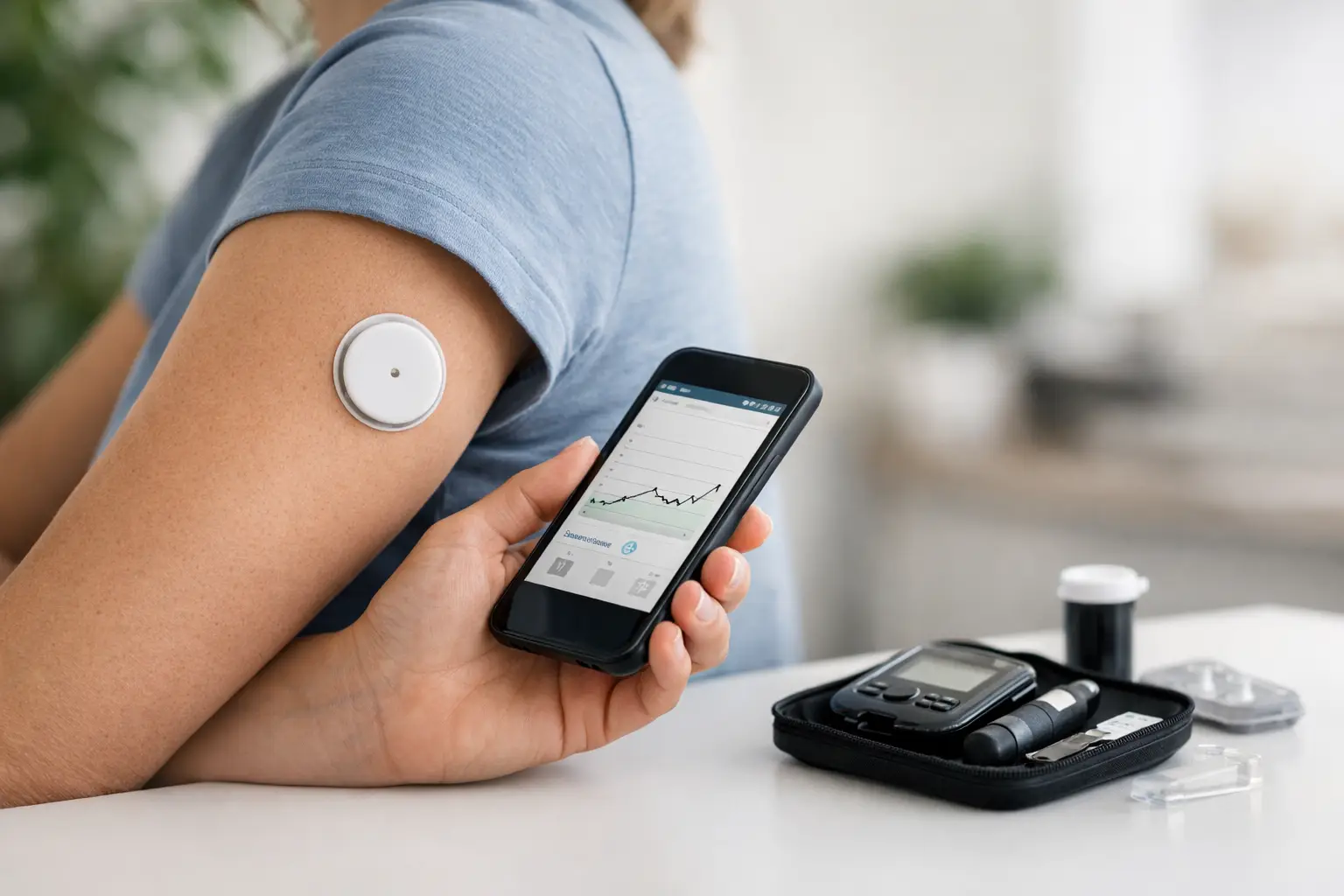
A fingerstick shows one moment. A continuous glucose monitor, or CGM, shows the pattern around it: what happens after breakfast, during a walk, overnight, or when you are sick. That broader view is why people look for a continuous glucose monitor review. But the best device is not necessarily the one with the most data. It is the one that gives you reliable information you can understand and use appropriately.
For people with diabetes, a CGM can be a valuable medical tool that supports day-to-day treatment decisions. For people without diabetes, it may offer interesting feedback about food, sleep, exercise, and stress, but it cannot diagnose a health problem or replace routine medical care. Here is a practical, evidence-informed way to assess your options.
What a Continuous Glucose Monitor Actually Measures
A CGM is a small sensor worn under the skin, usually on the back of the upper arm or abdomen. It measures glucose in interstitial fluid, the fluid between cells, rather than directly in a blood sample. A transmitter sends readings to a receiver, phone app, or insulin pump.
Most systems collect a reading every few minutes and display a graph instead of a single number. They also show whether glucose is rising, falling, or relatively stable. Depending on the system and its intended use, users may receive alerts when glucose is predicted to become too low or too high.
Because interstitial glucose changes slightly after blood glucose, readings can lag during rapid changes. This matters after meals, intense exercise, or when treating low blood sugar. If a reading does not match how you feel, follow the device instructions and consider confirming with a fingerstick meter, especially if you have diabetes or are about to make a treatment decision.
Continuous Glucose Monitor Review: What Matters Most
A useful review goes beyond asking whether a sensor works. FDA-cleared CGMs are tested for accuracy, but real-life convenience, insurance coverage, phone compatibility, and the type of support you need can matter just as much.
Accuracy and alerts
Accuracy is essential, particularly for people who use insulin or have a history of low blood sugar. Look for a system approved for your intended use and understand whether its readings can be used for insulin dosing without a routine confirmatory fingerstick. Your clinician can help interpret product-specific guidance.
Alerts are another major difference. Customizable low and high alerts may provide reassurance for some people, particularly overnight. Others find frequent notifications stressful or disruptive. Predictive alerts can be helpful, but no alert system eliminates the need to recognize symptoms and have a plan for treating hypoglycemia.
Wear time and comfort
Sensors are disposable and typically last from about 10 to 15 days, depending on the model. A longer wear time can mean fewer sensor changes, though comfort and skin tolerance are just as important.
Think realistically about your routine. Do you swim, play contact sports, sweat heavily, or sleep on your side? Adhesive can loosen with heat, exercise, and water exposure. Some users develop redness or itching from adhesives. If you have sensitive skin, ask a pharmacist or clinician about skin-prep options and stop using a product if you develop a significant reaction.
App experience and data sharing
A clear app can make CGM data much more useful. The best apps make it easy to see current glucose, trends, daily graphs, and patterns over time without requiring you to interpret a complicated dashboard.
Data sharing can be especially valuable for parents, caregivers, and diabetes care teams. Check whether the app works with your phone, whether it can share data with people you choose, and what happens if you lose internet or Bluetooth connectivity. If privacy is a concern, read the company’s data-sharing policy before creating an account.
Cost and coverage
Cost can be the deciding factor. For people with diabetes, coverage varies by insurance plan, diagnosis, medication use, and pharmacy benefit. Prior authorization may be required. A device that has a lower cash price may still cost more over a year if sensors must be replaced more often or are not covered by your plan.
For wellness-focused CGM programs, out-of-pocket costs may include sensors, a membership, app access, and optional coaching. Before subscribing, calculate the monthly total and ask what you will actually receive beyond the sensor data. Coaching can be useful, but it should not rely on exaggerated claims about “fixing” metabolism or preventing disease.
Integration with insulin delivery
Some CGMs connect with compatible insulin pumps to help automate insulin adjustments. This can be life-changing for eligible people with diabetes, but compatibility is specific. A pump and CGM cannot be assumed to work together simply because they are made by well-known brands. If automated insulin delivery is a goal, discuss the available combinations with your diabetes clinician.
Who May Benefit Most?
CGM use has strong clinical value for many people with type 1 diabetes and for many people with type 2 diabetes who use insulin. It can help reveal recurring highs and lows, support safer exercise and meal planning, and give clinicians better information when adjusting treatment.
People with gestational diabetes, recurrent hypoglycemia, or certain other health situations may also be candidates, depending on individual care plans. A clinician can help determine whether CGM use is appropriate and whether insurance criteria are likely to apply.
For adults without diabetes, the picture is less clear. A CGM can show that glucose responses differ from one person to another, even after the same meal. Yet a brief period of tracking cannot tell you that a particular food is inherently good or bad for you. Normal glucose also rises after eating. Overreacting to ordinary fluctuations can make eating unnecessarily restrictive or anxiety-provoking.
If your aim is better energy, weight management, or healthier meals, start with the basics that have broad evidence behind them: regular movement, adequate sleep, fiber-rich foods, enough protein, and balanced meals you can sustain. CGM data may be an optional learning tool, not a shortcut or a scorecard.
How to Use the Data Without Getting Misled
Patterns matter more than isolated readings. A higher-than-usual glucose response after one meal may reflect the meal itself, but it can also be influenced by sleep, stress, illness, alcohol, timing of exercise, or sensor variation. Try to look at repeated patterns under similar conditions.
It also helps to avoid making several major changes at once. If you want to see how breakfast affects you, keep the meal and timing reasonably consistent for a few days. Then test one practical adjustment, such as adding protein or fiber, taking a short walk afterward, or reducing a large portion of refined carbohydrates. This produces more useful information than chasing every rise on the graph.
For people with diabetes, CGM targets should be individualized. Time in range, rather than a single “perfect” reading, is often a more meaningful measure. Your care team can explain the targets that fit your age, health status, medications, and risk of low blood sugar.
Questions to Ask Before You Buy
Before choosing a system, make sure you can answer these questions:
- Is this device FDA-cleared for my intended use?
- Will my insurance cover the device and ongoing sensors, and what will I pay each month?
- Does it work with my phone, insulin pump, or preferred receiver?
- Do I need low-glucose alerts, data sharing, or automated insulin-delivery compatibility?
- How long does each sensor last, and what support is available if it fails early?
- Am I comfortable wearing an adhesive sensor continuously?
A clinician, certified diabetes care and education specialist, or pharmacist can often help clarify these points before you commit to a system.
The Bottom Line on Choosing a CGM
The most helpful CGM is the one that fits your medical needs, budget, technology comfort, and daily routine. For diabetes management, prioritize clinical accuracy, alert settings, professional guidance, and coverage. For general wellness, set a modest goal for what you hope to learn and be cautious of programs that turn normal glucose changes into a reason to fear food.
Used thoughtfully, CGM data can replace guesswork with useful context. Let it support sensible habits and informed conversations with your health care team, rather than letting a constantly changing number run your day.
Leave Feedback: Was this article helpful?