
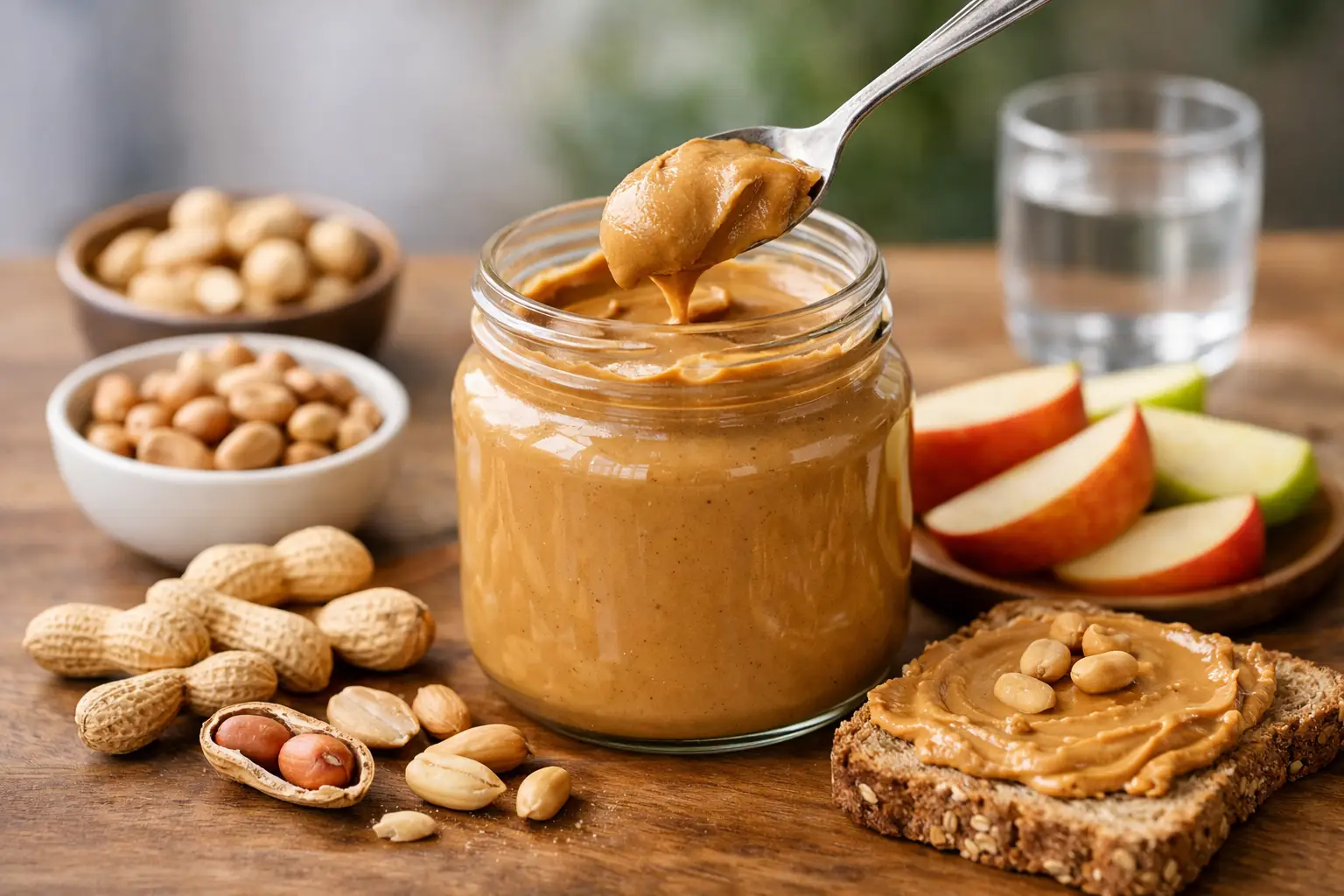
A spoonful of peanut butter can make oatmeal more filling, turn an apple into a satisfying snack, or rescue a rushed lunch. But it can also be surprisingly easy to eat several servings without realizing it. So, is peanut butter healthy? For most people, it can be a nutritious part of a balanced diet, especially when you choose a simple variety and pay attention to portion size.
Peanut butter is not a miracle food, and it is not automatically a problem for weight management. Its health effects depend on the product, the amount you eat, and what the rest of your eating pattern looks like.
Is peanut butter healthy for most people?
Yes. Peanut butter provides mostly unsaturated fats, along with plant protein, fiber, and several vitamins and minerals. Research on nuts and peanuts consistently links regular nut intake with better heart-health outcomes when they replace less nutritious foods, such as processed snacks high in refined carbohydrates or saturated fat.
Although peanuts are technically legumes rather than tree nuts, their nutritional profile is similar to nuts. The fats in peanut butter are primarily monounsaturated and polyunsaturated fats, the types generally encouraged in heart-healthy eating patterns. It also supplies magnesium, vitamin E, niacin, phosphorus, and potassium.
According to USDA nutrient data, a typical 2-tablespoon serving of regular peanut butter has about 190 calories, 7 to 8 grams of protein, roughly 16 grams of fat, and around 2 grams of fiber. Those numbers help explain why it is satisfying, but they also explain why the serving size matters.
The healthiest way to think about peanut butter is as a concentrated food. It delivers meaningful nutrition in a small amount, but a little can go a long way.
The potential health benefits of peanut butter
It may support heart health
Replacing foods high in saturated fat with foods containing unsaturated fats is one practical way to support heart health. Peanut butter can fit that role when it replaces, for example, butter on toast or candy as an afternoon snack.
It does still contain a small amount of saturated fat, so it is not necessary to eat large quantities for heart benefits. The American Heart Association emphasizes the bigger picture: choose unsaturated fats more often and limit saturated fat across the diet as a whole.
It can help meals and snacks feel more filling
Protein, fat, and fiber digest more slowly than refined carbohydrates alone. Pairing peanut butter with fruit, whole-grain toast, or plain yogurt may help you stay satisfied longer than eating a sugary snack by itself.
This can be useful for people trying to build a steadier eating routine. An apple with peanut butter, for instance, combines fiber-rich carbohydrate with protein and fat. It is not a special weight-loss formula, but it can be a more satisfying choice than a snack that leaves you hungry again 30 minutes later.
It provides useful plant-based protein
Peanut butter is not a complete substitute for all protein foods, but its 7 to 8 grams of protein per serving can contribute to daily needs. It is especially convenient for vegetarian or plant-forward meals, school lunches, and quick breakfasts.
Try it in a smoothie with milk or fortified soy milk, spread on whole-grain toast, or stirred into oatmeal. Combining it with other protein sources throughout the day helps create a more balanced intake.
It contains vitamins and minerals many diets lack
Peanut butter offers vitamin E, an antioxidant nutrient, plus magnesium, which supports normal muscle and nerve function. It also contains niacin, a B vitamin involved in turning food into energy.
These nutrients are helpful, but they should not be the sole reason to choose peanut butter. Fruits, vegetables, beans, whole grains, dairy foods or fortified alternatives, and other nuts and seeds all bring different nutritional strengths to the table.
The trade-offs: calories, added sugar, and sodium
Peanut butter is healthy for many people, but it is not a low-calorie food. Two tablespoons are about the size of a ping-pong ball, and a casual scoop can easily be double that amount. Four tablespoons may provide close to 400 calories before adding bread, crackers, or other foods.
That does not mean you need to measure every bite forever. But if you are trying to lose weight, maintain a calorie target, or understand why snacks are adding up, measuring a usual serving once or twice can be eye-opening. Use a tablespoon rather than eating straight from the jar when portion control is a concern.
The ingredient list matters, too. Many conventional peanut butters include added sugar, palm oil or other added oils, and salt. These products can still fit into a healthy diet, but they may not be your best everyday option if you are watching sodium or added sugars.
A natural peanut butter made with peanuts and salt, or simply peanuts, is often a straightforward choice. Oil separation is normal in products without added stabilizers. Stirring the jar and storing it according to the label directions can help keep the texture manageable.
How to choose a healthier peanut butter
The front label can be confusing. Terms such as “natural,” “no stir,” and “reduced fat” do not automatically tell you which jar is best. Check the Nutrition Facts label and ingredients instead.
When comparing options, look for these practical signs:
- Peanuts are the first ingredient, ideally with few additional ingredients.
- Added sugar is low or absent if you do not prefer a sweetened spread.
- Sodium fits your overall eating pattern, particularly if you have high blood pressure.
- The serving size is realistic for how you plan to use it.
Reduced-fat peanut butter is not always the healthier choice. Removing fat can make the product less satisfying, and some varieties add sugar or other ingredients to improve flavor and texture. Because peanut butter’s unsaturated fats are one of its advantages, a regular peanut butter in a moderate portion is often the more satisfying option.
Powdered peanut butter can be useful when you want peanut flavor with fewer calories, such as in a smoothie or sauce. Still, it has less fat and may not keep you full as long as regular peanut butter. Neither option is universally better.
Can peanut butter fit a weight-loss plan?
It can. Weight loss depends largely on maintaining an overall calorie deficit while meeting nutritional needs, not on banning specific foods. Peanut butter may help some people stick with a plan because it makes meals taste better and reduces the urge to snack later.
For others, it is a trigger food that is hard to portion. If you routinely eat several spoonfuls while standing at the counter, it may be smarter to buy single-serving packets, pre-portion it into a small dish, or choose another snack that feels easier to manage.
Context matters. Two tablespoons of peanut butter on whole-grain toast with fruit can be a balanced breakfast component. The same amount added to a large dessert smoothie with sweetened yogurt, syrup, and chocolate chips has a different role in your daily intake.
Who should limit or avoid it?
People with a peanut allergy should avoid peanut butter completely and follow their clinician’s guidance about preventing exposure. Peanut allergy can cause severe reactions, so this is not a situation for self-testing or experimentation.
People with chronic kidney disease may need individualized advice about potassium, phosphorus, protein, or calories depending on their stage of disease and treatment plan. Those following a medically prescribed eating plan should check with their healthcare professional or registered dietitian.
If you have diabetes, peanut butter can be a sensible choice because it is relatively low in carbohydrates and can make carbohydrate-containing foods more filling. However, sweetened varieties and oversized portions can still work against blood sugar or weight goals. Pair it with high-fiber foods and keep the serving reasonable.
Easy ways to use peanut butter well
Peanut butter works best when it adds staying power to foods that already offer nutrition. Spread it on whole-grain toast and top with sliced banana. Dip apple slices or celery in it. Stir a tablespoon into oatmeal, or use it in a simple sauce with ginger, garlic, and a small amount of soy sauce for vegetables and chicken or tofu.
It can also be a helpful backup meal ingredient. A peanut butter and banana sandwich on whole-grain bread is not fancy, but it provides carbohydrate, fat, protein, and fiber when time is short.
The goal is not to make peanut butter look healthier than it is. Choose a jar with a simple ingredient list, enjoy a portion that fits your needs, and use it to make nourishing foods more satisfying. That approach is usually more useful than treating any single food as either perfectly healthy or completely off-limits.
Leave Feedback: Was this article helpful?