
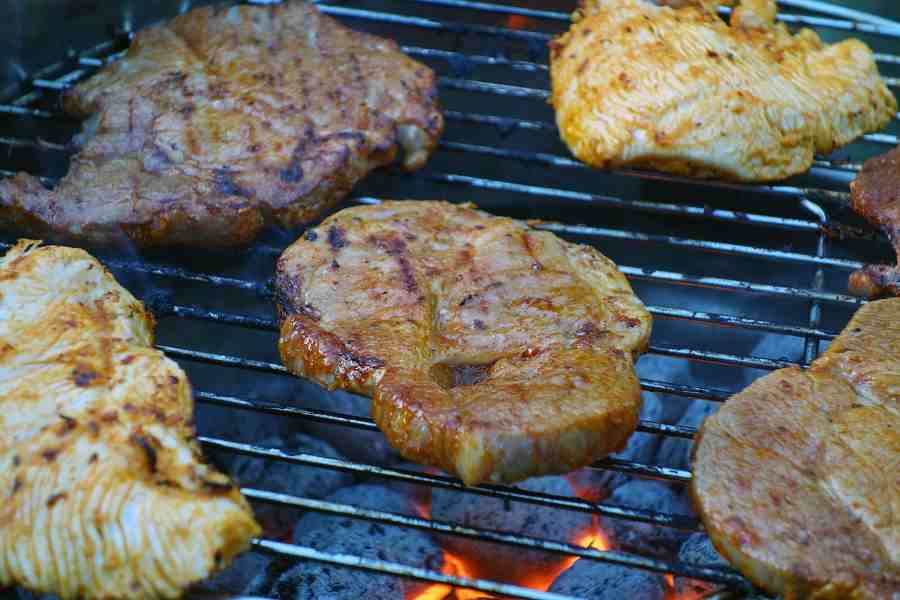
At a party or weekend cookout, very few things beat a properly cooked steak with a good crust, a juicy center and a few well-seasoned sides.
That part is easy.
The slightly trickier part is this: pellet grills do not cook steak exactly like a stovetop pan, a gas grill or cast iron over screaming-high heat.
They can make a fantastic steak, but the timing depends on the thickness of the cut, the grill temperature, the method you use and, most importantly, the internal temperature you want to finish at.
In other words, there is no single magic number that works for every steak. Still, there are some very useful guidelines.
How to Cook Your Steak With Desired Doneness
Before the steak ever hits the pellet grill, you need to know how done you want it.
That matters more than almost anything else, because the best way to cook a rare steak is not the same as the best way to cook a medium-well one.
From the FoodSafety.gov safe minimum temperature chart, steaks, chops and roasts of beef, pork, veal and lamb are considered safe at 145°F with a 3-minute rest.
That said, a lot of steak lovers still prefer lower final temperatures for texture and juiciness. As Traeger’s steak doneness guide notes, medium-rare usually lands around 130°F to 135°F and is widely preferred for flavor and tenderness.
The biggest difference between the levels of doneness is simply internal temperature. That is why a meat thermometer matters a lot more than guesswork.
Blue-Rare
Blue-rare steak is seared very lightly on the outside and left essentially raw and cool in the center, usually around 115°F or below.
Traeger lists black and blue at 115°F and below.
This style is not for everyone, and it also sits well below the USDA’s recommended safe temperature for whole cuts of beef.
Rare
Rare steak generally lands around 120°F to 125°F. The outside is seared, while the middle stays red and cool to warm.
Based on Traeger’s doneness chart, this is the point where you are still very much tasting the steak in its most lightly cooked form.
Medium-Rare
Medium-rare usually finishes around 130°F to 135°F.
This is the doneness many chefs and grillers prefer because it balances a good sear with a juicy, tender center.
A classic Journal of Animal Science study found that consumers gave some of the highest ratings for flavor, tenderness, juiciness and overall acceptance to steaks cooked rare to medium-rare.
Not surprisingly, this is also the doneness that most people are thinking of when they say they want a steak that is “perfect.”
Medium
Medium steak typically lands around 140°F to 145°F. As Traeger notes, this level still has some pink in the center, but much less than medium-rare.
This is also the point where your final temperature starts overlapping with the USDA’s 145°F guidance for steak safety.
Medium-Well
Medium-well steak usually falls around 150°F to 155°F.
There may be just a little pink left in the middle, but most of the interior is cooked through. You also start giving up more moisture at this stage, which is why the steak gets firmer.
Well-Done
Well-done steak generally reaches 160°F to 165°F.
At this point, there is little to no pink left and much less moisture than the lower doneness levels.
That does not make it “wrong” if it is your preference. It just means your margin for drying it out gets a lot smaller, which is why thermometer-based cooking matters even more here.
How Long Does Steak Take on a Pellet Grill?
This is where the “it depends” part really kicks in.
Thickness matters more than people want it to. A 1-inch steak and a 2-inch steak are not even having the same conversation.
The same goes for whether you are cooking over direct high heat or using a reverse-sear method.
One of the better practical references comes from Traeger’s steak doneness and timing guide, which gives these approximate per-side times for a 1-inch steak at 400°F:
- Rare: about 2½ minutes per side
- Medium-Rare: about 3½ minutes per side
- Medium: about 4½ minutes per side
- Medium-Well: about 5½ minutes per side
- Well-Done: about 6½ minutes per side
That is a useful starting point, but not a promise.
Pellet grills vary. Weather varies. Steak thickness varies. Your best bet is still to use those numbers as a rough map and your thermometer as the final authority.
Minutes are helpful. Internal temperature is what actually tells you the truth.
Cooking Time with Pellet Grill Temperature at 500°F
When your pellet grill can get up around 450°F to 500°F, steaks cook fast.
As Traeger’s guide shows, rare to medium-rare steaks can be in the neighborhood of roughly 3 to 7 minutes per side at 450°F, depending on your target doneness.
This is a great range for a fast sear, but it is also the range where it gets very easy to overshoot by “just one more minute.”
Cooking Time with Pellet Grill Temperature at 400°F
At 400°F, timing is a little easier to control, and the Traeger 400°F chart is a very handy benchmark for 1-inch steaks.
Think roughly 5 minutes total for rare, 7 minutes total for medium-rare, 9 minutes total for medium, 11 minutes total for medium-well and 13 minutes total for well-done.
Again, that is total grill time for a typical 1-inch steak, not a universal rule for every cut you will ever buy.
Cooking Time with Pellet Grill Temperature at 350°F
At 350°F, steaks will take a bit longer and usually brown more gently.
Pit Boss cooking guidance lists many 1-inch beef steaks in the range of about 8 to 10 minutes total over direct medium heat, though the company also notes that times vary with weather, location and your desired doneness.
That is the real theme with pellet-grill steak cooking: close enough to guide you, but never close enough to replace a thermometer.
Different Methods to Cook Steaks on the Pellet Grill
There are two main ways to cook steak on a pellet grill: traditional sear and reverse sear.
Both can work very well. The better choice mostly depends on the thickness of the steak and the kind of result you want.
For thinner steaks, traditional searing is often easier and more practical. For thicker steaks, reverse searing is usually the better move.
Reverse Sear
Reverse sear is a favorite for a reason. It gives thick steaks more time to cook evenly and pick up smoky flavor before you finish them over higher heat.
As Traeger’s reverse-sear method explains, the basic process looks like this:
- Season the steak generously with salt and pepper.
- Set the pellet grill to about 225°F.
- Place the steak on the grill and cook low and slow.
- For a thick steak, this may take about 45 to 60 minutes.
- Remove the steak, then raise the grill to its hottest setting.
- Sear the steak until it reaches your final target temperature.
For medium-rare, Traeger says to finish at about 125°F during the sear, which will typically rise a bit more as the steak rests.
Many cooks also use the rule of pulling the steak from the low-temp phase when it is about 10°F to 15°F below the final target.
A 2022 Foods study also suggested that reverse searing can improve some quality traits, including flavor-related compounds and tenderness characteristics, compared with more conventional searing approaches.
This is the method to use when you want a thick steak that is evenly pink edge to edge with a good crust at the end. It takes longer, but it is often worth it.
Traditional Sear
Traditional searing is faster and simpler. It is also a very good option when you are working with thinner steaks that do not need a long low-temperature phase.
- Preheat the pellet grill to about 400°F to 450°F.
- Season the steak just before cooking.
- Place it on the grill and flip once.
- Cook until the center reaches your desired doneness.
From Traeger’s 400°F timing chart, a 1-inch steak for medium-rare lands around 3½ minutes per side, while medium is closer to 4½ minutes per side.
This method is great when you want dinner quickly and do not feel like turning the cook into a full afternoon project.
Time Required to Cook Pork Steak
Pork steak is a different story and should not be treated like beef steak in terms of doneness targets.
From the FoodSafety.gov temperature chart and the National Pork Board, fresh pork steaks, chops and roasts should be cooked to 145°F and then rested for 3 minutes.
That means medium-rare style guidance does not really apply the same way here. Pork can still be juicy at 145°F, but it should not be pulled like a rare beef steak.
You can read also:
- How to Tell if A Sausage is Cooked
- Cooking Frozen Chicken on the Grill
- How Long Should You Boil Carrots
- How Long to Cook Pizza Rolls in Microwave
In Conclusion
Pellet grills can make excellent steak, but there is no single perfect cooking time that works for every cut.
Thickness, grill temperature, weather, steak starting temperature and your preferred doneness all matter.
- Pick your doneness before you start.
- Preheat the pellet grill properly.
- Use traditional searing for thinner steaks and reverse searing for thicker ones.
- Cook by internal temperature, not by hope.
- Let the steak rest before cutting into it.
For many people, medium-rare to medium is the sweet spot for flavor and texture.
From the Journal of Animal Science research, those lower-to-middle doneness levels also tend to score best with consumers for juiciness and tenderness.
And one last thing that deserves repeating: get a good instant-read thermometer. It is easily the most useful tool you can own for steak.
It saves guesswork, saves expensive meat and saves you from pretending that poking the steak with your finger is a science.
Leave Feedback: Was this article helpful?