
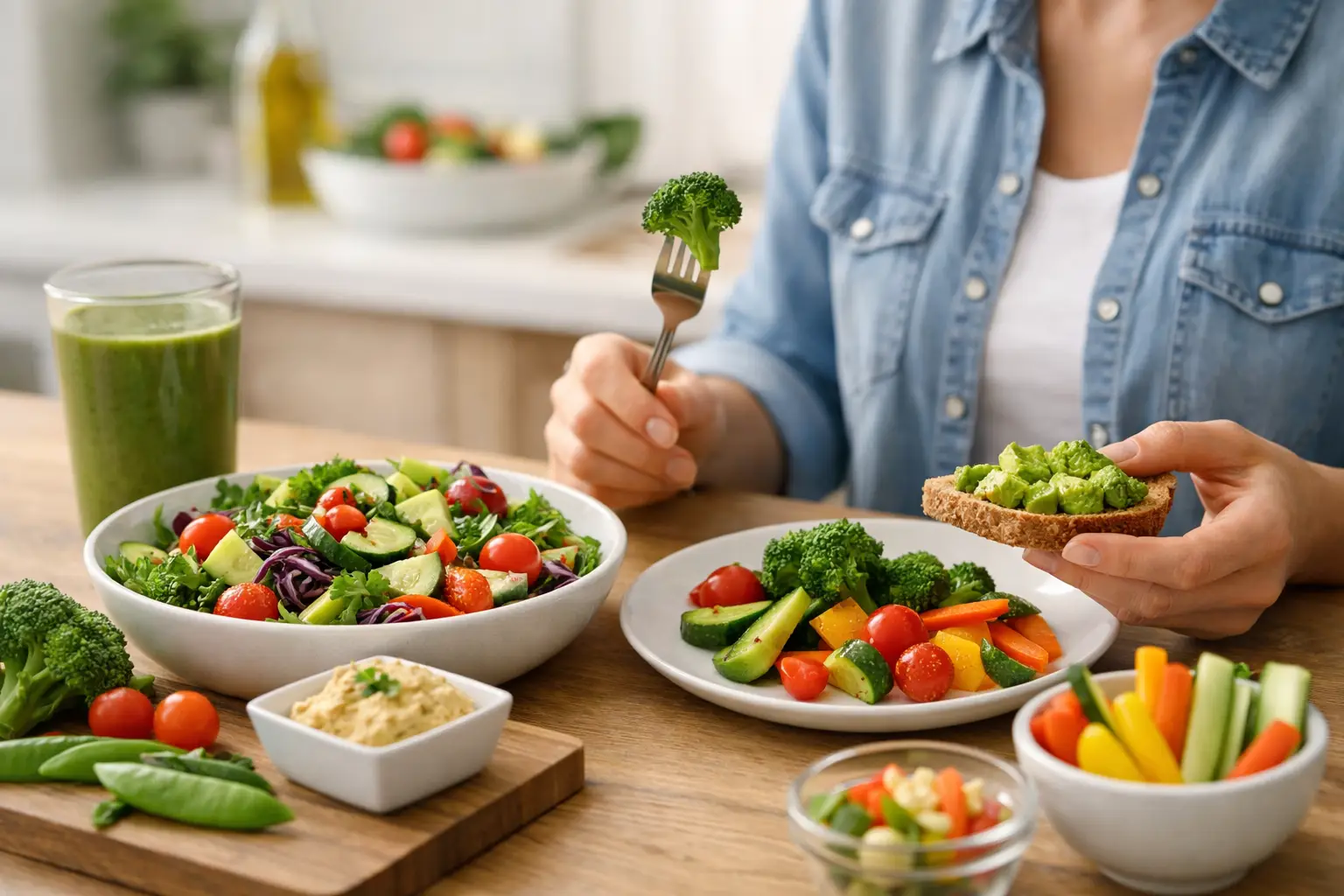
A bag of spinach that wilts in the refrigerator is not a motivation problem. More often, it is a planning problem: the vegetables were not chosen for the meals, time, budget, or cooking skills you actually have that week. Learning how to eat more vegetables is less about suddenly loving kale salads and more about making vegetables easy to use, enjoyable to eat, and reliably available.
Vegetables provide fiber, potassium, folate, vitamin C, and many other nutrients that support overall health. Eating a variety is associated with better diet quality and may help support heart health, digestive health, and healthy weight management. The Dietary Guidelines for Americans recommend that adults eat plenty of vegetables, yet many people fall short.
The good news is that every vegetable does not need to be fresh, raw, or prepared from scratch. A realistic approach is far more likely to stick.
Start with the vegetables you already tolerate
You do not need to begin with the vegetable you think you should like. If broccoli, carrots, bell peppers, green beans, corn, roasted cauliflower, or salad greens are acceptable to you, start there. Repetition builds familiarity, and familiarity can make new foods feel less intimidating over time.
Think about the form you enjoy, too. Some people dislike steamed vegetables but enjoy them roasted until browned and crisp at the edges. Others find raw carrots boring but like them with hummus, yogurt-based dip, or guacamole. Texture, temperature, seasoning, and preparation method can matter as much as the vegetable itself.
Rather than setting a vague goal to “eat healthier,” choose one small, measurable change. Add a handful of spinach to eggs twice this week, include a vegetable at lunch, or serve a frozen vegetable with three dinners. Small goals create evidence that the habit can fit your life.
How to eat more vegetables by changing the default
The easiest food to eat is usually the one that is already washed, visible, and ready when hunger hits. Make vegetables the convenient option rather than the ambitious option.
Keep a few low-prep choices on hand, such as baby carrots, snap peas, cherry tomatoes, prewashed salad kits, and microwave-ready frozen vegetables. Canned vegetables can work well, too. Choose lower-sodium options when possible, or rinse regular canned vegetables to reduce some of the sodium.
Frozen vegetables are especially useful for people who cook for one, have unpredictable schedules, or are trying to reduce food waste. They are typically frozen soon after harvesting and can be a nutritious, budget-friendly choice. Fresh produce is excellent, but it is not automatically better if half of it goes unused.
At the grocery store, shop with specific meals in mind. Instead of buying a broad assortment of produce with no plan, decide what each item is for. For example, buy peppers and onions for fajitas, broccoli for a sheet-pan dinner, salad greens for lunch, and frozen peas for pasta. This gives each vegetable a job before it enters your refrigerator.
Build vegetables into meals you already eat
You do not need to replace every favorite food with a vegetable-heavy version. Start by adding vegetables to familiar meals while keeping the parts that make the meal satisfying.
Upgrade breakfast and lunch
Breakfast can be a practical place to add vegetables because the amounts can be small. Fold spinach, mushrooms, tomatoes, or leftover roasted vegetables into eggs. Add grated zucchini to a savory oatmeal bowl, or pair a breakfast sandwich with sliced tomatoes and fruit.
For lunch, soups, grain bowls, sandwiches, wraps, and leftovers offer easy opportunities. Add a handful of arugula to a sandwich, choose a vegetable-based soup alongside a half sandwich, or bulk up leftover rice with frozen mixed vegetables and a protein source. If you regularly buy lunch, look for an extra vegetable side or ask for more vegetables in a bowl, salad, or burrito.
Make dinner formulas work harder
At dinner, aim to make vegetables a clear part of the plate rather than an afterthought. You do not need to measure precisely at every meal, but a helpful visual is to fill roughly half of your plate with vegetables and fruit when practical, then include protein and a satisfying carbohydrate source.
Reliable meal formulas make this easier:
- Stir-fries with frozen vegetables, protein, rice, and a flavorful sauce.
- Sheet-pan meals with chicken, fish, tofu, or beans plus vegetables and potatoes.
- Pasta with sautéed mushrooms, spinach, zucchini, peas, tomatoes, or broccoli.
- Tacos, quesadillas, and bowls with beans, salsa, peppers, onions, cabbage slaw, or roasted squash.
These meals work because vegetables are integrated into the main dish, not presented as a separate obligation. They can also be adjusted for your preferences. If raw salad leaves you hungry, a warm grain bowl with roasted vegetables and chicken may be more filling. If cooking after work feels unrealistic, frozen vegetables and a bottled sauce can be a smart shortcut.
Give vegetables enough flavor and fat
Plain, overcooked vegetables have convinced many people they dislike foods they might actually enjoy. Roasting, sautéing, grilling, air-frying, and quick stir-frying often create more flavor than boiling or steaming alone.
A little fat also helps. Olive oil, avocado, nuts, seeds, cheese, and dressings can make vegetables more satisfying and can help the body absorb fat-soluble nutrients found in foods such as carrots, spinach, and sweet potatoes. The goal is not to make every vegetable dish low-calorie at all costs. It is to create meals you want to eat consistently.
Try simple flavor combinations: broccoli with garlic and lemon, carrots with cumin and a touch of honey, green beans with toasted almonds, or roasted cauliflower with paprika and Parmesan. Sauces count, too. Salsa, pesto, marinara, tahini, peanut sauce, and yogurt-based dressings can turn a plain vegetable into a meal component you look forward to.
Use “vegetable boosters” for busy weeks
A vegetable booster is an ingredient you can add to several meals without much extra effort. Keep one or two prepared options ready rather than trying to prep an entire week of complicated recipes.
Roasted vegetables keep well for several days and can be added to wraps, salads, eggs, pasta, or grain bowls. A container of chopped onions and peppers can speed up tacos, omelets, and stir-fries. Even one bag of frozen spinach is versatile: add it to soup, pasta sauce, scrambled eggs, or a smoothie.
Be realistic about prep. If washing and chopping vegetables on Sunday makes you feel organized, do it. If it becomes another task you avoid, buy pre-cut produce or use frozen options. Healthy habits should reduce friction, not create more of it.
Increase fiber gradually if your body needs time
If your current diet is low in vegetables, suddenly eating large amounts of beans, cruciferous vegetables, and raw salads may cause gas, bloating, or changes in bowel habits. That does not mean vegetables are bad for you. It may simply mean your digestive system needs time to adjust to more fiber.
Increase portions gradually, drink enough fluids, and vary your choices. Cooked vegetables may be easier to tolerate than raw ones for some people. People with conditions such as irritable bowel syndrome, inflammatory bowel disease, or a history of digestive surgery may need individualized guidance from a registered dietitian or health care professional, especially during symptom flares.
Make progress visible, not perfect
A useful target is to include a vegetable in at least one meal each day, then build from there. Track success by actions you can control: Did you add vegetables to dinner? Did you bring a vegetable-based snack? Did you use the frozen broccoli before ordering takeout?
Missing a day does not erase the habit. The next meal is another chance to add something simple, whether that is lettuce on a sandwich, a side of green beans, or a handful of peppers in a skillet. The most effective way to eat more vegetables is the one you can repeat on your busiest, least motivated days – and that is a habit worth building.
Leave Feedback: Was this article helpful?