
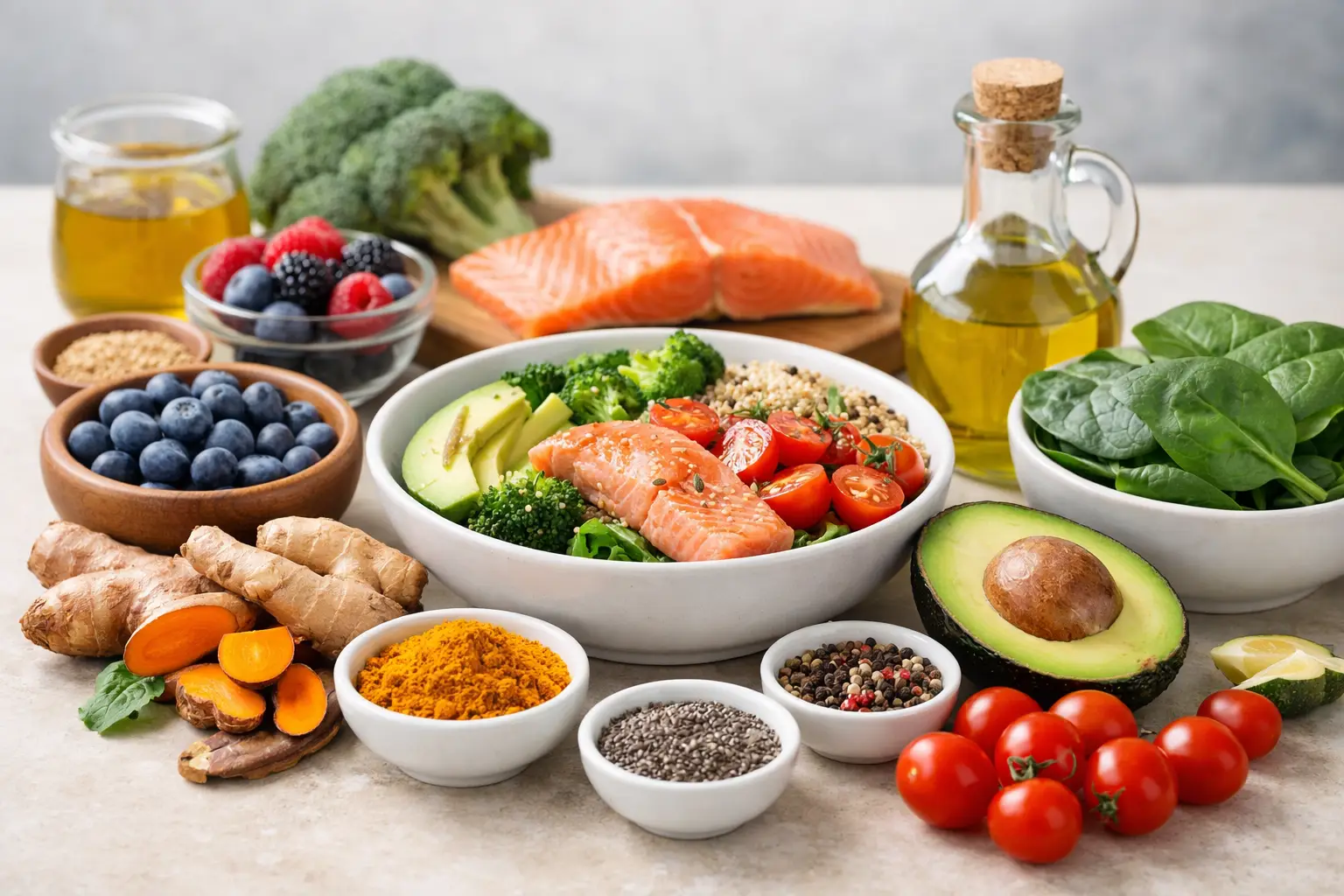
A pantry overhaul is not required to eat in a way that supports lower inflammation. For most people, an anti inflammatory foods guide is less about buying exotic ingredients and more about choosing familiar foods more often, preparing them simply, and being consistent enough for those choices to matter.
Inflammation is not always a problem. It is part of your body’s normal defense system, helping you heal after an injury or fight off infection. The concern is chronic, low-grade inflammation, which can be linked with conditions such as heart disease, type 2 diabetes, obesity, and some autoimmune disorders. Food is only one part of the picture, but it is a practical place to start because you make eating decisions every day.
What an anti inflammatory foods guide should actually help you do
The most useful advice is not a long list of “superfoods.” It is a realistic eating pattern you can repeat. Research consistently points toward a diet built around vegetables, fruit, whole grains, beans, nuts, seeds, seafood, and healthy fats, especially olive oil. This pattern is often associated with lower inflammatory markers and better long-term health outcomes.
That does not mean one meal can “fight inflammation” overnight. It means your overall pattern matters. If most of your meals are based on minimally processed, nutrient-dense foods, you are likely giving your body more fiber, antioxidants, and unsaturated fats, while cutting back on excess added sugar, refined carbs, and heavily processed foods.
Foods to eat more often
Vegetables are one of the strongest foundations of an anti-inflammatory eating pattern. Leafy greens, broccoli, Brussels sprouts, tomatoes, bell peppers, carrots, and cauliflower all bring different vitamins, minerals, and plant compounds to the table. Variety matters because different colors often signal different protective compounds. If you tend to buy the same two vegetables each week, expanding that rotation is a smart first step.
Fruit also belongs here, despite the confusion that often shows up online. Berries are especially well studied for their polyphenols, but apples, cherries, oranges, grapes, and pomegranate can all fit. Whole fruit is generally the better choice over juice because it offers fiber and has less impact on blood sugar.
Beans and lentils deserve more credit than they usually get. They are rich in fiber and plant-based nutrients, and they can help replace more processed convenience foods. If you do not tolerate large portions well at first, start small and increase gradually.
Whole grains can also play a role, especially when they replace refined grains. Oats, brown rice, quinoa, barley, and whole wheat foods are better options than heavily refined white bread, pastries, or sugary cereals. This is not because grains are magical, but because fiber and slower digestion support steadier blood sugar and better overall diet quality.
Fat matters too. Extra virgin olive oil is one of the most researched fats in anti-inflammatory eating patterns. Nuts, seeds, avocado, and fatty fish such as salmon, sardines, trout, and mackerel are also worth including. Fatty fish stand out because they provide omega-3 fats, which are linked with anti-inflammatory effects.
Herbs, spices, coffee, tea, and even dark chocolate can contribute useful plant compounds as well. Turmeric, ginger, cinnamon, garlic, and green tea often get attention for good reason, though they work best as part of an overall diet rather than as cure-alls.
Foods to limit, not fear
Most readers do better with a “more and less” mindset than a forbidden-food list. In general, the foods most often associated with a more inflammatory dietary pattern are highly processed foods rich in refined starches, added sugars, trans fats, and excess sodium.
That includes sugary drinks, candy, many packaged desserts, fast food, fried foods, and heavily processed meats like bacon, sausage, and deli meat. It can also include ultra-processed snack foods that are easy to overeat and offer very little fiber or nutritional value.
Red meat is a little more nuanced. It does not need to disappear from every diet, but portion size and frequency matter. Leaner cuts in moderate amounts are different from large, frequent servings of processed or heavily charred meats. Context matters too. A small portion of steak with roasted vegetables and beans is not the same as a fast-food meal built around fries, soda, and a processed burger.
The anti inflammatory foods guide most people can follow
If this still feels abstract, think in meal templates instead of rules. Build meals around a source of produce, a quality protein, a high-fiber carb, and a healthy fat. That basic structure makes everyday choices easier.
For breakfast, oatmeal with berries, chia seeds, and walnuts works well. Greek yogurt with fruit and pumpkin seeds is another practical option if you tolerate dairy. Eggs with spinach and whole grain toast can also fit.
For lunch, a grain bowl with greens, quinoa, roasted vegetables, chickpeas, and olive oil dressing checks many boxes. So does a turkey and avocado sandwich on whole grain bread with fruit on the side, especially if you keep processed meats to a minimum.
Dinner can be simple. Salmon with brown rice and broccoli is a strong example. So is lentil soup with a side salad and olive oil vinaigrette. A stir-fry with tofu or chicken, mixed vegetables, and a whole grain can work just as well, depending on the ingredients and sodium content.
Snacks do not have to be perfect. An apple with peanut butter, carrots with hummus, a handful of nuts, or plain yogurt with cinnamon are realistic choices that support the bigger pattern.
What about dairy, gluten, and nightshades?
This is where online advice often gets ahead of the evidence. Some people feel better limiting certain foods, but that does not mean everyone needs to remove them.
Dairy is a good example. For some people, especially those with lactose intolerance or specific sensitivities, it may cause digestive symptoms. For others, plain yogurt and kefir can be useful additions that provide protein and beneficial bacteria. The right answer depends on your tolerance and your overall diet.
Gluten is similar. If you have celiac disease or a medically confirmed gluten sensitivity, avoiding gluten is essential. If not, there is no strong reason to assume gluten is inflammatory for everyone. In many cases, people feel better on a gluten-free diet because they end up cutting back on ultra-processed foods, not because gluten itself was the issue.
Nightshade vegetables like tomatoes, peppers, eggplant, and potatoes are often blamed too. Some individuals with specific conditions may notice symptom changes, but most people do not need to avoid them. These foods can be part of a healthy, nutrient-rich pattern.
Small habits that make this easier
The biggest barrier is usually not knowledge. It is daily life. You are more likely to eat anti-inflammatory meals when the ingredients are visible, convenient, and already prepared.
Keeping frozen vegetables, canned beans, plain oats, olive oil, nuts, and fruit on hand can make a major difference. Frozen berries and vegetables are often just as nutritious as fresh and are less likely to go to waste. Canned beans and fish can save time, though it helps to choose lower-sodium options when possible.
Meal prep does not need to mean cooking seven complete meals on Sunday. It can be as simple as washing greens, roasting a tray of vegetables, cooking a pot of grains, or pre-portioning snack options. Those small moves reduce the chance that convenience foods take over when you are tired.
It also helps to look at the whole lifestyle picture. Poor sleep, chronic stress, smoking, and inactivity can all contribute to inflammation. Food matters, but it works best alongside regular movement, adequate sleep, and sustainable stress management.
When results may vary
An anti-inflammatory eating pattern can support overall health, but it is not a treatment plan for every condition. If you have inflammatory bowel disease, rheumatoid arthritis, diabetes, kidney disease, or another medical condition, your ideal diet may need more tailoring. Some high-fiber foods help many people, but they can aggravate symptoms for others during a flare or during certain treatments.
Weight changes can also influence inflammation. For people carrying excess body fat, gradual weight loss may help reduce inflammatory markers. Still, aggressive dieting, skipping meals, or following overly restrictive plans often backfires. A steadier approach is usually more realistic and healthier.
If you want a reliable place to begin, start with one meal a day. Upgrade breakfast, or make dinner more vegetable-forward, or swap sugary drinks for water and unsweetened tea. Those choices sound small, but repeated daily, they can shift your health in a meaningful direction.
The best anti-inflammatory diet is usually not the strictest one. It is the one you can keep eating next month, not just this week.
Leave Feedback: Was this article helpful?