
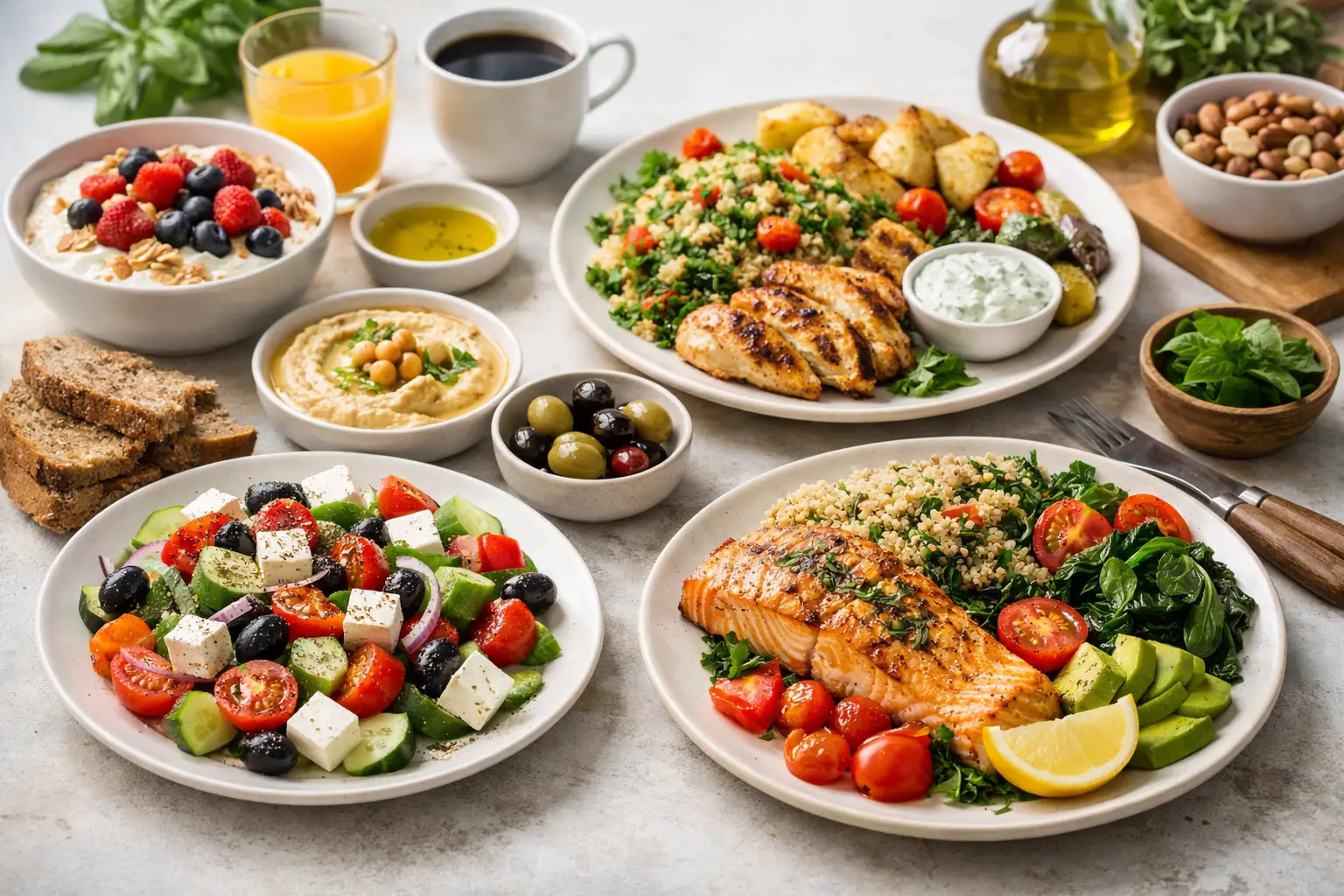
Most people do not need a complicated meal plan to eat Mediterranean-style. What they usually need is one clear Mediterranean diet meal example they can picture, shop for, and repeat. Once you see how a full day can look on your plate, this eating pattern feels much more practical and a lot less abstract.
The Mediterranean diet is not a strict menu with one correct breakfast, lunch, and dinner. It is a pattern built around vegetables, fruit, beans, whole grains, nuts, seeds, olive oil, herbs, and regular seafood, with moderate amounts of dairy and poultry. Red meat, heavily processed foods, and added sugar tend to play a smaller role. That flexibility is part of why it has stayed relevant for so long and why research often links it with heart health, metabolic health, and long-term wellness.
A Mediterranean diet meal example for one full day
A simple day might start with plain Greek yogurt topped with berries, walnuts, chia seeds, and a small drizzle of honey. On the side, you could have one slice of whole grain toast with a little avocado or olive oil. This kind of breakfast works because it combines protein, fiber, and healthy fats, which can help with fullness and steadier energy.
For lunch, think of a grain bowl rather than a diet plate. A solid option is cooked quinoa or farro with chopped cucumbers, tomatoes, leafy greens, chickpeas, olives, and grilled chicken or salmon. Dress it with olive oil, lemon juice, garlic, and herbs like oregano or parsley. Add a piece of fruit if you want something sweet afterward.
An afternoon snack could be apple slices with almond butter, or raw vegetables with hummus. If you are trying to keep meals simple, this is where Mediterranean eating helps. Snacks do not need to be trendy. They just need to be minimally processed and satisfying enough to keep you from showing up to dinner overly hungry.
Dinner might be baked salmon with roasted zucchini, eggplant, onions, and bell peppers tossed in olive oil, plus a side of brown rice or a small serving of roasted potatoes. If fish is not your thing, lentil soup with a side salad and whole grain bread also fits very well.
That full day is balanced, but it is not magical. The strength of the pattern comes from consistency, food quality, and overall habits, not from one perfect menu.
Why this Mediterranean diet meal example works
At first glance, this way of eating can look like common-sense healthy food. In many ways, that is exactly the point. It leans on foods with strong nutrition value rather than highly engineered diet products.
The vegetables, beans, fruit, and whole grains provide fiber, which supports digestion and may help with cholesterol control, blood sugar management, and satiety. Olive oil, nuts, seeds, and fish contribute unsaturated fats, which are generally favored over saturated fats for heart health. Greek yogurt, beans, chicken, fish, and lentils add protein, making meals more filling and easier to build around.
Another reason this pattern works for many adults is that it is realistic. You can make it at home, order parts of it at a restaurant, and adapt it to your budget. It is also less all-or-nothing than many trendy diets. That matters, because eating habits tend to last longer when they fit regular life.
What a Mediterranean plate usually looks like
If you are not sure how to build meals without overthinking them, focus on proportions. A large share of the plate is usually vegetables. Then add a source of protein, such as beans, lentils, fish, chicken, yogurt, or eggs, and include a high-fiber carbohydrate like whole grains, fruit, or starchy vegetables. Olive oil often serves as the main added fat.
This does not mean every meal must be perfectly balanced. Some breakfasts will be lighter on vegetables. Some dinners will be heavier on grains or beans. The goal is not precision. The goal is a repeated pattern built around mostly whole, nutrient-dense foods.
Easy ways to build your own meals
Once you understand the framework, creating your own menu gets easier. Breakfast can be oatmeal with fruit and nuts, eggs with sautéed spinach and tomatoes, or yogurt with seeds and fruit. Lunch might be leftover grilled vegetables with hummus in a whole grain wrap, a bean salad with olive oil dressing, or soup with a side salad.
Dinner is often where people think the Mediterranean diet becomes expensive or time-consuming, but it does not have to. A pot of lentils, roasted vegetables, and brown rice can cover several meals. Canned tuna or salmon can work when fresh fish is not practical. Frozen vegetables are also a useful option and can be just as nutritious as fresh in many cases.
The most helpful shift is often moving away from the idea that every meal needs a large portion of meat as the center. In Mediterranean eating, plants do much more of the heavy lifting.
A few smart swaps
Small substitutions can move your routine closer to this pattern without requiring a full kitchen overhaul. Use olive oil-based dressings instead of creamy bottled dressings. Choose fruit and nuts over pastries or chips more often. Replace refined grains with oats, quinoa, brown rice, or whole grain bread when possible. Try beans or lentils in a few meals each week instead of always relying on red meat.
These changes are not about perfection. If your current eating style is far from Mediterranean, even a few consistent upgrades can make a meaningful difference over time.
Where people get it wrong
One common mistake is assuming Mediterranean eating means unlimited olive oil, nuts, cheese, and bread. These foods can absolutely fit, but calories still count if weight loss is one of your goals. Healthy fats are beneficial, yet they are also energy-dense. Portion awareness still matters.
Another mistake is turning the Mediterranean diet into a charcuterie board. Olives, cheese, crackers, and wine may look Mediterranean-inspired, but that is not the same as a day built around vegetables, legumes, seafood, whole grains, and fruit. The core pattern is plant-forward and nutrient-dense, not just rustic-looking.
It is also easy to overlook protein. Some people cut back on meat but do not add enough beans, fish, yogurt, eggs, tofu, or lentils. Then meals feel less satisfying, which can lead to grazing later on.
Can this help with weight loss?
It can, but it depends on how the meals are built. The Mediterranean diet is not automatically low-calorie. A balanced bowl with beans, vegetables, chicken, and olive oil can support weight management because it is filling and nutrient-rich. But oversized portions of oil, nuts, cheese, bread, and dessert can still push calories higher than needed.
For many people, this eating pattern helps with weight loss because it encourages fuller, less processed meals that are easier to stick with. Fiber and protein can help manage hunger, and the emphasis on whole foods may reduce mindless snacking. Still, results vary based on portion sizes, activity level, sleep, age, and overall habits.
How to make it affordable and realistic
You do not need specialty ingredients to eat this way. Beans, oats, brown rice, canned fish, eggs, plain yogurt, seasonal produce, frozen vegetables, and potatoes are all budget-friendly staples that fit well. Buying nuts in larger bags, using dried or canned legumes, and repeating simple meals during the week can also keep costs down.
Meal prep helps, but it does not need to be elaborate. Wash greens, cook a grain, roast a tray of vegetables, and prepare one protein source. That alone gives you the pieces for several lunches and dinners. For busy households, that level of prep is often more sustainable than making a different recipe every night.
At The Healthy Apron, we see this as one of the biggest strengths of the Mediterranean approach. It is evidence-based, but it also works in ordinary kitchens with ordinary groceries.
Who may need to personalize it
This pattern is broad enough to suit many people, but personal adjustments still matter. Someone with diabetes may want to pay closer attention to carbohydrate portions and meal balance. A person with high blood pressure may benefit from emphasizing lower-sodium options, especially with canned foods, cheeses, and packaged items. If you have kidney disease, food allergies, digestive conditions, or another medical concern, your best version of this diet may look different.
Cultural preferences matter too. You do not need to eat only Mediterranean-region recipes to follow Mediterranean principles. The real goal is a food pattern, not a narrow set of dishes.
If you want a practical place to start, use one Mediterranean diet meal example as your template for the week, then adjust based on your taste, schedule, and health needs. The best healthy meal is usually the one you will actually make again tomorrow.
Leave Feedback: Was this article helpful?