
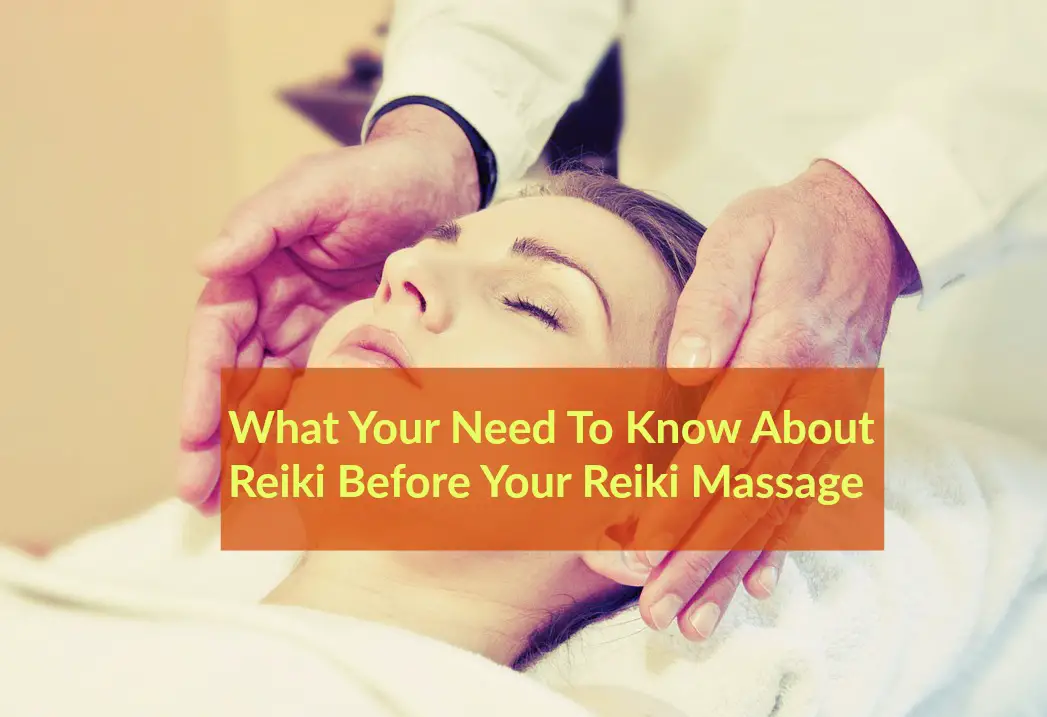
There are many types of massage, and then there is Reiki massage, which is not really a massage in the traditional kneading-the-shoulders sense.
Reiki is based on the belief that a life-force energy flows through us, and that when this energy feels “low” or blocked, we may feel stressed, worn down or unwell. Short answer: some people find it deeply relaxing, but the science is still not strong enough to call it a treatment for disease.
And that distinction matters.
What is Reiki?
Reiki comes from two Japanese words: Rei, often translated as “universal” or “higher wisdom,” and Ki, meaning life-force energy. The International Center for Reiki Training describes Reiki as a technique for stress reduction and relaxation that may also support healing.
Picture a very quiet room, a fully clothed person lying on a massage table and a practitioner placing their hands lightly on or just above the body. That is closer to Reiki than what most of us think of when we hear “massage.”
Reiki is traditionally taught as a Japanese healing practice, and many practitioners describe it as a way of balancing energy in the body. In Living a Life of Reiki, the practice is also framed as a lifestyle and spiritual discipline, not just a one-time wellness appointment.
That said, Reiki is not a replacement for medical care, physical therapy, mental health treatment or prescribed medication. I always like to keep that part very clear because “relaxing” and “medically proven” are not the same sentence, even if they sometimes get treated that way online.
The Five Basic Reiki Principles
Many Reiki practitioners use five basic principles as part of the practice. As noted in this overview of the five Reiki principles, they are often repeated quietly before a session or used as a daily reflection.
Whether or not one believes in energy healing, the principles themselves are actually pretty reasonable reminders for stress management and emotional awareness.
» Principle 1: Just for today, I will not be angry.
Anger is normal, of course, but staying stuck in it rarely feels good in the body. This principle encourages pausing, breathing and choosing a calmer response when possible.
» Principle 2: Just for today, I will not worry.
Worry loves to pretend it is problem-solving, doesn’t it? This principle is more about noticing worry and gently letting go of what cannot be controlled.
» Principle 3: Just for today, I will be grateful.
Gratitude does not mean pretending everything is wonderful. It means finding something steady to hold onto, even when the day is not exactly cooperating.
» Principle 4: Just for today, I will do my work honestly.
This one is about integrity, which may not sound glamorous, but it does make life feel a lot less complicated.
» Principle 5: Just for today, I will be kind to every living thing.
Kindness is not a small thing. It can change the tone of a room, a relationship and sometimes an entire day.
Reiki Massage
Receiving a Reiki massage is different from booking a Swedish massage, deep tissue massage or sports massage. There is usually no rubbing, kneading, stretching or working out of muscle knots.
Instead, Reiki practitioners are trained through a process called an attunement, which is part of Reiki teaching and is thought by practitioners to connect the student to Reiki energy. This is not the same as attending massage therapy school, earning a clinical license or completing a medical degree.
That does not automatically make a practitioner good or bad. It simply means a person looking for Reiki should ask about training, experience, boundaries, fees and what to expect before the session begins.
It is also important to know that Reiki is spiritual in nature, but it is not considered a religion. There is no requirement to believe in a specific faith, and a good practitioner should never pressure anyone into a belief system.
Many people do feel that Reiki connects them to God, spirit, prayer or something bigger than themselves. Others simply view it as a quiet relaxation practice, and honestly, that may be enough for some people.
What Does It Feel Like?
 A Reiki session is usually calm, slow and quiet. Some people describe warmth, tingling, heaviness, lightness or a wave of relaxation while the practitioner’s hands are placed lightly on or above different areas of the body.
Others feel very little during the session and only notice later that they are calmer or sleepier than usual. As the Reiki FAQ from the International Center for Reiki Training notes, experiences vary quite a bit from person to person.
The goal is usually to support relaxation of the body and mind. From a practical standpoint, that might mean lying still, breathing more slowly and taking a break from the constant mental checklist most of us carry around all day.
And really, sometimes that alone feels like a luxury.
Reiki Benefits and Effects
Reiki is often used as a complementary therapy, meaning it may be used alongside conventional medical care. It should not be used instead of medical care, especially for serious conditions such as cancer, heart disease, infections, diabetes, high blood pressure, depression or anxiety disorders.
Based on the National Center for Complementary and Integrative Health’s Reiki overview, there is not enough high-quality evidence to show that Reiki is effective for any specific health condition. That is a very different message than “it does nothing,” but it is also very different from “it treats disease.”
Where Reiki may be helpful is in supporting relaxation, comfort and perceived well-being. Some people also report improvements in pain, anxiety, mood or sleep, although studies tend to be small and not always well controlled.
Reiki has also been used in some hospitals, cancer centers and hospice settings as part of integrative care. As Cancer Research UK notes about Reiki, it may help some people feel more relaxed, but there is no scientific evidence that Reiki can treat or cure cancer.
That is probably the most balanced way to look at it: maybe relaxing, potentially comforting, but not a stand-alone medical treatment.
What Does the Research Say?
Short answer: mixed, limited and still not conclusive.
One of the challenges with studying Reiki is that it is difficult to create a true placebo. It is also hard to blind participants and practitioners, and many studies include small numbers of people, which makes the results less reliable.
A 2008 systematic review in the International Journal of Clinical Practice concluded that the evidence was insufficient to suggest Reiki is an effective treatment for any condition. That is still an important caution when reading big claims about Reiki online.
On the other hand, a 2015 review in Pain Management Nursing reported that Reiki therapy may be helpful for pain and anxiety, though the authors also noted the need for stronger research. In other words, interesting, but not case closed.
Here are some of the better-known studies and reviews that have looked at Reiki:
» Reiki for the Treatment of Fibromyalgia: A Randomized Controlled Trial (Journal of Alternative and Complementary Medicine, 2008)
Results/Conclusion: “Neither Reiki nor touch improved the symptoms of fibromyalgia.” You can read the study on Reiki and fibromyalgia.
» Reiki Improves Heart Rate Homeostasis in Laboratory Rats (Journal of Alternative and Complementary Medicine, 2008)
Results/Conclusion: The study reported that Reiki appeared to affect heart rate in stressed and unstressed rats. The animal research is available through PubMed’s listing on Reiki and heart rate in rats.
» Effect of Reiki Therapy on Pain and Anxiety in Adults: An In-Depth Literature Review of Randomized Trials With Effect Size Calculations (Pain Management Nursing, 2015)
Results/Conclusion: The review found evidence suggesting Reiki may help with pain and anxiety, but the overall quality of studies was limited.
» The Effect of Reiki on Pain and Anxiety in Women With Abdominal Hysterectomies (The Center for Reiki Research, 2006)
Results/Conclusion: The report noted lower pain scores in the first 24 hours after surgery for the Reiki group, though this type of study still needs to be interpreted with caution. The summary is listed through the Center for Reiki Research hysterectomy report.
» Symptomatic Improvement Reported After Receiving Reiki at a Cancer Infusion Center (American Journal of Hospice & Palliative Medicine, 2012)
Results/Conclusion: Participants reported symptom improvements, including cancer-related symptoms. As with many Reiki studies, this suggests possible comfort benefits, not proof that Reiki treats cancer; the article is available through SAGE Journals on Reiki in a cancer infusion center.
» Effects of Reiki on Autonomic Activity Early After Acute Coronary Syndrome (Journal of the American College of Cardiology, 2010)
Results/Conclusion: Reiki was associated with improved emotional state and changes in heart rate variability after acute coronary syndrome. The study can be found in the Journal of the American College of Cardiology.
» The Effect of Distant Reiki on Pain in Women After Elective Caesarean Section: A Double-Blinded Randomized Controlled Trial (BMJ Open, 2011)
Results/Conclusion: Distant Reiki had no significant effect on pain following elective C-section. The full article is available in BMJ Open’s study on distant Reiki and C-section pain.
» Reiki Energy Medicine: Enhancing the Healing Process (Alice Moore, RN, BS, Reiki Master, Hartford Hospital Department of Integrative Medicine)
Results/Conclusion: The report described decreases in anxiety and pain. The Hartford Hospital document on Reiki energy medicine gives more detail.
You can find additional Reiki research collections here:
Bottom line on the research: Reiki may help some people feel calmer, more comfortable or less anxious, but stronger, larger and better-designed studies are still needed. I would not hang a medical treatment plan on Reiki alone, and I don’t think anyone should be asked to.
What Can You Expect in a Typical Reiki Session?
Most Reiki sessions begin with a brief intake, where the practitioner may ask about your general health, stress level, goals for the session and any areas you prefer not to have touched. A good practitioner should explain their process before beginning and should respect your boundaries the entire time.
You will usually remain fully clothed and either lie on a massage table or sit in a chair. As described by the University of Minnesota’s Taking Charge of Your Health & Wellbeing resource on what to expect during a Reiki session, the touch is typically light, still and non-invasive.
The practitioner may place their hands lightly on the head, shoulders, stomach, legs or feet, or they may hold their hands slightly above the body. This should never feel forceful, sexual, painful or uncomfortable.
Some people feel warmth from the practitioner’s hands, while others feel coolness, tingling or nothing at all. As this Reiki treatment overview explains, experiences can be subtle and may vary from one session to the next.
A session may last anywhere from 30 to 90 minutes. Afterward, people often describe feeling peaceful, sleepy or emotionally lighter, although others simply feel like they rested quietly for a while.
Is Reiki Safe?
Reiki appears to be generally safe when used as a complementary relaxation practice. The bigger concern is not usually the Reiki itself, but what someone might skip because they believe Reiki is enough.
Please do not use Reiki to delay seeing a healthcare professional for chest pain, unexplained weight loss, severe depression, infection, uncontrolled pain, cancer symptoms or any new or worsening health issue. Reiki can sit beside medical care, but it should not try to replace it.
Reiki may not be the right fit for everyone, either. Some people do not like being touched, lying still or participating in practices with spiritual language, and that is completely fine.
As with any wellness service, choose a practitioner who is respectful, transparent and willing to answer questions. If someone promises a cure, tells you to stop medication or discourages medical care, that is your cue to leave.
Conclusion
Reiki massage may be a calming, gentle complementary therapy for people looking for relaxation, comfort or a quiet break from stress. It is not really massage in the traditional sense, and it is not a proven treatment for medical conditions.
The evidence is mixed, but some people do report feeling better after sessions, especially when it comes to stress, anxiety, pain perception or general well-being. I have no issue with that, as long as we keep our expectations realistic.
Think of Reiki as a possible add-on, not the main event. Modern medicine, mental health care, physical therapy and nutrition all still get their rightful place at the table.
Additional Tips Before Your Reiki Massage
• Repeat the five basic principles before your treatment if that feels meaningful to you.
• Wear comfortable clothing to your Reiki appointment.
• Avoid a heavy meal right before your session.
• Ask the practitioner what will happen before the session begins.
• Speak up if any hand placement feels uncomfortable.
• Plan a little quiet time afterward if you can.
• Keep taking medications as prescribed unless your healthcare provider tells you otherwise.
Further reading:
- Reiki Healing Benefits (History and Method)
- Ways Thai Massage Can Provide Stress Relief (Benefits, Effects and Tips)
- Biodynamic Therapy – A Guide to it’s Method and Practice
Leave Feedback: Was this article helpful?