
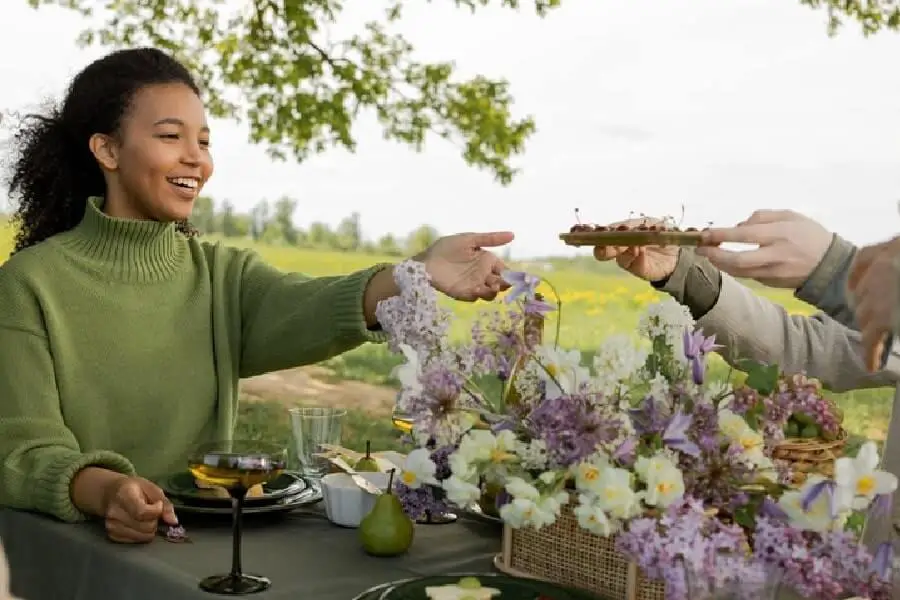
Daffodils are gorgeous, cheerful and very tempting to clip for a spring table. Since flowers do show up on cakes, salads and fancy little desserts, it is a fair question: are daffodils edible?
Short answer: no. Daffodils are not edible, and every part of the plant — bulb, stem, leaves and flower — contains toxic compounds that can make people and pets sick.
The biggest troublemaker is lycorine, a bitter plant alkaloid found in the highest amount in the bulb. Daffodils also contain calcium oxalate crystals, which can irritate the mouth, throat and skin.
Pretty? Absolutely. Something to nibble on? Not unless you enjoy nausea, vomiting and a very regrettable afternoon.
Daffodil Definition
Daffodils belong to the Narcissus genus in the amaryllis family, Amaryllidaceae. The common daffodil is often listed as Narcissus pseudonarcissus, but most gardeners use “daffodil” for many spring-blooming narcissus varieties.
Native to parts of Europe and North Africa, daffodils are now grown in temperate regions around the world.
Their popularity is easy to understand. They bloom early, come back year after year and bring that bright yellow “we made it through winter” energy to the garden.
Classic daffodils are yellow with a trumpet-shaped center, but newer varieties can be white, orange, pink, cream or a mix of colors. Breeders have also developed different shapes, including double daffodils, miniature daffodils and split-cup types.
Are Daffodils Safe to Use on Cakes?
This is where things get a little tricky. Daffodils may be used as decoration near food, but they should not be eaten or placed directly on food where sap or plant pieces can touch the icing, frosting or cake.
For food styling, the safest move is to use flowers that are clearly edible and grown without pesticides. Think nasturtiums, violas, pansies, roses, lavender or calendula — not daffodils.
Also, please do not assume a flower is edible just because it is sold at a grocery store, florist or garden center. Many flowers are grown for looks, not for plates.
Why Daffodils Are Toxic
As noted by the National Capital Poison Center, daffodils are beautiful but potentially toxic. The bulb contains the highest concentration of toxic compounds, which is why daffodil poisonings often happen when the bulbs are mistaken for onions, shallots or garlic.
Lycorine is found throughout the plant, but again, the bulb is the main concern. Eating any part of a daffodil can cause nausea, vomiting, abdominal cramping and diarrhea.
Daffodils also contain calcium oxalate crystals, which are tiny, needle-like crystals that may cause burning and irritation of the lips, tongue, mouth and throat. In some people, touching the plant may also trigger skin irritation.
Most mild cases improve within a few hours, but “mild” is doing a lot of work here. Vomiting and diarrhea can still lead to dehydration, especially in children, older adults and pets.
Symptoms of Daffodil Poisoning
Daffodil poisoning symptoms depend on how much was eaten, which part was eaten and the size of the person or animal. A tiny taste of a petal is not the same as eating part of a bulb, which is much more concentrated.
Possible symptoms may include:
- Nausea
- Vomiting
- Diarrhea
- Stomach cramps
- Burning or irritation of the mouth and throat
- Drooling or excessive salivation
- Swelling of the lips, tongue or throat
- Lightheadedness
- Drowsiness
- Skin irritation after handling the plant
- Low blood pressure in more serious cases
- Tremors or convulsions in pets after larger exposures
Severe poisoning is uncommon in people, but that does not make daffodils safe. It simply means most people stop eating them quickly because the taste is bitter and the symptoms are unpleasant.
What to Do if Someone Eats a Daffodil
First, remove any remaining plant pieces from the mouth. Rinse the mouth with water, and small sips of water or milk may help ease irritation.
Do not try to make someone vomit unless a medical professional tells you to do so. That old-school advice needs to retire, preferably somewhere far away from the medicine cabinet.
Call Poison Control or a health care professional if a child eats daffodil, if more than a small amount was swallowed, or if symptoms such as repeated vomiting, severe throat pain, trouble swallowing, excessive drooling or dehydration develop. In the U.S., Poison Control can be reached at 1-800-222-1222.
For pets, call your veterinarian or an animal poison helpline right away. Bulbs are especially risky for dogs because digging plus chewing is basically their favorite toxic plant delivery system.
Are Daffodils Poisonous to Dogs?
Yes, daffodils are poisonous to dogs. The ASPCA lists daffodils as toxic to dogs, cats and horses, with the bulb being the most toxic part.
Dogs may develop vomiting, diarrhea, drooling, abdominal pain, drowsiness, low blood pressure, tremors or heart rhythm changes after eating daffodils. Drinking water from a vase that held daffodils may also cause stomach upset, so that vase water is not exactly the refreshing little drink some pets think it is.
Are Daffodils Poisonous to Cats?
Unfortunately, yes. Cats can become sick after chewing the flowers, leaves or stems, although the bulb is still the biggest concern.
Symptoms in cats may include drooling, vomiting, diarrhea, mouth irritation, lethargy and abdominal discomfort. Since cats are smaller and can be sensitive to plant toxins, it is best to keep daffodils out of reach — or out of the house completely if your cat treats every bouquet like a salad bar.
Why Daffodil Bulbs Are Often the Problem
Daffodil bulbs look a little too much like onions for comfort. That is one reason accidental poisonings have happened when bulbs were stored in kitchens or mixed in with food ingredients.
Here is the simple fix: never store flower bulbs near food. Keep them in clearly labeled bags or containers and away from children, pets and anyone who may be helping in the kitchen without knowing what they are.
I know, labeling sounds boring. But “boring” beats daffodil stew every single time.
The Greek Myth Behind Narcissus
The daffodil’s botanical family name is tied to the story of Narcissus from Greek mythology. In the myth, Narcissus was a beautiful young man who rejected the nymph Echo, leaving her heartbroken.
Nemesis, the goddess of revenge, led Narcissus to a pool of water, where he became captivated by his own reflection. Depending on the version, he either fell in or wasted away staring at himself, and a flower grew where he died.
A little dramatic? Very. But also a memorable way to explain why these flowers have been associated with beauty, vanity and spring renewal for centuries.
Daffodils in European Gardens
Daffodils have a long history in Europe and North Africa, where different narcissus species grow in meadows, woodlands, rocky slopes and coastal areas. Spain, Portugal, France, Italy and Morocco are all part of the broader narcissus story.
The Greek botanist Theophrastus described narcissus plants in his work Enquiry into Plants. Later, daffodils became common in gardens, eventually becoming one of the most recognized spring bulbs in the world.
The Romans believed daffodils had healing qualities, although we obviously need to separate historical use from modern safety. Just because people once believed a plant was medicinal does not mean we should be putting it in soup.
Classification and Breeding
The serious classification and breeding of daffodils took off in the 19th century. Since then, plant breeders have created thousands of cultivars with different colors, petal shapes, heights and bloom times.
Most people use “daffodil” for the large trumpet-shaped blooms, but gardeners and breeders often use the term more broadly. Either way, edible they are not.
Do Daffodils Have Any Garden Benefits?
Yes, daffodils have plenty of garden benefits, even if they do not belong on the dinner plate. They are reliable early spring bloomers, they add color when much of the garden still looks half-asleep, and they can support early pollinators when other flowers are scarce.
Another perk: many deer, rabbits and rodents tend to leave daffodils alone because of their bitter, toxic compounds. I cannot blame them for being unimpressed with a poisonous bulb buffet.
Daffodils also naturalize well in many areas, meaning they can spread and return for years with very little fuss. Plant them in fall, enjoy them in spring, and then let the leaves yellow naturally so the bulb can store energy for next year.
Frequently Asked Questions
Are daffodils edible?
No, daffodils are not edible. Every part of the plant contains toxic compounds, and the bulb is the most poisonous part.
Can humans die from eating daffodils?
Death from daffodil poisoning in humans appears to be very rare, but serious illness is possible, especially after eating the bulb. Severe vomiting, dehydration, low blood pressure or trouble swallowing should be treated as a medical concern.
What is the most poisonous part of a daffodil?
The bulb is the most poisonous part of the daffodil because it contains the highest concentration of lycorine and other irritating compounds. This is also the part most often mistaken for onion or garlic.
Can you touch daffodils?
Most people can handle daffodils without a problem, but some may develop skin irritation, especially after handling cut stems, bulbs or sap. Wearing gloves is a smart idea when planting bulbs or arranging large bunches.
Is daffodil vase water poisonous?
Daffodil vase water may contain irritating plant compounds from the stems. Keep it away from children and pets, and do not use it for watering edible herbs or food plants.
Why do people accidentally eat daffodils?
Most accidental cases happen because the bulbs are mistaken for onions or the leaves are confused with edible greens such as chives. This is why daffodil bulbs should never be stored in the kitchen or near food.
What flowers are edible?
Some edible flowers include violas, pansies, nasturtiums, roses, lavender, calendula and dandelions. Only eat flowers that have been correctly identified, grown for food use and not sprayed with pesticides or florist chemicals.
The Bottom Line
Daffodils are beautiful spring flowers, but they are not edible. The whole plant is toxic, with the bulb being the most dangerous part.
Eating daffodil can cause nausea, vomiting, diarrhea, stomach cramps and mouth or throat irritation. More serious symptoms can happen, especially in pets or after larger amounts are eaten.
Enjoy daffodils in the garden, in a vase and as a sign that spring has finally decided to show up. Just keep them off the plate, away from curious pets and nowhere near the onions.
Leave Feedback: Was this article helpful?