
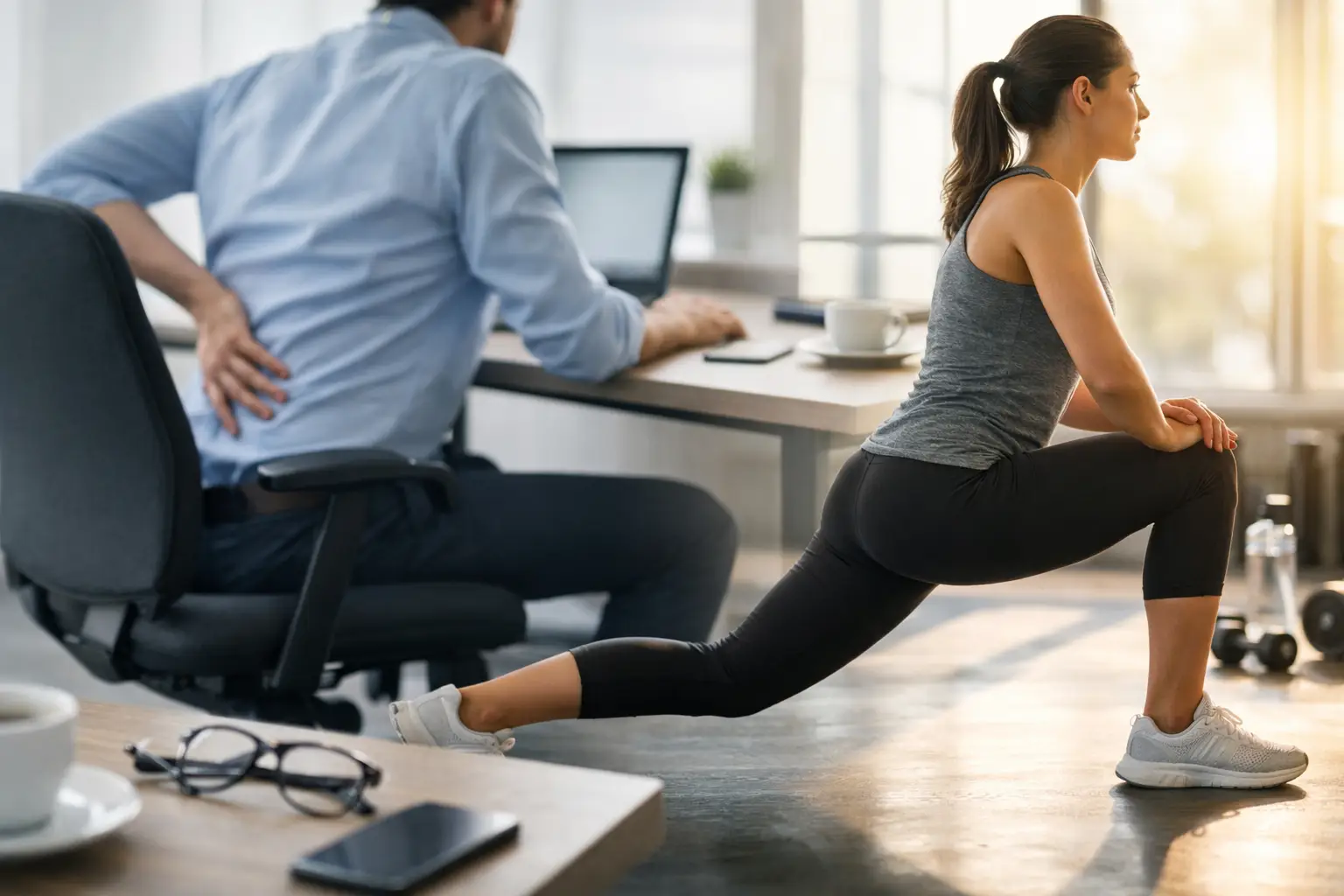
When people search for sitting too much health risks, they are usually asking a practical question: can a desk job, long commute, or evening on the couch really affect health? Research suggests it can. Long periods of sitting are linked with a higher risk of several chronic health problems, especially when they become a regular part of life.
That does not mean every seated afternoon causes harm or that you need to stand all day. Sitting is normal. The concern is the pattern of spending many waking hours inactive, with few breaks for walking or other movement. Small, repeatable changes can make that pattern healthier without turning your workday upside down.
Why sitting affects more than posture
Sitting uses very little energy. When large blocks of the day pass with minimal movement, the body gets fewer opportunities to use glucose, engage major leg muscles, and support healthy circulation. Over time, those effects may influence metabolic and cardiovascular health.
Research has consistently found associations between high sedentary time and higher risks of cardiovascular disease, type 2 diabetes, some cancers, and earlier death. These studies cannot prove that sitting alone causes every outcome. People who sit more may also have other risk factors, such as poor sleep, stress, limited access to exercise, smoking, or health conditions that reduce mobility. Still, the overall evidence supports a simple message: less uninterrupted sitting is generally better for health.
Regular exercise helps, but it may not fully erase the effects of being sedentary for the rest of the day. A person can complete a 30-minute workout and still spend 10 or more hours sitting. Both planned exercise and everyday movement matter.
Sitting too much health risks to know
Heart disease and circulation concerns
Extended sitting is associated with a greater risk of heart disease and stroke. One reason may be that inactivity affects blood pressure, blood fats, blood sugar regulation, and body weight – all factors that influence heart health.
Sitting still for long stretches can also leave the legs feeling heavy or swollen, particularly during travel or long workdays. For most people, brief movement breaks are enough to restore comfort. But sudden one-sided leg swelling, warmth, redness, chest pain, or shortness of breath needs urgent medical attention, as these symptoms can signal a blood clot or another serious problem.
Higher blood sugar and diabetes risk
Your muscles use glucose for energy when you walk, climb stairs, or even stand and shift position. During prolonged sitting, that demand drops. Research suggests that frequent movement breaks may improve post-meal blood sugar responses compared with sitting continuously.
This is especially relevant for people with prediabetes, type 2 diabetes, a family history of diabetes, or a history of gestational diabetes. Movement is not a replacement for prescribed medication or a diabetes care plan, but short walks after meals can be a realistic addition worth discussing with a clinician.
Weight gain can become easier
Weight change is shaped by many factors, including food intake, sleep, medications, hormones, stress, and genetics. Sitting too much does not automatically cause weight gain. However, it reduces daily energy use and can crowd out activities that help maintain weight, such as errands on foot, household tasks, recreational movement, and exercise.
The goal is not to obsess over calories burned while standing. It is to build a day that includes more natural movement, which can support weight management alongside nutritious eating and adequate sleep.
Back, neck, hip, and shoulder discomfort
The most immediate effect of sitting is often physical discomfort. A chair that is too low, a screen that sits off to one side, or hours spent leaning toward a laptop can strain the neck, upper back, hips, and lower back. Tight hip flexors and reduced muscle endurance can make getting up feel stiff.
Posture matters, but there is no single perfect posture to hold all day. The best posture is usually the next posture. Adjusting your position and getting up regularly tends to help more than trying to sit perfectly still.
Mental health and energy
Sedentary time has been linked with poorer mood and greater symptoms of anxiety and depression in some studies. The relationship is complicated. Depression, chronic pain, caregiving demands, and exhaustion can all make movement harder, so sitting may be both a contributor and a consequence.
Even so, a few minutes of movement can be a useful reset. Daylight, a short walk, gentle stretching, or walking while taking a phone call may improve alertness and break up a mentally draining day.
How much sitting is too much?
There is no single number that applies to everyone. Risk generally rises as sedentary time adds up, especially when it is uninterrupted. Office workers, drivers, remote employees, gamers, and people with mobility limitations may all spend long periods seated for very different reasons.
Current physical activity guidance for US adults recommends at least 150 minutes of moderate-intensity activity each week, plus muscle-strengthening activities on two or more days. Brisk walking, cycling, swimming, dancing, and many fitness classes can count. The guidance also encourages adults to move more and sit less throughout the day.
If that target feels far away, start smaller. Health benefits begin before a person reaches an ideal routine. A five- or 10-minute walk is still movement, and a consistent habit is more useful than an ambitious plan that lasts one week.
Practical ways to sit less without disrupting your day
A standing desk can be helpful, but it is not required. Standing in one position for hours can also lead to discomfort. The most useful approach is to rotate among sitting, standing, and moving.
Try setting a reminder to stand up at least once every 30 to 60 minutes. Walk to refill your water, do a lap around the room, or take a few flights of stairs if available. If reminders become annoying, connect movement to something you already do, such as finishing a meeting, sending several emails, or starting a new episode of a show.
For desk work, consider taking calls while walking, placing the printer or trash can a short distance away, and choosing an in-person conversation over another message when appropriate. If you work from home, a brief walk before logging in and after logging off can create a useful boundary while adding steps.
At home, make television time a little more active. Stand during commercials, fold laundry, stretch on the floor, or walk in place while waiting for food to cook. None of these actions needs to be intense. Their value comes from interrupting long, still periods.
When a more tailored plan makes sense
People with arthritis, chronic pain, balance concerns, heart disease, diabetes complications, or recent surgery may need a more individualized approach. A physical therapist, physician, or qualified exercise professional can help identify safe options. Chair exercises, short assisted walks, water-based movement, and gentle strength training may be more realistic than a generic step goal.
Pay attention to pain that persists, worsens, wakes you at night, or comes with numbness, weakness, bowel or bladder changes, or unexplained weight loss. Those symptoms deserve medical evaluation rather than another ergonomic adjustment.
You do not need a perfect schedule to lower the health risks of sitting too much. Start by noticing one long stretch of stillness in your day, then give your body a reason to move. A few minutes now and then can become a habit that supports your health for years.
Leave Feedback: Was this article helpful?