
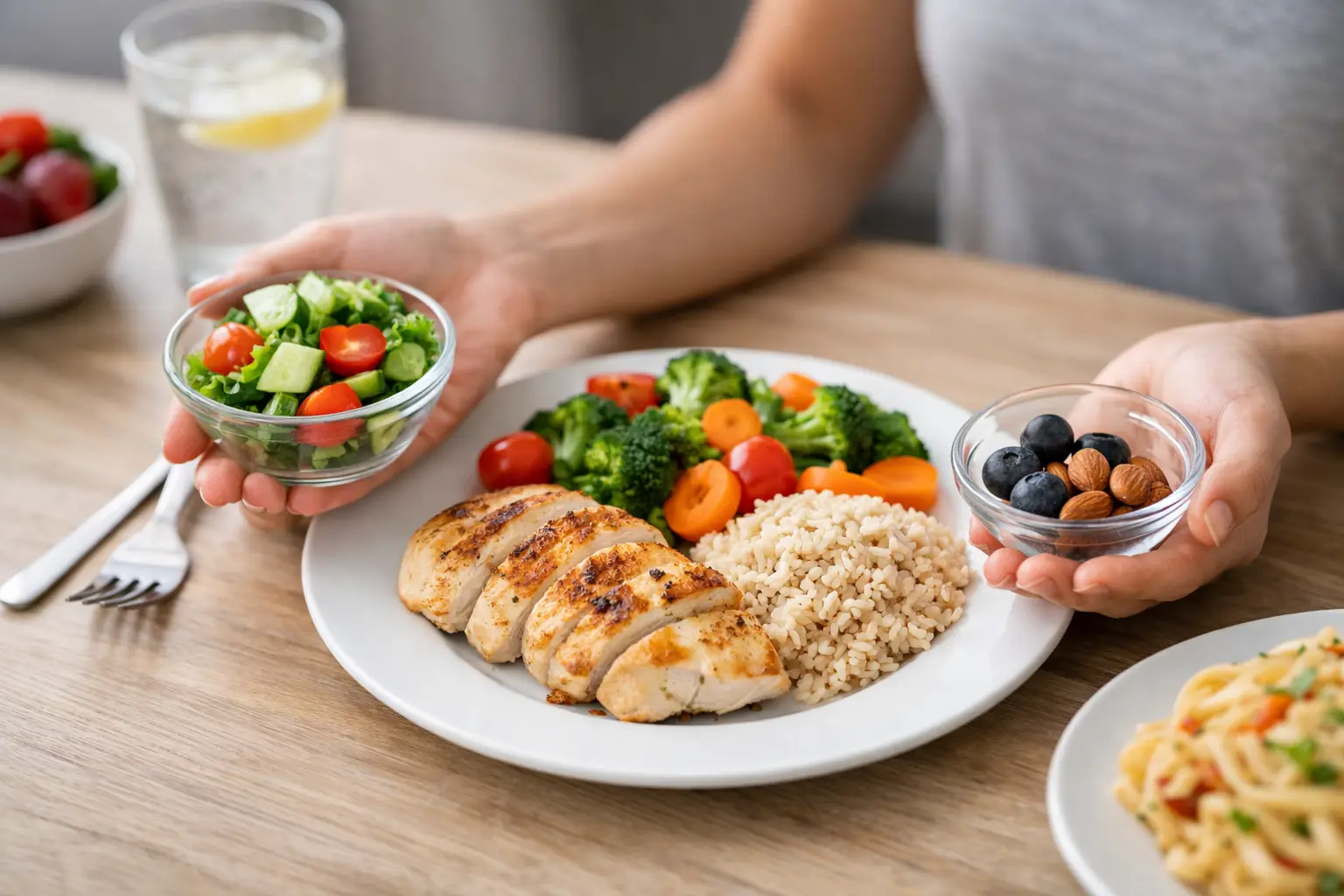
You can eat a salad the size of a serving bowl or a bowl of granola that quietly contains three servings – and both can change your calorie intake more than most people realize. That is why portion control for weight loss matters so much. It is not about eating tiny meals or obsessing over every bite. It is about learning what an appropriate amount looks like, so you can create a calorie deficit without feeling like every meal is a test of willpower.
For many adults, portion sizes have drifted upward over time. Restaurant meals are larger, packaged foods often contain multiple servings, and even healthy foods can add up quickly when portions are generous. Research consistently shows that people tend to eat more when they are served more, often without noticing. That makes portion awareness one of the simplest and most reliable tools for weight management.
Why portion control for weight loss matters
Weight loss usually comes down to energy balance. If you regularly consume more calories than your body uses, weight tends to increase. If you consume fewer calories than you burn, weight tends to decrease over time. Portion control helps by lowering calorie intake in a practical way, without requiring you to cut out entire food groups or label foods as good or bad.
This approach also works well because it is flexible. You can still eat meals you enjoy, dine out, and include treats. The adjustment is the amount, not necessarily the food itself. For many people, that feels more realistic than strict dieting.
That said, portion control is not exactly the same as deprivation. A smaller portion of a high-calorie food may help with weight loss, but if meals are too small overall, hunger can rebound and make overeating more likely later. The goal is a portion that supports a calorie deficit while still giving you enough protein, fiber, and overall volume to stay satisfied.
Portion size vs serving size
These terms are often used like they mean the same thing, but they do not.
A serving size is a standardized amount listed on a Nutrition Facts label. It helps you understand the calories and nutrients in a measured quantity of food. A portion size is how much you actually put on your plate or eat in one sitting.
This matters because many packaged foods look like a single serving but contain two or more. A bottle of smoothie, a bag of chips, or a large muffin may be easy to finish, yet the calories can be far higher than expected. Reading the serving size first can prevent that kind of accidental overeating.
What effective portion control looks like
A good portion-control strategy is simple enough to repeat. You should not need a food scale forever, and you should not have to memorize dozens of measurements. Most people do best when they use a few practical habits consistently.
Start with the plate method
The plate method is one of the easiest ways to manage portions without counting every calorie. Fill about half your plate with nonstarchy vegetables, one quarter with lean protein, and one quarter with starches or whole grains. Add healthy fats in modest amounts, such as a spoonful of dressing, some avocado, or a small handful of nuts depending on the meal.
This method works because vegetables add bulk and fiber for relatively few calories, while protein supports fullness. It is not perfect for every eating style, but it gives most people a reliable visual structure.
Use your hand as a guide
Your hand travels with you, which makes it useful when measuring tools are not around. A palm-sized portion of protein, a fist-sized portion of carbohydrates, a thumb-sized amount of fat, and one or two cupped hands of vegetables can be a practical starting point.
These are not exact measurements, and that is okay. Portion control does not need laboratory precision to be helpful. What matters most is building a better sense of scale.
Change the environment, not just your willpower
Large plates, family-style serving bowls, and eating from the package can all push portions up. Using a smaller plate or bowl can help some people eat less without feeling restricted. Serving your food in the kitchen instead of placing big dishes on the table can also reduce mindless seconds.
This does not mean you must turn every meal into a strategy session. It simply means the setup around food matters, and small changes can make healthy choices easier.
Foods that deserve extra attention
Some foods are especially easy to overeat because they are calorie-dense, highly palatable, or both. That does not make them off-limits. It just means portions matter more.
Nut butters, oils, nuts, trail mix, chips, baked goods, sugary coffee drinks, and alcohol can all deliver a lot of calories in a small volume. Even nutritious foods like granola, dried fruit, and avocado can become surprisingly calorie-heavy when portions creep up.
On the other hand, foods with high water and fiber content – such as vegetables, fruit, broth-based soups, beans, and plain popcorn – often provide more fullness for fewer calories. Building meals around these foods can make portion control feel easier and more satisfying.
How to control portions without feeling hungry
This is where many plans fall apart. If you are white-knuckling your way through the day, the portion is probably too small, the meal is unbalanced, or both.
Prioritize protein and fiber
Protein is consistently linked to better fullness, and fiber slows digestion and adds bulk. Meals that include chicken, fish, Greek yogurt, eggs, tofu, beans, or cottage cheese along with vegetables, fruit, legumes, or whole grains are often more satisfying than meals built mostly around refined carbs.
If your lunch is a small sandwich and a few crackers, hunger by midafternoon is not surprising. If that same lunch includes a solid protein source, fruit, and crunchy vegetables, the portion may feel much more manageable.
Slow down enough to notice fullness
It takes time for fullness signals to catch up. Eating quickly can make even a reasonable portion feel unsatisfying because your body has not had time to register it. Slowing down, chewing thoroughly, and pausing before going back for more can help you distinguish between true hunger and habit.
You do not need to eat with perfect mindfulness. Even one simple pause halfway through a meal can help.
Do not save all your calories for later
Some people try to eat as little as possible early in the day, then end up ravenous at night. That pattern often makes portion control harder, not easier. A balanced breakfast or lunch can reduce overeating later, especially if evenings are your toughest time.
Portion control when eating out
Restaurants are one of the biggest real-world challenges because portions are often much larger than what most people need. Still, eating out does not have to cancel your progress.
A useful approach is to decide on your portion before you start eating. You might split an entree, box up half early, or choose an appetizer and side instead of a large main dish. Looking for meals built around protein and vegetables can also help, since they tend to be more filling per calorie than meals centered on fried foods, creamy sauces, or oversized starch portions.
There is also a trade-off here. Sometimes a lighter restaurant meal leaves you satisfied, and sometimes it leaves you wanting more an hour later. That is why it can help to include enough protein and fiber instead of just ordering the smallest thing on the menu.
Common mistakes with portion control for weight loss
One common mistake is focusing only on dinner. Portions at snacks, drinks, and small extras count too. A few handfuls of nuts, spoonfuls of peanut butter, or daily specialty coffees can narrow the calorie deficit more than expected.
Another mistake is relying on vague ideas of healthy eating without checking portions at all. Foods like salmon, olive oil, brown rice, and smoothies can absolutely fit into a weight loss plan, but calories still matter.
A third mistake is becoming too strict. If portion control turns into measuring every lettuce leaf or feeling guilty after one larger meal, it becomes harder to sustain. Accuracy helps, but consistency matters more.
When portion control may need more structure
If your progress has stalled, measuring some foods temporarily can be useful. This is especially true for calorie-dense items like cereal, pasta, rice, oil, dressings, and nut butter. Many people find that their estimates are simply off, and a short reset helps recalibrate their eye.
Structured tracking can also help if you have specific goals, but it is not required for everyone. Some people do very well with visual methods and a few repeat meals. Others need numbers for a while to understand where extra calories are coming from. It depends on your personality, your routine, and how much detail feels sustainable.
Portion control works best when it supports your life instead of taking it over. Think of it as a skill, not a punishment. The more often you build meals with enough protein, fiber, and sensible portions, the less effort it takes. Small adjustments, repeated consistently, are usually what move the scale – and help you feel better while doing it.
Leave Feedback: Was this article helpful?